By Jasmine Reed, PowerVault Staff
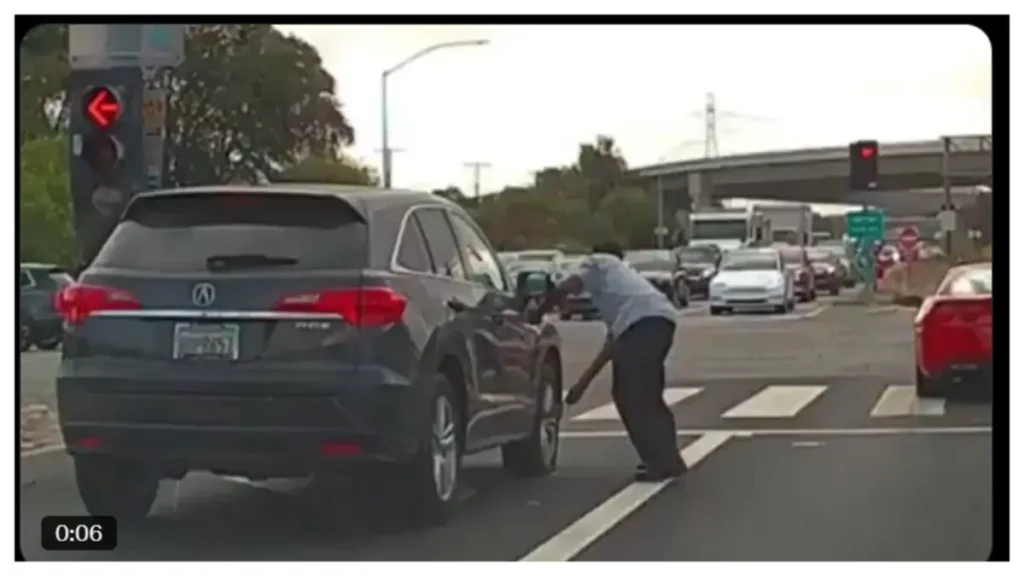
In a strange twist of fate that feels ripped from the pages of a tense urban drama, a woman in Los Angeles thought she was enacting her own version of vigilante justice when she jumped out of her vehicle to slash a Black man’s tires, unaware that her actions were being recorded by a dashcam. This situation throws a glaring spotlight not only on her impulsive rage but also on the deeper societal issues that fuel such confrontations, particularly in today’s racially charged climate.
To understand the gravity of this moment, we must dissect the context in which it occurred. It’s no secret that tensions are high across the nation, amplified by a volatile mix of social injustice and personal grievances. The woman’s act of vandalism appeared to stem from a clash on the road, but it echoes a broader narrative of displacement and the racial undertones that accompany public altercations. For many Black individuals, these interactions can feel like a microcosm of larger systemic issues, where the stakes often extend far beyond a heated argument or a damaged vehicle.
In the realm of Black culture, this incident lays bare the complexities of public perception and the reactions to perceived threats. The dashcam footage encapsulates a moment where technology inadvertently becomes a witness, capturing the rawness of human emotion in a society that often overlooks the underlying reasons that propel such confrontations. It serves as a reminder that while individuals may act out of personal frustration or anger, these moments are steeped in a history of racial tension that often gets swept under the rug. The question arises: what drives someone to jump out with such aggression, and what does it reveal about our social fabric?
This scenario draws parallels to moments we’ve witnessed in the past, where public outbursts turn into viral spectacles, revealing the fragility of our societal connections. Think back to incidents like the infamous ‘BBQ Becky’ or ‘Permit Patty,’ where individuals took it upon themselves to police Black bodies in public spaces. In each case, social media became both a megaphone for outrage and an unsettling mirror reflecting the fears, biases, and sometimes, the absurdity of our reality. It’s almost as if we have a reoccurring theme where ordinary interactions morph into battlegrounds for racial discourse, each incident feeding a narrative that is all too familiar.
Looking ahead, we must ask ourselves what this means for our communities. Are we witnessing an evolution of public accountability, where the lens of technology protects against personal vendettas? Or does this incident signal a resurgence of aggressive self-policing in a society that fails to confront its deeply rooted issues? As we engage in conversations about race, justice, and personal accountability, it’s crucial that we stay vigilant and consider the ramifications of these moments—both for those directly involved and for our collective understanding of race and justice in America. The future may well hinge on how we choose to respond, address, and ultimately dismantle the systems that perpetuate these cycles of anger and violence.
About The Author