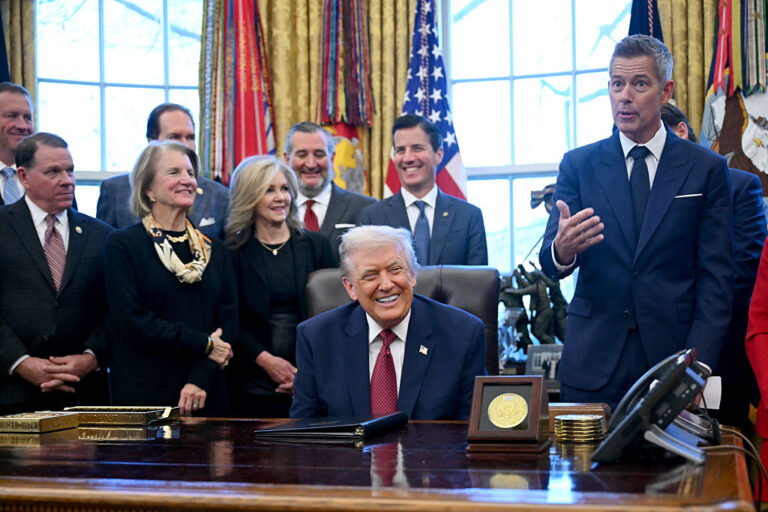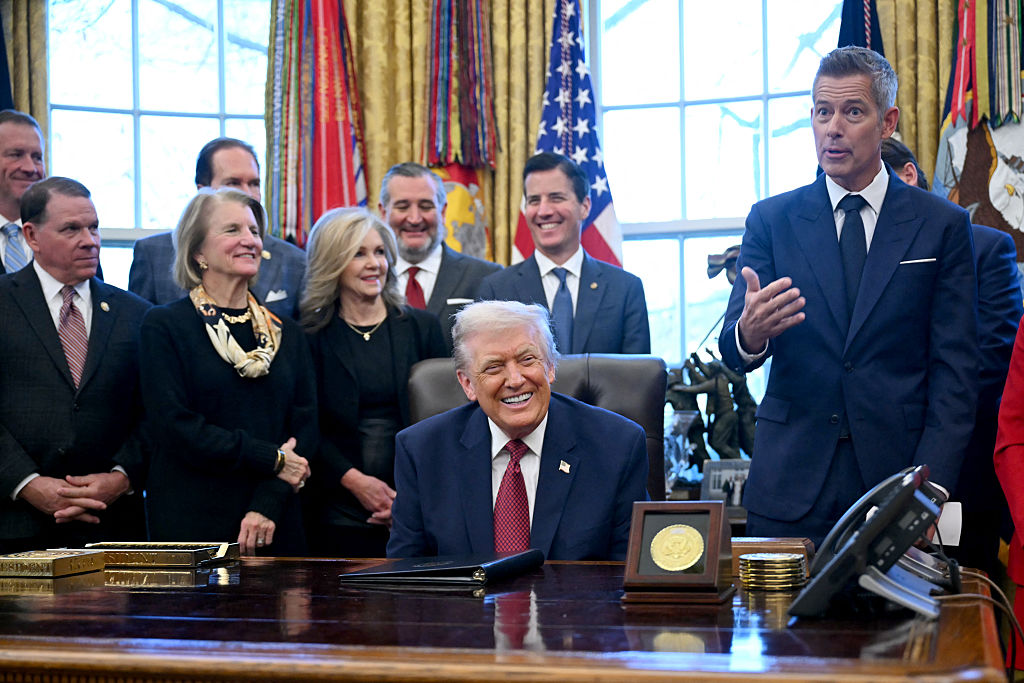
In a scenario that feels all too familiar, President Trump’s administration has once again found itself under fire for a disturbing display involving children. During a recent pep rally led by Transportation Secretary Sean Duffy, a child in the audience was scolded for yawning, prompting outrage from those who witnessed the strikingly awkward moment. Critics have been vocal about the administration’s tendency to utilize children as political props, stripping away their agency and subjecting them to uncomfortable situations for the sake of adult agendas.
The incident has sparked conversations about the ethical implications of involving kids in political spectacles. Children are often caught in the crossfire of adult politics, and the expectation that they should remain engaged during tedious events is not only unrealistic but also unfair. Duffy’s admonition of the yawning child speaks volumes about the dynamics at play—here is a young person, probably bored out of their mind, being chastised for their natural reaction to an uninspiring pep rally that did little to engage or excite.
This pattern of using children as political theater raises significant ethical questions. Is it fair to expose young, impressionable minds to the often cutthroat world of politics? When does the line blur between using children for a cause and outright exploitation? In a climate where children should be celebrated for their innocence and creativity, it’s disheartening to see them treated as mere instruments for a political narrative.
Unfortunately, this isn’t the first time the Trump administration has faced backlash for similar incidents. From staged photo ops to hollow pep rallies, the consistent theme seems to be a disregard for how children experience these moments. Instead of promoting genuine engagement and education, the focus often shifts to optics and public relations, leaving our future generation as mere props in an ongoing script.
As we reflect on this troubling trend, it’s essential to call out this behavior and advocate for a political landscape where our children can thrive without being paraded around like trophies. It’s not just about protecting their innocence but also about allowing them a space where their voices can be heard—without fear of reprimand for simply being kids.
About The Author