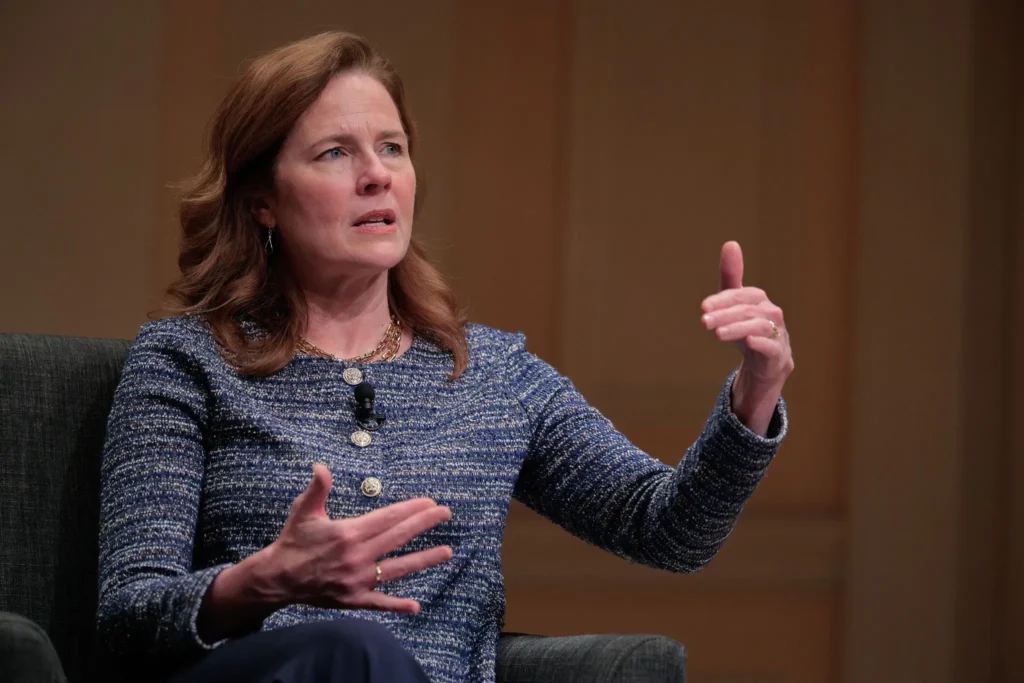
The recent Supreme Court decision to strike down key provisions of the Voting Rights Act has ignited an intense online discourse, particularly focused on Justice Amy Coney Barrett. The conservative majority ruling, which Barrett endorsed, has raised alarms about the implications for marginalized communities. What makes this situation particularly disheartening is that Barrett is a mother to two Black adopted children, which has led many to question the safety and future of her children in a landscape that seems increasingly hostile to voting rights for people of color.
Social media has erupted with a blend of concern and outrage, as users grapple with the contradiction of Barrett’s judicial decisions and her role as a mother. The notion that she could simultaneously participate in undermining protections meant to ensure her own children’s rights has left many feeling conflicted. Comments flooded in, expressing a mix of disbelief and sympathy, as people pointed out that the very system she helped weaken poses risks not only to her children but to countless others who depend on these protections for fair treatment and representation.
This situation calls into question the complexities of identity and privilege. Barrett’s opinion, which further entrenches systemic barriers, raises awareness about how those in power can be disconnected from the realities faced by those they impact. The concerns for her children highlight a larger cultural narrative about accountability, particularly within spaces where decisions are made that can dismantle protections for vulnerable populations. It reflects a painful irony: a justice who, by personal circumstance, should be deeply aware of the consequences of disenfranchisement, yet chooses to perpetuate them.
As the discourse unfolds, it’s crucial to amplify the voices that advocate for justice and equality. The protection of voting rights is not just a political matter; it’s a moral one that affects lives across the nation. The cries for justice resonate louder when we can see the faces behind the statistics, and in Barrett’s case, those faces include her own children. This incident serves as a poignant reminder that every decision made within the court has real-world implications, and it beckons a collective call to ensure that the rights of all citizens, especially the most vulnerable, are fiercely protected and upheld.
From The Source
About The Author