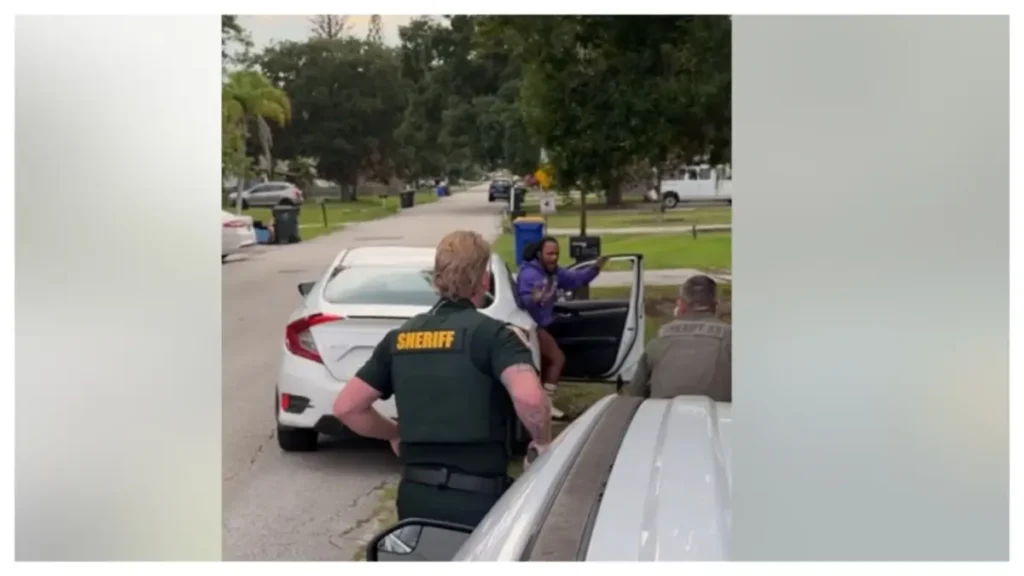
In a shocking display of misguided pride, Brevard County Sheriff Wayne Ivey posted an edited video on social media showcasing a K-9 attack on a Black man who appeared to be complying with law enforcement. Instead of receiving the accolades he seemed to anticipate, Ivey’s actions sparked an immediate and intense backlash that put the spotlight on the troubling dynamics of race, policing, and the glorification of violence in law enforcement. The edited footage, stripped of its context, was an attempt to portray the incident as a success story in crime prevention, but it instead revealed a disturbing reality that many have come to expect in interactions between police and communities of color.
What was supposed to be a moment of triumph quickly devolved into a national conversation about the use of force and systemic racism in policing. Critics were quick to point out the implicit message in Ivey’s post: that the brutalization of individuals, particularly those from marginalized communities, is something to be celebrated. As the backlash grew, it became clear that many were not willing to overlook the violence, nor the insensitivity of a law enforcement leader who failed to recognize the gravity of the situation. Instead of praise, Ivey faced widespread condemnation, reflecting a growing societal demand for accountability and reform in how police handle encounters with civilians.
In the aftermath of the sheriff’s ill-advised post, the conversation surrounding police brutality and the treatment of Black individuals by law enforcement has reignited. This incident serves as a stark reminder that the wounds of racial injustice run deep, and that communities are no longer silent in the face of such blatant disregard for human dignity. As discussions unfold about the need for systemic change, it is essential that leaders in law enforcement understand the weight of their words and actions, and the responsibility they bear in shaping the narrative of justice.
About The Author