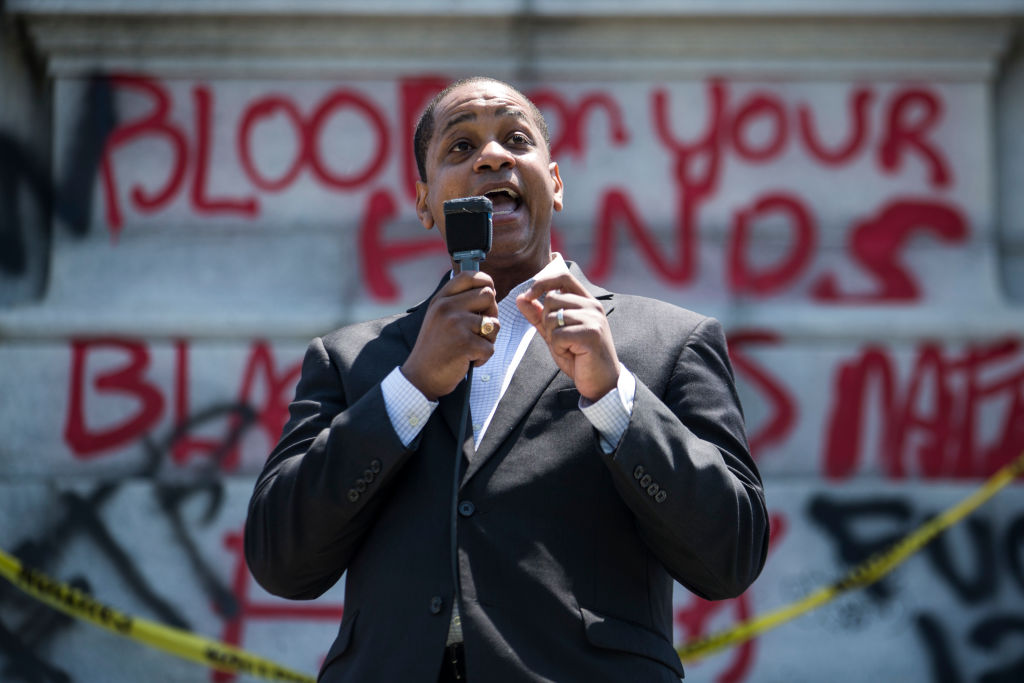
RICHMOND, VA - JUNE 04: Virginia Lieutenant Gov. Justin Fairfax speaks to demonstrators in front of a statue of Confederate General Robert E. Lee is pictured on June 4, 2020 in Richmond, Virginia. Virginia Gov. Ralph Northam (D) and Richmond Mayor Levar Stoney announced plans to take down the statue. (Photo by Zach Gibson/Getty Images)
In a devastating turn of events that has sent shockwaves through the political landscape of Virginia, Justin Fairfax, the state’s second Black lieutenant governor, has been implicated in a tragic murder-suicide involving his wife. Reports indicate that Fairfax shot his wife before turning the gun on himself, leaving behind a community grappling with the loss of a leader and a family torn apart by violence. Fairfax’s ascent to political prominence was celebrated by many as a milestone for representation, marking a significant step forward for Black leadership in Virginia. However, this heartbreaking incident underscores the complexities and challenges that often accompany public life, revealing a dark and hidden struggle far removed from the podium and press conferences.
As details continue to emerge, questions swirl about the circumstances leading up to this harrowing act. Friends and supporters are at a loss, attempting to reconcile the image of a rising star in politics with the grim reality of his final hours. Fairfax’s journey to lieutenant governorship was not without its controversies, facing accusations of sexual misconduct that he has consistently denied. Whether these pressures contributed to the tragic outcome remains a subject of speculation and sorrow. In a world where mental health issues are increasingly acknowledged, this incident serves as a stark reminder of the importance of support systems and open discussions about struggles that often remain hidden behind the facade of success.
This tragic event stands as a poignant chapter in Virginia’s political narrative, one that will inevitably spark conversations about the systemic issues that affect mental health and relationships, especially within the high-stakes environment of public office. As the community mourns, it is imperative that we collectively reflect on the need for empathy and understanding in times of crisis, recognizing that even those who appear to have it all together can be battling unseen demons. The Fairfax family’s story is a heartbreaking reminder of the fragility of life and the urgent need for compassion as we navigate the complexities of existence in a public eye. Our thoughts are with those affected by this unspeakable loss, and we are left to ponder what lessons can be drawn from this tragedy to prevent future occurrences in our communities.
About The Author