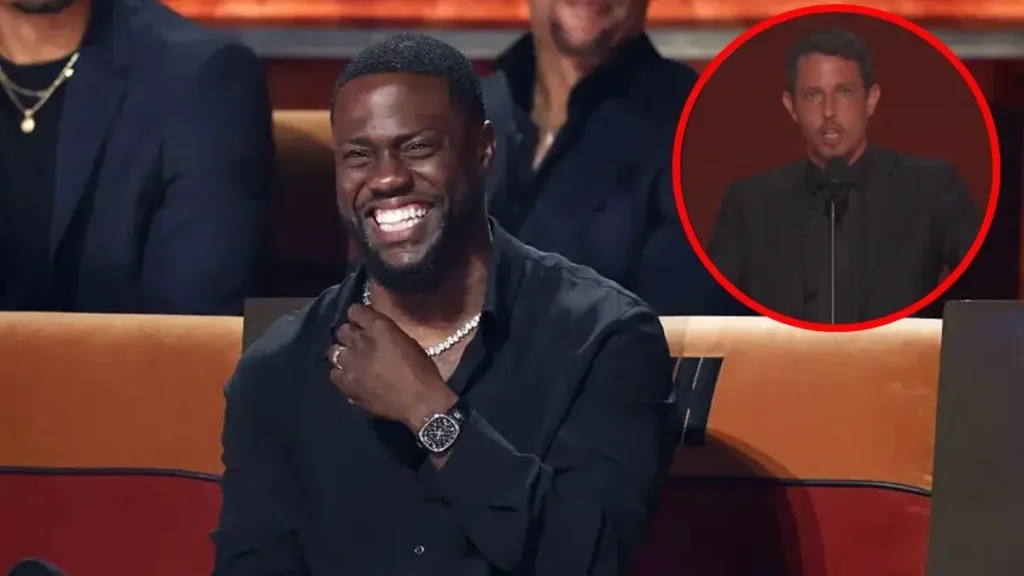
Comedian Kevin Hart has finally addressed the controversy surrounding his recent roast, stirring the pot with his bold remarks. The star-studded event went viral earlier this month after several comics made racially charged jokes, culminating in Tony Hinchcliffe’s infamous quip about George Floyd. Hart’s response has ignited a firestorm of debate, reflecting the complexities of humor in today’s social landscape.
In his candid commentary, Hart questioned Hinchcliffe’s choice of material, asking, “Why you ain’t lead with that?” This rhetorical question encapsulates the frustrations many feel with comedians who push boundaries at the expense of sensitive topics. Hart’s reaction goes beyond mere discontent; it signals a call for accountability in comedy, challenging performers to be more considerate in their craft. While some fans applaud Hart for taking a stand, others argue that he missed the opportunity to defend the art of roasting itself, which often thrives on the edge of discomfort.
The fallout from this roast is emblematic of a broader conversation about race, comedy, and the responsibility that comes with laughter. Hart’s willingness to address the issue head-on demonstrates his commitment to using his platform for more than just entertainment; he’s engaging in a necessary dialogue that resonates with many who feel marginalized. The ensuing debates have highlighted the fine line comedians walk between humor and insensitivity, leaving audiences pondering where to draw that line in an increasingly polarized society.
As the discourse around Hart’s comments continues to unfold, one thing is clear: the intersection of comedy and social issues is more critical than ever. Whether he intended to spark this debate or simply react to a moment gone wrong, Hart has undoubtedly placed himself at the center of a conversation that challenges both comedians and audiences alike to reflect on the implications of their laughter.
About The Author