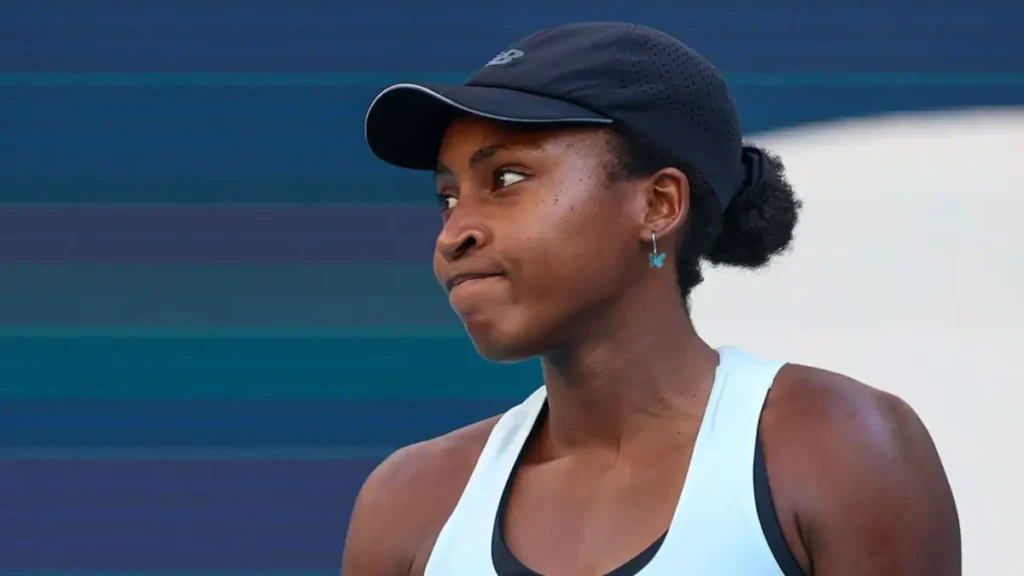
In the world of sports, few figures shine as brightly as Cori ‘Coco’ Gauff, a young tennis prodigy who has captured hearts and titles on and off the court. Recently, Gauff found herself at the center of controversy, facing backlash over her choice of hairstyles during important matches. From cornrows to bold updos, Coco’s hair has become a canvas of self-expression, but it also sparked a wave of criticism that many athletes, particularly Black women, know all too well. Rather than bowing to the pressure, Coco stood her ground, demonstrating not only her talent but also her commitment to authenticity in a space that often seeks to dictate how Black athletes should present themselves.
Gauff’s powerful response resonates deeper than just tennis. In her own words, she proclaimed, ‘You ain’t gotta explain,’ sending a clear message that she doesn’t owe anyone a justification for her appearance. This declaration mirrors a broader cultural sentiment, especially for young Black women navigating spaces that often impose rigid standards of beauty and professionalism. Coco’s confidence and refusal to conform underscore an important dialogue about identity, representation, and empowerment in sports, where the narrative has historically marginalized voices that don’t fit a prescribed mold.
By using her platform to challenge the status quo, Gauff not only reclaims her narrative but also provides inspiration to countless others who feel the weight of societal expectations. This incident isn’t merely about hair; it’s emblematic of the struggles Black women face in asserting their identity and navigating spaces that often prioritize conformity over individuality. As Coco gears up for future matches, her stance serves as a reminder that true strength lies in authenticity. In an arena where every detail can be scrutinized, her unapologetic embrace of her natural self challenges the public to rethink preconceived notions about professionalism and appearance.
Coco Gauff’s journey is a testament to the power of self-acceptance and resilience, qualities that extend beyond tennis and reach into the very core of cultural identity. She’s paving the way for future generations to embrace their individuality and to redefine what it means to succeed. In this moment, Coco isn’t just swinging her racket; she’s serving up a lesson in pride, empowerment, and the undeniable strength of being true to oneself. In a sport that demands excellence, Gauff’s triumphs remind us that victory is also about standing firm in one’s identity, loud and clear, without apology or explanation.
About The Author