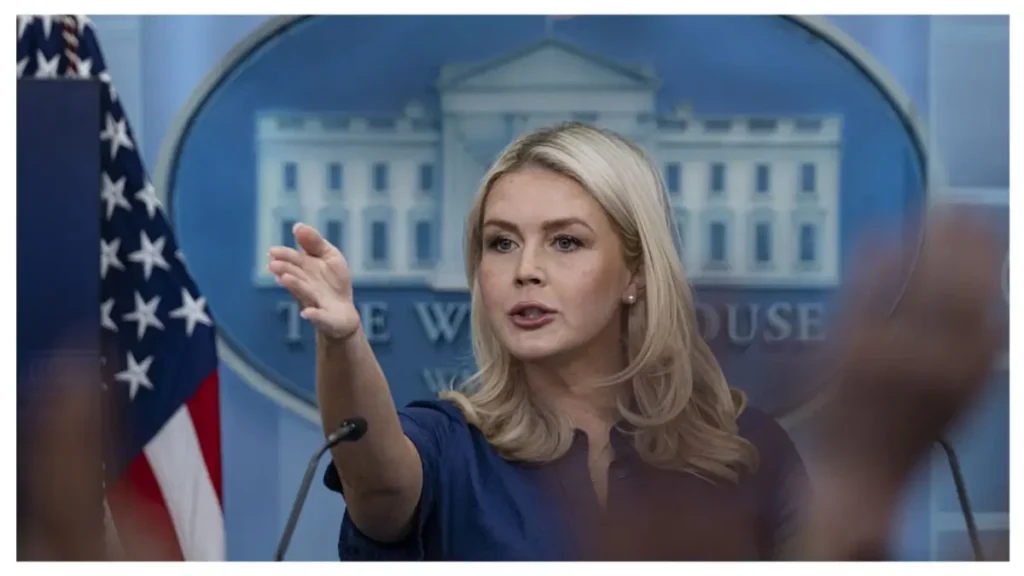
In a recent press briefing, White House Press Secretary Karoline Leavitt found herself on the receiving end of an incisive question from a bold reporter. Known for her rapid-fire responses and unwavering defense of the administration, Leavitt has crafted an image of composure and confidence. But when pressed about a particularly controversial policy, her guard slipped, revealing the strain that comes with toeing the party line. The reporter spotted her vulnerability and capitalized, asking a question that immediately shifted the room’s energy. It was a moment where the dynamics of power shifted, and Leavitt’s response was less than graceful, leading her to make what many consider an absurd move. The incident not only showcased the high-stakes environment of political communication but also highlighted the precarious balance that figures like Leavitt must maintain between loyalty to the administration and public accountability.
As the press briefing unfolded, it became clear that Leavitt’s usual poise had faltered. The reporter’s question cut deep, and for a moment, you could see her recalibrating her thoughts in real time. The atmosphere in the room crackled with anticipation, as everyone awaited how she would navigate this sudden turn of events. Instead of addressing the inquiry with her trademark confidence, she resorted to a defensive maneuver that only seemed to exacerbate the situation. In an attempt to regain control, Leavitt delivered a response that was both convoluted and dismissive, taking the brunt of criticism from both her colleagues and those in the press. It painted a vivid picture of the intense pressure faced by political spokespersons, especially when they encounter unexpected challenges to their narratives.
This incident underlines the broader theme of accountability in politics, particularly concerning the voices that represent the ruling party. Leavitt’s slip reminds us that beneath the polished exteriors of press secretaries lies the same vulnerability we all share. As the political landscape becomes increasingly polarized, the burden of defending controversial policies can lead to cracks in even the most stoic of faces. Leavitt may be a defender of the administration, but on that day, she became a reminder of the human element embedded within political discourse. The press is not just there to listen; they are watchers of the game, ready to expose when the players falter.
As we look ahead, this moment serves as a lesson for anyone in the political arena: staying true to your message while remaining open to tough questions is a balancing act fraught with challenges. In a world where information moves at lightning speed and scrutiny is relentless, every word counts. For Leavitt, this incident may serve as a wake-up call, a reminder that the pressure cooker of political life is unforgiving, and the line between eloquence and absurdity can sometimes blur with just one question. As the press continues to hold power accountable, one must wonder how this experience will shape Leavitt’s future interactions with the media.
About The Author