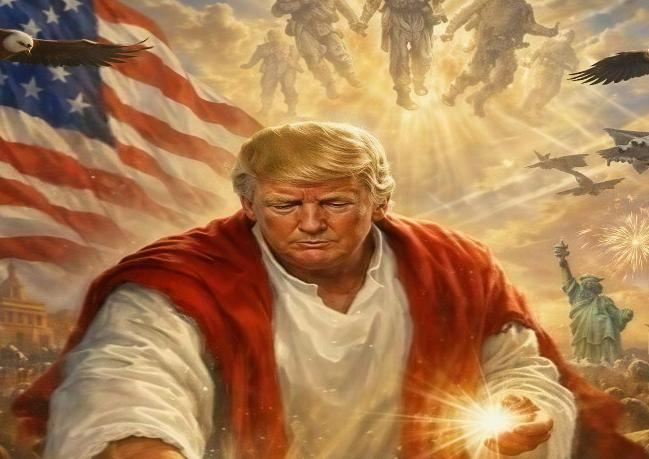
In recent years, we have witnessed a troubling convergence of faith and politics that demands our attention. As we analyze the landscape, we must confront an uncomfortable truth: for many, patriotism has morphed into a brand of faith that comes dangerously close to idolatry. This alarming trend is not merely about disagreements over policies or party lines; it’s a complete surrender of spiritual integrity cloaked in the guise of loyalty. As segments of American Christianity rally behind leaders whose actions directly contradict the core tenets of empathy, justice, and love—values that resonate deeply within the Black community—we find ourselves standing at a moral crossroads.
We are reminded that faith without discernment can lead to willful blindness. The outpouring of unwavering support for a presidency that embodies divisive rhetoric, discriminatory policies, and a blatant disregard for human dignity raises serious questions. Are we witnessing a crisis of faith or simply a crisis of moral clarity? In an era where preachers seem more inclined to justify a political agenda than to challenge their congregations to act with righteousness, it becomes imperative for us to stand up and speak out. Silence is complicity, and we can no longer afford to stay mute in the face of spiritual surrender.
The danger lies in the normalization of corrupt leadership as a reflection of divine favor. When religious leaders endorse a brand of Christianity that aligns with power over principle, we must ask ourselves what faith truly looks like. Does it reside in the applause of a crowd or in the quiet determination to uplift the marginalized? In this context, we are called to remember that faith should not be an instrument of oppression but a catalyst for liberation.
As we engage with this reality, we must uplift voices that challenge the status quo and remind us of the true essence of faith—love, compassion, and justice for all. It’s a clarion call for believers to reclaim the narrative of faith as a force for good, not a tool for politics. Let us strive to ensure that our spiritual journeys are framed by a commitment to justice, not a blind allegiance to power, and stand firm against the erosion of our values in these chaotic times.
About The Author