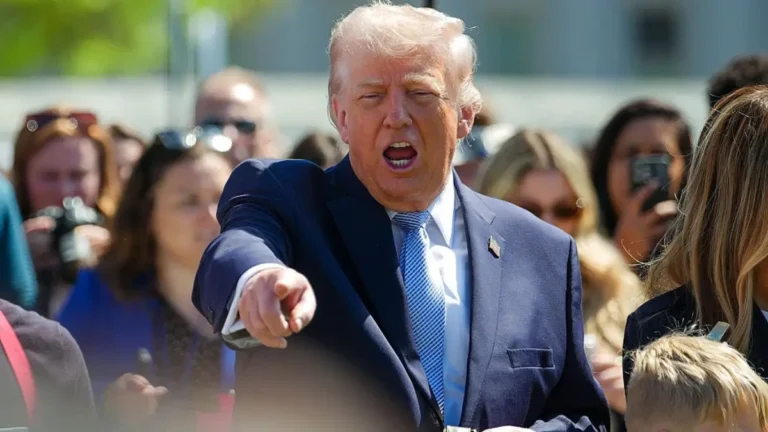
In an unexpected twist during a recent Fox News interview, former President Donald Trump took a simple question about energy policy and transformed it into a long-winded soliloquy about himself. What was intended to be a discussion on the global oil crisis quickly morphed into a self-congratulatory narrative that seemed more suited for a late-night comedy skit than a serious policy conversation. His tendency to stray off script has become a hallmark of his public speaking, but this latest escapade had people wondering if he was even aware of the topic at hand.
Instead of addressing the pressing issues surrounding energy consumption and policy, Trump ramblingly recounted his own achievements, boasting about how his administration supposedly set the stage for energy independence. As he continued to speak, the bewilderment on the faces of viewers became palpable. The absurdity of the situation was hard to ignore: here was a former president attempting to turn a grave global concern into an impromptu pep talk about his own legacy. It was a surreal moment that felt like it belonged in a sketch on Saturday Night Live rather than a serious national broadcast.
Trump’s ability to pivot discussions to center around his persona raises questions about his grasp on the realities of governance. While he can certainly capture attention, the substance of his remarks often gets lost in the theatrics. At a time when people are grappling with rising oil prices and energy shortages, the focus should be on solutions and strategic policy discussions—not on a self-directed victory lap. Yet, somehow, Trump managed to not only miss the point, but exacerbate the situation with his extended monologue.
In an era where political discourse is increasingly chaotic, one has to wonder if there’s a method to his madness or if he’s just simply unmoored from the issues that matter. As viewers tried to process the bewildering comments, it was clear that this wasn’t just another off-the-cuff speech; it felt like a masterclass in how to derail a conversation. For many, this is a reminder that politics is as much about perception as it is about policy. The real question for the American public is whether they’ll continue to accept this kind of entertainment masquerading as leadership.
About The Author