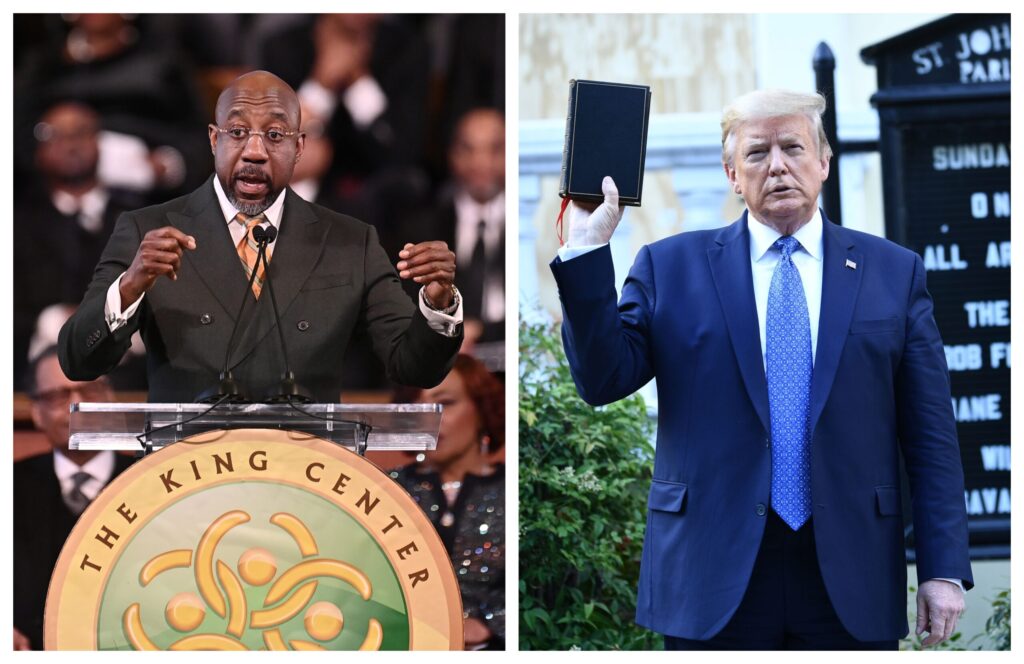
In an exclusive interview with The Root, Senator Raphael Warnock offered sharp criticism of how Donald Trump has co-opted the message of Christianity for political gain. Warnock, a pastor and a prominent voice in the Black community, described Trump’s version of Christianity as a distortion that prioritizes power and celebrity over compassion and community care. He stated, “In Donald Trump’s White House, Jesus is a victim of identity theft,” highlighting how the former president’s actions often contradict the core tenets of faith that emphasize love and service to others.
Warnock’s remarks come at a time when the intersection of faith and politics has become increasingly contentious. He argues that the manipulation of Christian doctrine to fit a political agenda undermines the authenticity of the faith and alienates those who seek genuine spiritual guidance. The senator pointed out that true Christianity calls for justice and equity, a message that has been obscured in the political arena.
The senator’s perspective is particularly relevant as the country grapples with issues of social justice and equality. For many in the Black community, the church has historically been a sanctuary and a source of strength, yet the commercialization of Christianity threatens to dilute its prophetic voice. Warnock’s commentary serves as a reminder of the responsibility that comes with faith, urging believers to remain vigilant against any attempts to exploit their beliefs for partisan purposes.
In this moment of reflection and challenge, Warnock’s insights encourage a return to the roots of Christian teaching, inviting people of faith to engage in the important work of social justice while rejecting the hollow rhetoric that often permeates political discourse. As the country prepares for another election cycle, his call to action resonates deeply: the integrity of faith must not be compromised for the sake of political expediency. The conversation around faith’s role in politics continues to evolve, and leaders like Warnock are crucial in steering it towards a more equitable and just future.
About The Author