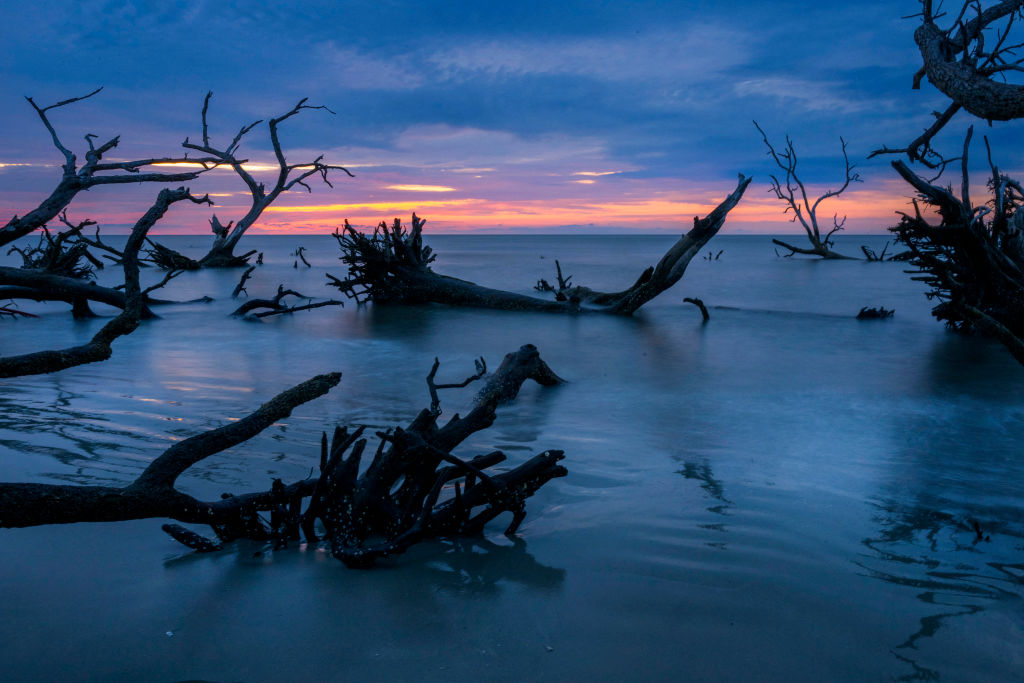
Driftwood sits just off the shoreline on a boneyard beach, a popular term for the weathered remains of shoreline trees that have fallen from an eroding maritime forest due to climate change, at Hunting Island State Park in St Helena, South Carolina, on July 10, 2023. Isolated on islands scattered along the coast, ancestors of those in the Gullah Geechee community relied on the land and sea. They created their own culture, fed by their African heritage, and even developed their own Creole language. Hundreds of thousands of people are today part of the community -- which is threatened by climate change, gentrification, and real estate developers circling like hawks. (Photo by Jim WATSON / AFP) (Photo by JIM WATSON/AFP via Getty Images)
Nestled along the South Carolina coast, Hilton Head Island is not just a paradise for vacationers; it’s also home to the resilient Gullah Geechee community. This group, descendants of enslaved Africans, has tirelessly preserved their unique culture, language, and traditions for generations. However, the community now finds itself at a crossroads as critical conversations about land use and development unfold without their input. The Legal Defense Fund has spotlighted the alarming reality that the voices of these long-standing residents are being sidelined in plans that could affect their very existence.
For centuries, the Gullah Geechee people have cultivated a rich tapestry of culture, infused with African heritage and shaped by their experiences in America. Their crafts, music, and culinary traditions offer a glimpse into a world that is both deeply rooted and vibrantly alive. Yet, as the island’s popularity surges, so does the threat of gentrification and the erasure of their historical contributions. The ongoing discussions around land management are critical, as they directly impact the preservation of the community’s legacy and the safeguarding of their ancestral lands.
Many community members express growing frustration over feeling invisible in decisions that will ultimately affect their homes and future. The lack of representation in these discussions is more than just a local issue; it reflects a broader trend of marginalized communities being overlooked in the face of development. Activists and community leaders are calling for transparency and inclusion, urging local officials to recognize the Gullah Geechee’s rightful stake in these conversations. These calls for justice are not only about land; they are about identity, heritage, and the right to exist on their terms.
As the Gullah Geechee community stands firm in its fight to be heard, it serves as a powerful reminder of the importance of preserving cultural heritage amid change. This ongoing struggle is emblematic of the fight for civil rights, equity, and a voice in a society that too often forgets the stories of its most vulnerable populations. As Hilton Head Island continues to evolve, we must ensure that the narrative includes the voices of those who have been there all along—the Gullah Geechee community, guardians of a legacy that deserves to be celebrated, not silenced.
About The Author