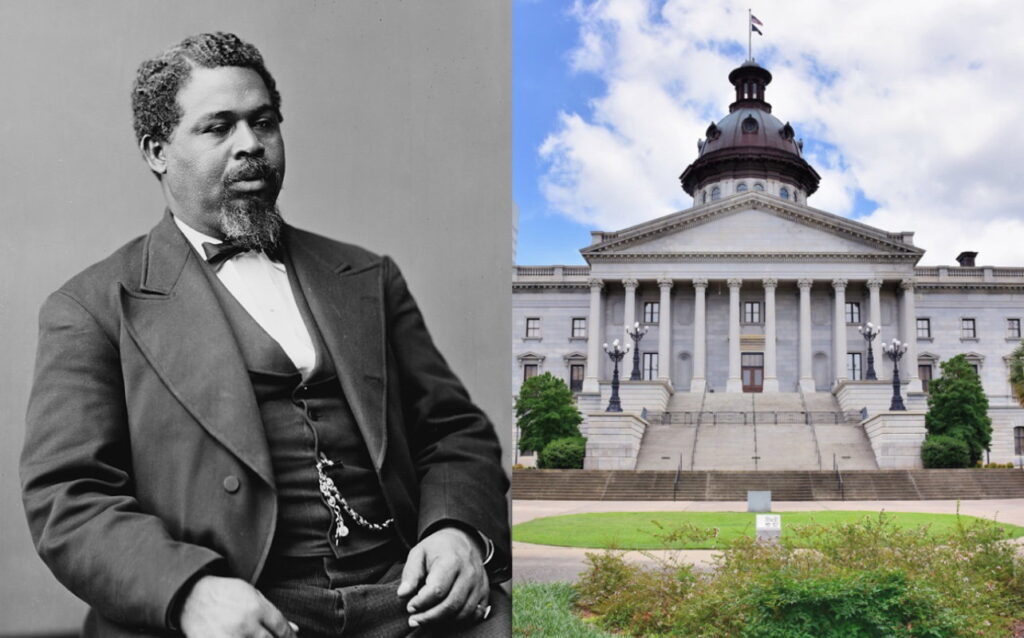
In a historic move, South Carolina is set to honor Robert Smalls, a remarkable civil rights figure and Gullah Geechee hero, by erecting the state’s first individual statue of an African American at the Statehouse in Columbia. Smalls, born into slavery in 1839, became a symbol of bravery and resilience during the Civil War when he famously commandeered a Confederate ship, the Planter, to freedom for himself and fellow enslaved people. His actions not only showcased his courage but also highlighted the pivotal role that Black individuals played in shaping American history.
The statue, which will stand proudly on the Statehouse lawn, is a poignant reminder of Smalls’ extraordinary life and contributions to both South Carolina and the nation. After escaping to freedom, Smalls went on to serve in the South Carolina legislature, fight for the rights of freedmen during Reconstruction, and advocate for education and civil rights. His legacy is a testament to the indomitable spirit of the Gullah Geechee people and their rich cultural heritage, which has often been overlooked in the broader narrative of American history.
The decision to place a statue of Smalls at the heart of the state’s political landscape underscores a significant shift in how South Carolina acknowledges its past. For generations, the stories of Black heroes like Smalls have been marginalized, but this honor is a step towards reclaiming that narrative and recognizing the contributions of Black South Carolinians. As the state prepares for the unveiling, it is not just a celebration of one man’s life but also a moment of reflection on the struggle for justice and equality that continues today.
The statue will serve as a beacon of hope and inspiration for future generations, reminding them of the power of resilience and determination in the face of oppression. As the Gullah Geechee community continues to thrive and share their rich cultural traditions, Robert Smalls’ legacy will undoubtedly stand as a guiding light, encouraging all to honor those who fought for freedom and equality. Robert Smalls’ story is a crucial part of the fabric of American history; it is time that it is celebrated in a manner befitting his extraordinary legacy.
In a time when the conversation about racial equity and representation is more critical than ever, South Carolina’s commitment to honoring Robert Smalls is a resounding call to action. It invites us all to remember and celebrate the achievements of Black leaders who have paved the way for the rights and freedoms we enjoy today, ensuring that their stories are not forgotten in the annals of history.
About The Author