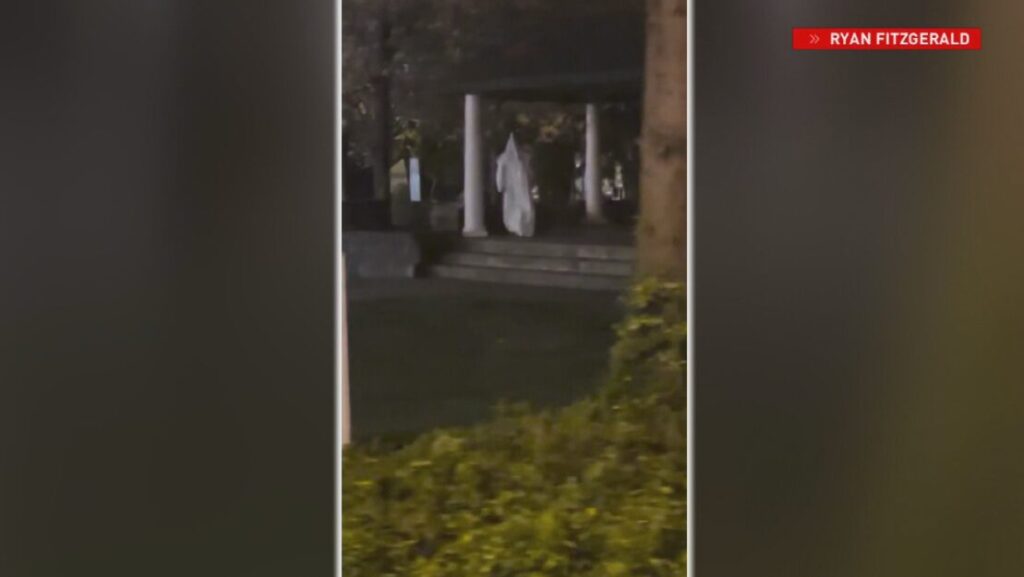
A chilling scene unfolded in a Rhode Island town as a viral video captured a hooded figure strolling through the community, causing alarm and unrest among residents. The figure, clad in what appeared to be a white robe reminiscent of Klan attire, ignited a flurry of emotions and conversations around the resurgence of hate symbols in public spaces. With racial tensions still significant in many parts of the country, this sighting feels particularly timely and troubling.
Local citizens have expressed outrage and confusion over the incident, with many taking to social media to voice their concerns. As one local resident aptly put it, “That’s straight up Klan.” The sentiment resonates with a broader cultural awareness, as images of hate groups continue to surface in the American landscape, forcing communities to confront both historical and present-day racism. For people of color, encountering such provocative imagery isn’t just a fleeting moment of discomfort; it’s a painful reminder of a history that many would rather forget but cannot afford to ignore.
The incident raises critical questions about community safety and the responsibility of local authorities to address such acts of hate. It serves as a wake-up call for residents and lawmakers alike to engage in difficult dialogues about racism and its manifestations in our society. Understanding the past helps illuminate the present, and it underscores the importance of vigilance against the normalization of hate.
As the video circulates and discussions mount, it’s crucial for the community to come together, not just to condemn the actions of one individual but to reaffirm their commitment to inclusivity and justice. The time has come for Rhode Island—and indeed, the nation—to stand united against symbols of hate and ensure that all voices are heard and respected. In doing so, communities can not only confront hate but also foster a legacy of love and acceptance that can drown out the whispers of division.
About The Author