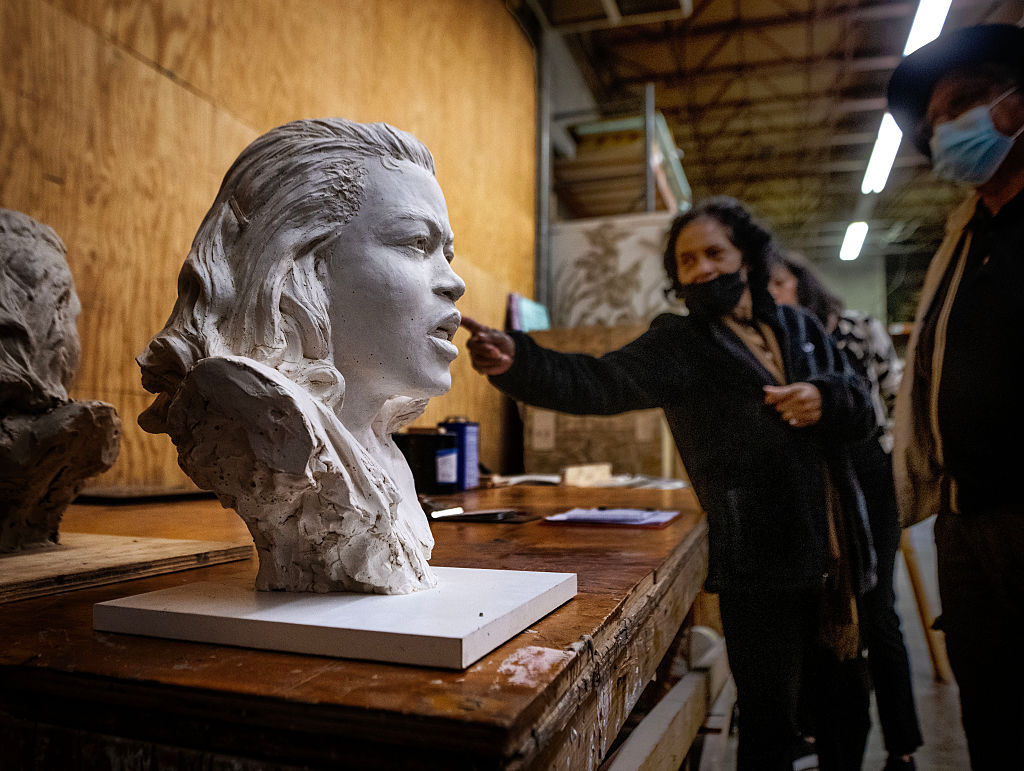
On December 16, 2022, history was made as a statue honoring Barbara Rose Johns was unveiled in the U.S. Capitol, a powerful testament to her legacy as a teenage activist who fought for educational equality. In 1951, at just 16 years old, Johns led a courageous walkout at the all-Black Robert R. Moton High School in Farmville, Virginia, protesting the inadequate and deplorable conditions that her school endured under segregation. This single act of defiance became a pivotal moment in the struggle against racial injustice, ultimately contributing to the landmark Supreme Court case Brown v. Board of Education, which declared state laws establishing separate public schools for Black and white students unconstitutional.
The unveiling of Johns’ statue signifies a profound shift in how we remember and honor the figures of our past. For too long, statues of Confederate generals and symbols of oppression have dominated public spaces, overshadowing the stories of those who bravely fought against injustice. With this installation, Johns’ legacy takes its rightful place among the heroes of civil rights, shedding light on the resilience and fortitude of a young woman who sparked a movement. The statue is not merely a tribute to her bravery but a celebration of the youth who have always been at the forefront of social change, reminding us that activism knows no age.
As we reflect on the significance of this moment, it’s important to recognize the wider implications of honoring figures like Barbara Rose Johns in the heart of American democracy. Her story is a reminder that systemic change often begins with the voices of the young and disenfranchised. It encourages us to continue the fight for equality and to honor the past while pushing for a more inclusive future. By replacing a statue of Robert E. Lee, a symbol of oppression and division, with that of Johns, the Capitol now stands as a space that acknowledges not just the struggles but also the victories of those who dared to dream of a better world.
Barbara Rose Johns’ statue is a beacon of hope and empowerment, particularly for future generations who may feel marginalized in their fight for justice. It serves as a call to action for young activists today, reminding them that change is possible when courage meets conviction. As we celebrate her legacy, let us all commit to standing up against inequality, just as she did all those years ago. The monument to Johns is not just her story; it is our shared history of resilience and determination in the quest for equity and justice for all.
About The Author