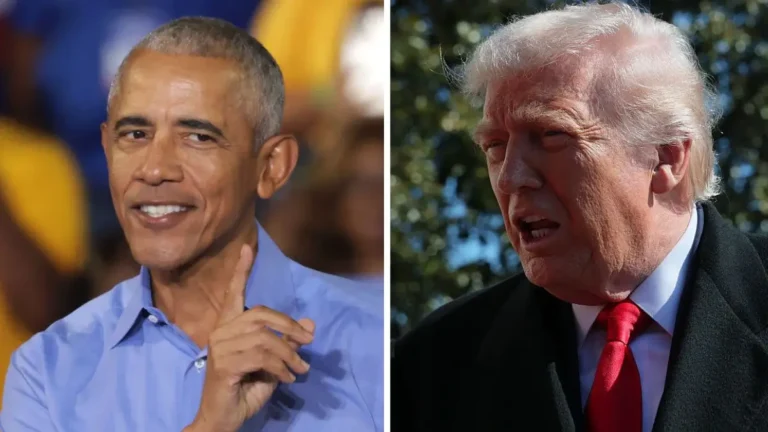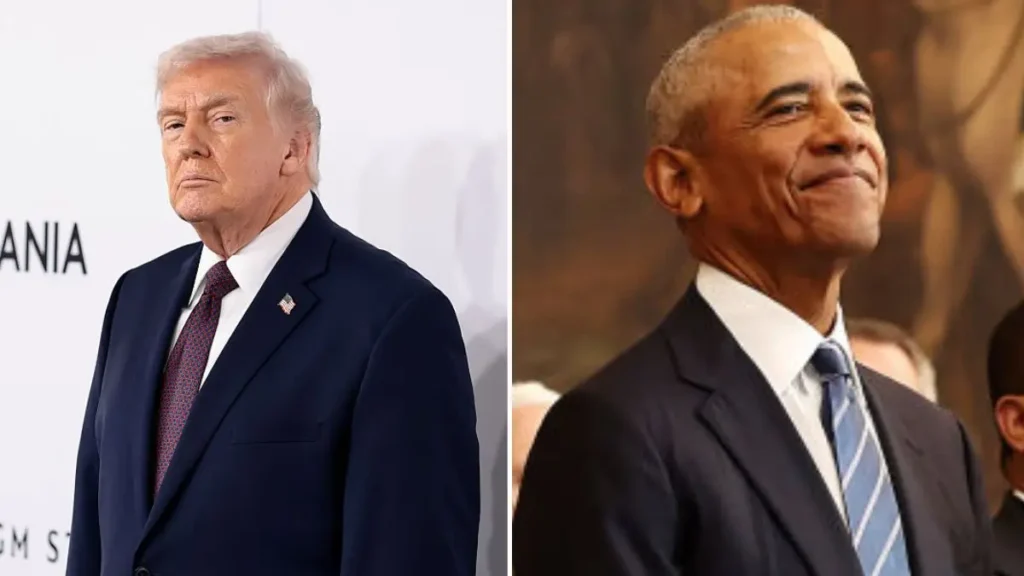
In a dizzying political landscape that often feels like a reality show gone awry, President Donald Trump’s second term has been marked by an extensive rebranding effort. The latest episode in this saga involves the White House scrambling to address the fallout from controversial policies and remarks, while simultaneously attempting to reshape narratives that have been in the works since his initial presidency. In a twist that many saw coming, it appears that beneath the surface of these changes lies a familiar target: former President Barack Obama.
The White House’s attempt to clarify its stance on certain issues has led to some eyebrow-raising statements from aides and spokespeople, inadvertently confirming suspicions that much of the rhetoric was indeed aimed at undermining Obama’s legacy. The administration’s insistence that their policies are uniquely American and a break from the past feels increasingly hollow, especially when one line in the recent press briefing seems to echo sentiments that were pointedly directed at Obama during Trump’s first term. It’s as if they took a page out of a playbook that was written in the shadows of the White House, one that thrives on division and distraction.
As Trump seeks to erase the memory of his predecessor from the American consciousness, it’s vital to recognize the broader implications of this strategy. By continuously framing policies against the backdrop of Obama’s presidency, the current administration not only diminishes the achievements of the past but also risks alienating a significant portion of the electorate that appreciates those advancements. The incessant need to vilify Obama, while attempting to reestablish a “new” vision for America, highlights a dangerous political game that feeds into racial division and historical amnesia.
For many observers, the theatrics unfolding in Washington can feel hella ridiculous. The rush to sanitize Trump’s track record, while simultaneously casting Obama as the villain, serves as a reminder of how history can be rewritten by those in power. The one-liners and sound bites may play well at rallies, but they don’t hold up under the scrutiny of those who remember the progress made during Obama’s tenure. In this ongoing saga, the stakes are high, and the need for accountability in politics has never been clearer. As the narrative continues to unfold, it becomes increasingly apparent that America’s political landscape is still very much defined by the legacies of the past, whether those in power like it or not.
About The Author