By Malik Carter, PowerVault Staff
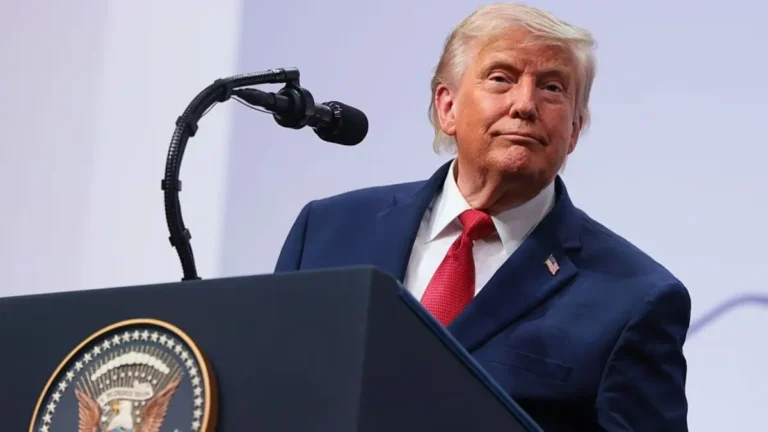
In a move reminiscent of a bad reality show plot twist, Donald Trump recently decided to take shots from the sidelines as Taylor Swift and Travis Kelce’s burgeoning romance took center stage in New York City. The media frenzy surrounding the couple, with their romantic escapades dominating headlines, drew Trump’s ire. He felt compelled to remind everyone who he believes still runs New York, tapping into the White House’s clout for a petty social media jab. By inserting himself into this narrative, Trump sought to overshadow a moment meant for joy, reducing it to mere fodder for his personal vendetta against the cultural icons of today.
To understand the context of this spectacle, it’s crucial to reflect on the symbolic weight that celebrities like Swift and Kelce carry in contemporary America. Swift, a celebrated artist whose influence transcends music, and Kelce, a top-tier athlete, represent a generation that reshapes cultural conversations. Their visibility in New York City is not just about romance; it’s about the intersection of pop culture, sports, and media in a landscape that often displaces traditional power structures. However, Trump’s antics reveal a deeper anxiety lurking among the old guard. His need to validate his status by attempting to dim the glow of current stars suggests that he feels threatened by their cultural capital.
From a cultural perspective, Trump’s actions are a stark reminder of how easily the old powers can try to reclaim agency through a spectacle of divisive rhetoric. This isn’t just about a celebrity couple; it’s an illustration of how traditional politics often fails to grasp the pulse of modern society. Swift and Kelce symbolize a new wave of influence that celebrates authenticity, joy, and unfiltered expression, while Trump represents a bygone era clinging to remnants of authority and control. This clash isn’t just a trivial squabble; it underscores the broader conflicts within our society as new narratives emerge that challenge outdated paradigms.
One can’t help but draw parallels to similar instances in history where marginalized voices have reclaimed narratives only to have them co-opted or attacked by those in power. Think back to the Civil Rights Movement: while leaders like Martin Luther King Jr. and Malcolm X fought for equality and justice, there were always those in power eager to undermine their progress and silence their messages. Much like Trump’s attempts to insert himself into the current narrative, history shows us that fear of losing influence often incites desperate measures from the old guard.
As we look ahead, it’s essential to keep a watchful eye on how this dynamic continues to unfold. Will the cultural icons of today rise above these petty distractions, or will they become embroiled in the kind of noise that serves only to benefit those who thrive on division? The music and sports industries are at a transformative crossroads, and the potential for a new wave of storytellers and innovators is ripe for the taking. The future belongs to those who not only create but also uplift, and it’s this very essence that will ultimately determine who truly runs New York—and indeed, the cultural narrative of America.
About The Author