By Tanya Brooks, PowerVault Staff
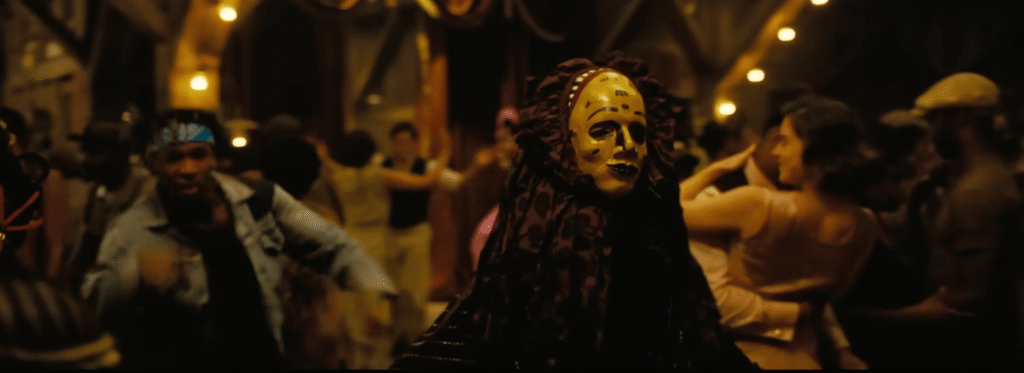
In a bold cinematic moment, the Surreal Montage sequence in the film ‘Sinners’ dives headfirst into the vivid and often chaotic tapestry of Black music and dance, forging a vital connection between our ancestral roots and contemporary expressions. Unlike your typical historical recount, this montage flows like memory itself—sometimes fragmented, yet always pulsating with life, color, and emotion. It’s a stunning reminder of how our past is woven into the very fabric of our present, and in many ways, it’s a call to action for the current generation to reclaim and celebrate that legacy.
To understand the significance of this moment, we must recognize that Black music has always been a powerful vessel for storytelling, resistance, and healing. From the African rhythms that birthed spirituals and blues to the modern beats of hip-hop that challenge systemic oppression today, this tradition is imbued with a spirit of survival. ‘Sinners’ does more than just pay homage—it invites viewers to experience the nonlinear journey of Black culture, where every dance move and musical note is a marker of our collective history. This sequence encapsulates a vital truth: our cultural evolution is not a straight line, but a complex, beautiful dance of influences and reactions.
The implications for our community are profound. In an era where the commercialization of Black art often threatens to dilute its raw power, works like ‘Sinners’ serve as a stark reminder of our roots. It challenges creators to dig deeper into their heritage, to understand the weight of the rhythms they produce and the stories they tell. As we navigate a landscape often clouded by appropriation and superficiality, the film’s exploration of memory emphasizes the importance of authenticity in our creative expressions. It’s an invitation to embrace our narratives, to wear our history as armor against those who would attempt to rewrite it.
Looking back, this moment parallels the impact of music videos in the late ‘80s and early ‘90s, where artists like Spike Lee and the emergence of the New Jack Swing movement celebrated Black identity and culture in ways that were unapologetically bold and resonant. Just as those creative forces brought Black storytelling to the forefront, ‘Sinners’ reaffirms the potency of artistic expression as both a mirror and a blueprint for societal change. The magic lies in its ability to transcend mere entertainment, igniting a spark that compels audiences to reflect on their place within this continuum.
As we look toward the future, it’s essential to continue this dialogue about heritage and artistry. The success of ‘Sinners’ could pave the way for more projects that embrace the complexity of Black narratives, challenging creators across genres to push boundaries and tell stories that are authentically theirs. In a world that often seeks to define us through a narrow lens, it is vital that we keep celebrating the rich, textured history of Black music and dance as a source of inspiration and empowerment. The conversation has only just begun, and we must ensure that it continues to evolve, inviting new voices to join the chorus without losing sight of where it all began.
About The Author