By Marcus Ellison, PowerVault Staff
In a world where every move is scrutinized, especially for those born into legacy, Charlie Woods found himself in the spotlight for all the wrong reasons. A moment of frustration at the 2026 U.S. Junior Amateur Championship has caught everyone’s attention, not just for the event itself but what it signifies for those who carry the weight of a famous last name.
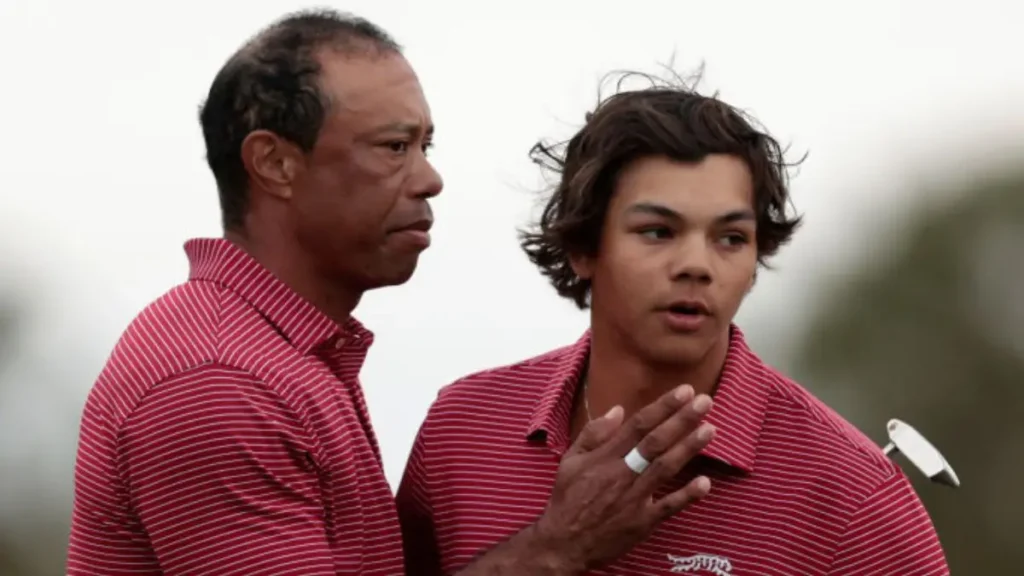
Charlie Woods, son of the legendary Tiger Woods, was in a pivotal playoff situation when a camera shutter broke his focus, leading to an outburst that included an F-bomb and a visible kick of his club. It’s a scene reminiscent of the raw emotions that Tiger himself has occasionally shown on the green. The younger Woods then directed his frustration at a spectator, illustrating the intense pressure he’s under to live up to an almost mythical family name.
This incident speaks volumes about the pressures faced by young athletes in the public eye. Charlie, at just 16, is already experiencing the struggles of balancing personal ambitions with the expectations of being a Woods. This isn’t just a story about a young golfer losing his cool; it’s a cultural moment that echoes through the halls of sports history, especially within Black culture, where the intersections of talent, legacy, and scrutiny are ever-present.
In the same way that Baby Blue addressed the Combs brothers, young stars like Charlie have to navigate a world where their family name is both a blessing and a burden. This isn’t just about golf. The outburst highlights the struggle of young Black athletes who stand at the crossroads of personal development and public pressure. Much like the cultural renaissance we’re witnessing in various art forms, as seen with the resurgence of hip-hop’s golden age in new albums from Rakim, Masta Killa, and Kurupt which links back to the roots of the culture, Charlie’s moment is a reminder that the past always informs the present.
Charlie Woods’ presence on the course is a symbol of cultural evolution, much like how David Jonsson’s role as the new Black Panther represents a shift in narrative and representation. Charlie’s actions, raw and unfiltered, are a testament to the challenges of growing up in the limelight but also to the strength it takes to continue forging one’s own path in the shadows of giants.
Looking ahead, the key question is how Charlie will respond to this moment. With the public eye watching closely, every step he takes from here will be analyzed. Will he emerge stronger, with a renewed focus and resolve, much like his father’s comeback stories that captivated the world? Or will the pressures of legacy prove too heavy to bear?
For the culture, Charlie’s journey is more than just a sports story. It’s a narrative of resilience, a topic deeply woven into the fabric of Black culture, especially when considering how figures like Miles Minnick’s journey in hip-hop shines a light on the next generation’s potential. Charlie’s next moves will not only shape his career but will also serve as a beacon for young athletes dealing with similar pressures.
The world will be watching, analyzing, and critiquing, as it always does. But in the end, this moment will be about whether Charlie Woods can step out of his father’s shadow and into his own spotlight. Whatever the outcome, his story will continue to resonate within the culture, reminding us all of the intricate dance between legacy and individuality.
About The Author