By Marcus Ellison, PowerVault Staff
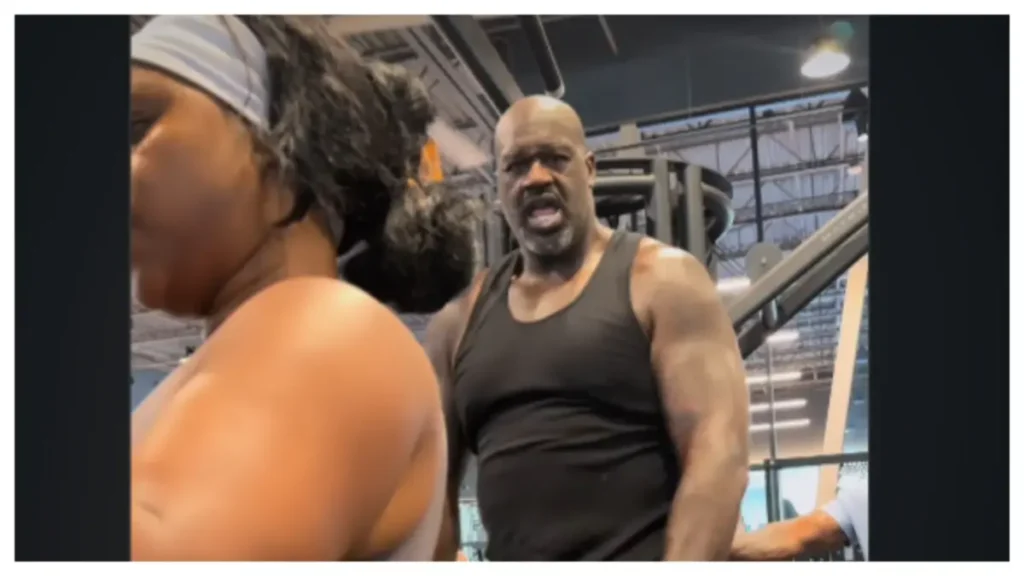
Picture this: You’re at the gym, earbuds in, vibing to your favorite playlist, determined to crush your workout. Suddenly, a towering figure steps into your space, and it’s none other than Shaquille O’Neal, larger than life and full of that signature Shaq flair. The unexpected encounter seems fun at first, until the social media universe labels the NBA legend a ‘creep’ for his antics. It’s a strange situation that’s unfolded, blending humor with a hint of discomfort, and it has the culture talking.
Shaq’s larger-than-life personality has always been a magnet—for fans, media, and sometimes controversy. The recent incident at the gym, which went viral faster than a TikTok dance challenge, has people divided. On one side, you’ve got fans who see Shaq’s behavior as playful and harmless, the kind of stunt that’s classic Shaq. Yet, there’s another side, perhaps more critical, that interprets the gesture as invasive, raising questions about personal boundaries, even for a celebrity of his magnitude.
It’s not the first time the celebrity world has blurred the lines between personal and public space. Remember when K. Michelle accused Shaboozey of ghosting her and not liking Black women? That episode also revealed the power dynamics and expectations at play when fame enters the room. Shaq’s gym surprise, while different in context, similarly exposes the delicate dance between celebrity presence and personal space.
But why does this matter for our culture? For one, it taps into the broader conversation about how we perceive and react to celebrity actions. In Black culture, where figures like Shaq are not just athletes but icons, how they conduct themselves in public can become a reflection of cultural norms and shifts. This incident urges us to consider how much leeway we give our idols and whether their status shields them from scrutiny that others might face.
It also speaks to the changing dynamics of personal boundaries in the era of digital virality. Today, one misstep caught on camera can ignite a social media firestorm, as Shaq’s gym incident did. In a world where every action can be recorded and shared, there is an underlying question: How do we balance public persona with personal respect? Celebrities, despite their larger-than-life images, are often expected to tread lightly, lest they face the wrath of online critics.
Historically, the scrutiny of Black celebrities has been intense and often unforgiving. From the days of Muhammad Ali’s outspoken activism to the modern pressures faced by artists like Cardi B, whose success with four diamond songs has been dissected from every angle, the cultural spotlight can be both a blessing and a burden. Shaq’s situation is a reminder of this duality, highlighting how the community grapples with holding its stars accountable while celebrating their achievements.
As we look forward, the incident with Shaq might just be a fleeting moment—or it could spark broader discussions about celebrity conduct and its implications. Will this change how athletes like Shaq engage with fans in public spaces? Or will it be merely a footnote in his legacy of entertainment? Only time will tell. But one thing’s certain: in a culture that thrives on connection and expression, these moments matter. They shape conversations, influence perceptions, and ultimately, they reflect back on the culture that holds them dear.
So what’s next? For Shaq, probably another playful moment in the public eye, because that’s just who he is. But for the rest of us, it’s a chance to keep the dialogue going about respect, boundaries, and the ever-evolving role of celebrity in our lives. After all, in a world that’s always watching, how we respond today sets the tone for the culture of tomorrow.
About The Author