2026 Midterms: Why the Surge of Poll Monitors Matters for Black Voters
By DeShawn Price, PowerVault Staff The 2026 midterms are shaping up to be a political battlefield, with thousands of poll monitors ready to deploy across the nation. These monitors aren't just there to observe; they'r...
Advertisement

By DeShawn Price, PowerVault Staff
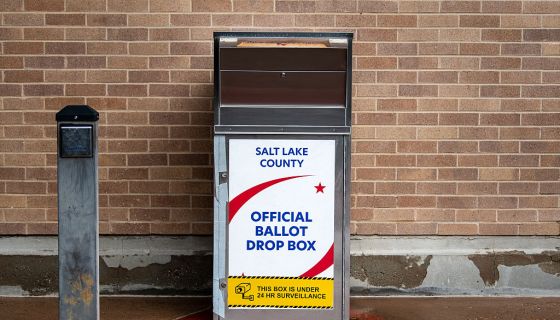
The 2026 midterms are shaping up to be a political battlefield, with thousands of poll monitors ready to deploy across the nation. These monitors aren't just there to observe; they're standing guard against a potential onslaught of voter suppression tactics that have threatened to undermine our democratic process. As reported by the Associated Press, both the Democrats and the Department of Justice are leading the charge, assembling a formidable force of thousands of poll monitors prepared to defend the sanctity of our elections. This mobilization reflects the gravity of the moment, as the nation braces for an election that could redefine the political scene and set a precedent for how future elections are conducted, especially in an era marked by increasing polarization and distrust.
The push for poll monitors comes as a direct response to the Department of Justice's plan to station at least 1,000 federal monitors at polling sites across the country. But it doesn’t stop there. Voting rights groups like Common Cause and the ACLU are teaming up with Democratic state parties and activist organizations, training an army of their own to counteract attempts to disenfranchise voters. Their mission is clear: protect the vote from interference and intimidation, particularly the kind that has targeted Black and marginalized communities in the past. This coordinated effort shows the commitment to safeguarding the electoral process, ensuring that every citizen, regardless of their background, can exercise their right to vote freely and without fear of retribution or obstruction.
In a statement to the AP, Jane Kleeb, vice chair of the DNC, emphasized the unprecedented nature of these preparations. We're dealing with a president who has openly discussed the possibility of seizing ballots and deploying ICE agents to polling stations, actions that would have been unimaginable in a functioning democracy. The mere thought of such actions highlights the absurd state of American politics today, where the rule of law and democratic norms are under siege. She noted that these threats have forced election officials to conduct 'war game' scenarios, planning for disruptions that, just a few years ago, would have been unthinkable. This level of preparation is proof of the seriousness of the threats we face and the determination to protect the integrity of our elections.
For context, the 2026 midterms are not just another election cycle. Redistricting efforts threatened to make this one of the least competitive races in recent history, but the tides are shifting in ways few anticipated. Even traditionally red districts are now up for grabs, largely due to growing disillusionment with Donald Trump and his GOP allies, whose actions have alienated a significant portion of the electorate. The question isn't just about who will win, but whether the democratic process itself will be allowed to play out fairly. With voters increasingly skeptical of political manipulation, the stakes are higher than ever. Will the voices of the people be heard, or will they be drowned out by gerrymandering and voter suppression? This election may well decide the future of American democracy.
Trump's unpopularity is dragging his party down, and the GOP's unwillingness to distance itself from his dangerous rhetoric is alienating voters across the board. Even Texas, a bastion of Republican dominance for decades, finds itself potentially losing a Senate seat amid this turmoil, signaling a seismic shift in the political scene. This shifting scene has sparked concern that the Trump administration might once again attempt to meddle with the election outcome, casting doubt on the integrity of the results. The fear is palpable, as many worry that the same tactics used to undermine previous elections could be employed once more, threatening the core of our democratic institutions. Voters are watching closely, and the world is watching with them, waiting to see if America can rise to the occasion and uphold its democratic ideals.
This isn't the first time we've faced threats to our voting rights. The 1960s civil rights era saw activists fighting tooth and nail for the right to vote without fear, facing down violence and intimidation to secure the fundamental right to participate in democracy. Fast forward to the 2000s, and we witnessed the hanging chads in Florida, a fiasco that highlighted the vulnerability of our electoral system. The Voting Rights Act of 1965 was supposed to ensure our voices were heard, but its erosion has left many communities vulnerable to suppression once again. Yet, here we are, still fighting for the same rights our ancestors bled for. The parallels to history are striking, and they remind us that the fight is far from over. The struggle for voting rights is a continuous battle, demanding vigilance and resilience in the face of ongoing challenges.
Still, in the face of adversity, we rise, drawing strength from our history and determination to shape our future.
When a president threatens the sanctity of our vote, it's time to prepare for the worst.
When a president threatens the sanctity of our vote, it's time to prepare for the worst. The deployment of poll monitors, while unprecedented, is a necessary response to an administration that seems hell-bent on undermining the democratic process through intimidation and misinformation. These monitors are the frontline in the battle for fair representation, ensuring that disenfranchised communities can cast their votes without fear. They stand as a buffer against attempts to disenfranchise voters, acting as witnesses and advocates for fair play at the polls. In a political climate charged with tension and uncertainty, the presence of these monitors serves not only as a preventative measure but also as a symbol of our collective resolve to uphold the principles of democracy, no matter the challenges we face.
The ramifications of Trump's antics extend beyond the immediate election. They expose a deeper flaw within the GOP, a party that has become complicit in undermining democracy to maintain power, often at the expense of truth and integrity. This is more than about one man; it's about a system that has allowed fear-mongering and misinformation to take root, threatening to erode the very foundations of our democracy. If we don't address these issues now, we risk legitimizing a culture of deceit and manipulation that could have lasting repercussions on our political scene. The stakes are high, and the responsibility lies with us to demand accountability and transparency, to ensure that our democratic institutions remain strong and resilient in the face of such unprecedented challenges.
For Black voters, this election is a turning point, a chance to assert their power in a system that has historically tried to silence them. It's about more than the candidates on the ballot; it's about ensuring our voices are heard in a system that has long marginalized us and attempted to strip away our agency. The surge of poll monitors is both a shield and a symbol, proof of our resilience and our refusal to be sidelined. It represents a collective determination to defend our right to vote and to challenge a system that still views Black political power as a threat. As we head to the polls, we carry with us the legacy of those who fought before us, and we are determined to continue that fight for fair representation.
Advertisement
The underlying tensions of race, class, and power cannot be ignored. Black communities have long been targeted by voter suppression tactics, from gerrymandering that dilutes their voting power to voter ID laws that disproportionately affect them. These efforts to disenfranchise are not new, but they are increasingly bold and overt, emboldened by a political climate that often turns a blind eye to discrimination. As we approach the midterms, it's critical to recognize that these maneuvers are designed to dilute Black political power and maintain the status quo, preserving a system that privileges the few over the many. In response, we must remain vigilant and proactive, fighting to ensure that every vote is counted and every voice is heard in the ongoing struggle for equity and justice.
As the nation braces for the midterms, one thing is clear: the fight for a fair election is far from over. With poll monitors ready to hold the line, we must remain vigilant in our efforts to protect our democratic institutions. This is about more than an election, it's about protecting our future and ensuring that the principles of democracy remain intact. As the dust settles, we'll see if democracy truly prevails, or if we're left questioning the integrity of the process once again. The outcome of this election will have far-reaching implications, not just for the immediate political scene but for the very soul of the nation. It's a call to action for all of us to stand up and be counted, to demand that our voices be heard and that our votes be respected.