Alabama State vs Jackson State: Who Gets the Credit?
By Tanya Brooks, PowerVault Staff Alabama State beat Jackson State 20 to 13, turning a one point fourth quarter lead into a win built on defensive stops. The Hornets moved to 6 wins and 5 losses without producing the...
Advertisement

By Tanya Brooks, PowerVault Staff
Alabama State beat Jackson State 20 to 13, turning a one point fourth quarter lead into a win built on defensive stops. The Hornets moved to 6 wins and 5 losses without producing the kind of offensive finish that usually commands national attention. Their defense protected a shrinking advantage, and their kicking game supplied the final six points. Winning this way means accepting that the players carrying the afternoon might not be the ones featured on the poster. That deserves more than a passing mention beneath somebody else’s college football highlights. HBCU players should not need a celebrity coach, a viral celebration or an NFL projection to have their actual work taken seriously.
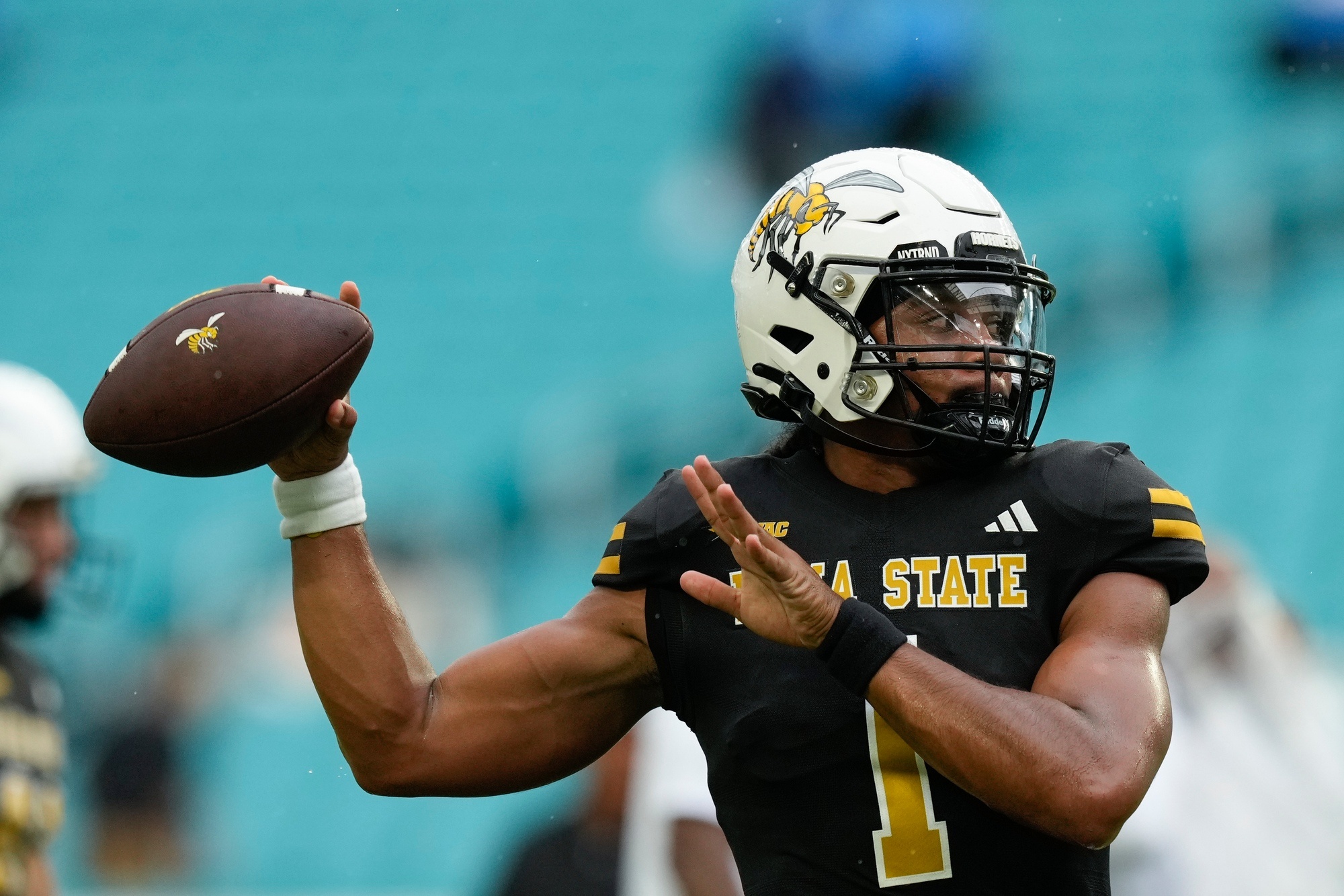
According to WSFA’s reporting from Montgomery, Alabama State established an early cushion, watched Jackson State nearly erase it, then answered when another empty possession could have changed the game. Quarterback Aaron Frye opened the scoring with a 39 yard touchdown run. Less than a minute later, the Hornets scored again through a defensive sequence that required multiple players to stay involved. Two touchdowns arrived quickly enough to suggest control without proving Alabama State could sustain it over four quarters. The early advantage mattered, but it did not settle anything. Jackson State spent the next two quarters making Alabama State defend every bit of it. The real test came after the easy assumption that this might become a comfortable afternoon had disappeared.
Jackson State receiver Jency Riley fumbled after a reception, and Zaquan Patterson recovered for Alabama State. Patterson returned the ball 30 yards before another fumble created a second scramble. Myles Richardson recovered in the end zone for the touchdown, putting the Hornets ahead 14 to 0 with 5:30 remaining in the first quarter. The important detail is the second recovery. A takeaway does not guarantee points, and a return does not excuse everybody else from finishing the play. Richardson’s involvement turned a broken sequence into a scoring possession. Credit cannot stop at the initial takeaway when possession becomes uncertain again. Richardson secured the payoff that Patterson’s return had made possible. The accompanying video follows the reporting on that early separation.
The video sits beside a scoring sequence that rewards attention beyond whoever first touched the football. Jackson State then supplied its own evidence of persistence. Jared Lockhart found Joanes Fortilien for a 2 yard touchdown on fourth down in the second quarter. Choosing to pursue seven points carried consequences against a defense already responsible for an Alabama State touchdown. Failure there would have left a substantial possession without points while Alabama State still held fourteen. The completion cut the deficit to 14 to 7. Ivaniciuc followed with a 22 yard field goal as the first half expired. Suddenly, Alabama State’s two touchdown cushion had become a four point advantage, and Jackson State had made the home team earn a different kind of victory.
Lockhart’s fumble on a third quarter keeper gave Alabama State another opening, with T’Marrion Phillips recovering. A missed 39 yard field goal left that opportunity unused. Ivaniciuc’s 25 yard field goal then brought Jackson State within 14 to 13 with 10:45 remaining. Alabama State answered with a lengthy possession and a 47 yard field goal at 5:17. That possession consumed more than five minutes, limiting the time Jackson State had to turn its comeback into a lead. Its defense forced a turnover on downs with 4:24 left, and a later 40 yard field goal supplied the final margin. Those details matter together: the Hornets recovered from a missed kick rather than letting it define their finish. A second accompanying video follows that decisive stretch.
That video accompanies the finish; the broader history explains why the names involved deserve space beyond one result. Jackson State’s football identity predates its recent celebrity spotlight. Walter Payton left the program for the Chicago Bears as the fourth selection in the 1975 NFL draft. Deion Sanders later brought national attention during his coaching tenure, including SWAC championships in 2021 and 2022. Those eras matter, but neither should become a condition for covering the players competing now. Alabama State also deserves recognition on its own terms, rather than serving as an obstacle in Jackson State’s story. Treating the Hornets as supporting characters would miss the central fact of this afternoon: their players made the decisions and recoveries that settled it. HBCU football loses depth when national interest follows a famous individual out the door instead of staying with the institutions.
The coverage problem starts when ordinary football excellence gets treated as insufficient entertainment.
Black athletes deserve coverage that recognizes competence before it demands a spectacle.
Black athletes deserve coverage that recognizes competence before it demands a spectacle. For Frye, Richardson, Patterson and Phillips, this game offered distinct evidence of contribution. One created offense with his legs. Others recovered loose footballs that changed possessions or produced points. None of that establishes a professional future, and pretending otherwise would cheapen the evaluation. It does establish a right to specific, serious attention. A college player’s performance has meaning now, not only if an NFL personnel department eventually decides it can use him. Players benefit when coverage explains what they did instead of merely announcing that their school won. Recruiters can evaluate film for themselves. Readers should still receive enough detail to understand why a player mattered, especially when the decisive work came away from the usual star positions.
The industry argument is about consistency, not charity. Major college programs receive endless discussion of situational football, special teams and how teams respond under pressure. HBCU teams deserve that same analytical effort without being packaged as inspirational exceptions. Alabama State missed a scoring chance after a takeaway, then later converted two field goals under tighter conditions. That is useful football material. So is the defense forcing Jackson State off the field after the lead reached four. That margin mattered because a field goal alone could no longer put Jackson State ahead, changing what its offense needed. Coverage choices also shape which athletes become familiar commercial faces. PVN’s discussion of Shai Gilgeous Alexander and Spotify touches a different level of that visibility economy. Familiarity has value long before a sponsor makes an offer.
Fans have responsibilities here, too. Supporting an HBCU program cannot mean demanding respect nationally while discussing its players only when they deliver a rivalry win or an embarrassing mistake. Riley’s fumble and Lockhart’s turnovers belong in the account. So do Jackson State’s fourth down touchdown and its push back into contention. Accountability gets stronger when it includes the whole performance rather than assigning one young player the role of villain. The same quarterback who lost possession also delivered the touchdown pass that helped keep Jackson State from being buried before halftime. Alabama State supporters can celebrate without pretending the offense solved every problem. Jackson State supporters can criticize the mistakes without erasing the response. A serious football community should be able to hold pride and disappointment in the same conversation.
Race and money shape the terms of that conversation even when no contract figure appears in the game report. Predominantly white institutions with powerful football brands can sell uneven victories as proof of depth or toughness. HBCUs too often must defend their overall legitimacy before anyone discusses the third quarter. That unequal burden lands on Black players and the schools developing them. It also diverts attention from the practical questions about investment, staffing and exposure that serious institutional analysis should pursue. The broader question of institutional opportunity also informs PVN’s examination of Alabama school report cards, although academic ratings and football results measure different things. Neither a scoreboard nor a rating explains every resource behind a result. Respect requires asking about those conditions without reducing Black institutions to what they lack.
Advertisement
Prairie View A&M comes to Alabama State next, giving the Hornets another home game and a practical test of what carries over. The defense has a finish worth building on. The offense still has reason to examine why a recovered fumble produced no points and why the early touchdowns were not followed by another. Jackson State, meanwhile, has clear mistakes to address without dismissing the effort that made the fourth quarter competitive. No sweeping verdict needs to be forced onto either roster. Watch the next possession, the next recovery and the next response. These players have already earned more than a glance.
More from PowerVault Network: