
Chrisean Rock Punches Adam22: Could a Lawsuit Follow?
By Tanya Brooks, PowerVault Staff Chrisean Rock punched Adam22 after his parenting joke at Wild ’N Out Live, and the No Jumper host says he is considering legal action. The confrontation turned a roast segment into so...
Advertisement

By Tanya Brooks, PowerVault Staff
Chrisean Rock punched Adam22 after his parenting joke at Wild ’N Out Live, and the No Jumper host says he is considering legal action. The confrontation turned a roast segment into something a comedy format cannot simply laugh away. Adam says his jaw was swollen afterward. He also says their friction over his comments about her parenting predates the show. Rock’s participation in professional boxing is another detail Adam cited in explaining why he might take the dispute further. Those details matter, but so does the distinction between explaining why somebody reacted and excusing what they did. A microphone does not erase consequences. Neither does being the target of a personal joke.
According to XXL’s reporting on the confrontation, the incident happened Thursday, Nov. 12, at Intuit Dome in Inglewood, California. Nick Cannon’s Wild ’N Out Live: The Next Generation tour was running its familiar roast battle segment. Adam was facing cast member Justina Valentine when he redirected his punchline toward Rock. The twist was that Rock was on his own team. Instead of keeping his teammate outside the line of fire, Adam made her the payoff to a joke aimed at his opponent. That changes the setup without changing the standard for physical contact. This was not a confrontation that began outside the venue. It unfolded during a performance built around public insults, with performers expected to keep the exchange verbal.
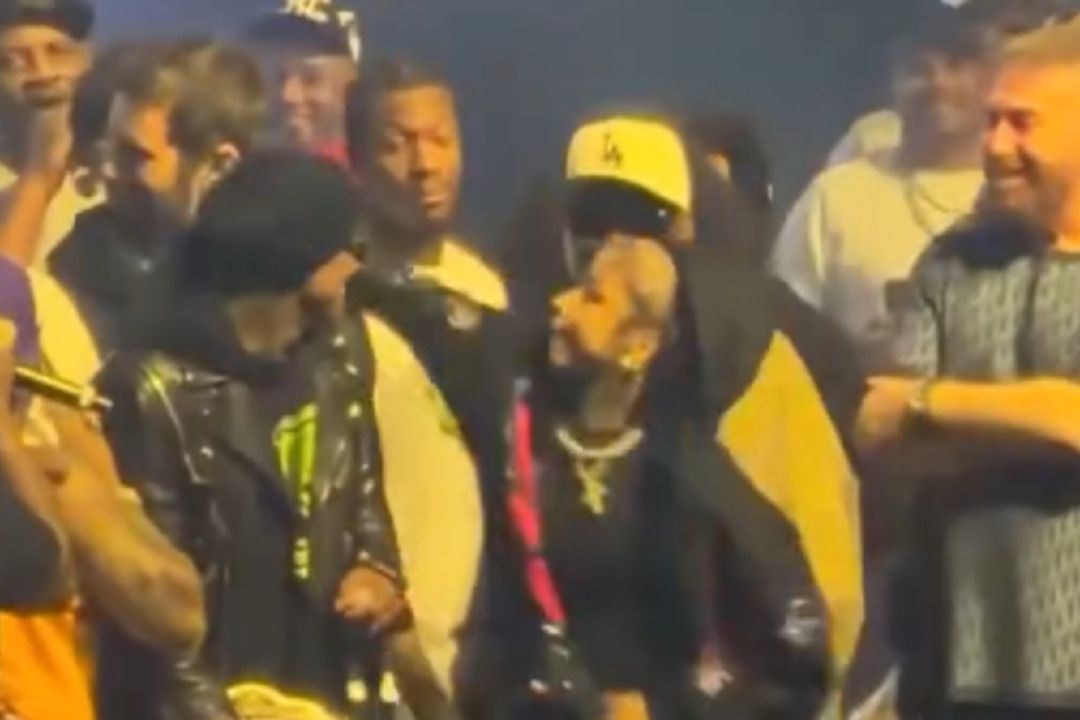
Adam’s line started with his scheduled opponent before bringing Rock’s parenting into the round. “Justina, your BBL, that’s embarrassing/But that's nothing compared to Chrisean Rock's parenting,” he said into the microphone. The source reports that his turn had ended when he headed toward the back of the stage. Rock then approached from the side, punched him several times in the head, and walked away. Valentine was the opponent named at the start, but Rock became the subject of the sharper accusation without being the person trading bars with him. The reported sequence places the physical confrontation after the punchline, rather than during an ongoing back and forth between them. That sequence is the key context for the stage footage below.
The stage footage documents the confrontation, but it cannot establish the full history between the two participants. Adam supplied part of that history later that night, saying Rock already disliked him because of earlier remarks about her parenting. That remains his account of their prior friction. The reporting provided does not establish what those earlier comments were, when he made them, or whether anyone discussed boundaries before the show. An existing grievance and advance knowledge of a particular punchline are separate things; the available account does not establish the latter. Filling those gaps with assumptions would turn commentary into guesswork. Knowing someone dislikes a subject can explain why a joke carries extra weight. It does not establish that the resulting confrontation was planned.
Later that night, Adam appeared on social media holding an ice pack against his jaw. “I was attacked, brutally, earlier tonight,” he said. He added, “I know a lot of you guys are probably gonna think this is pretty funny, and as much as I seem to be speaking okay right now, my jaw is incredibly swollen.” Those are his descriptions, not an independent medical assessment. He also said he was considering legal action because Rock participates in professional boxing. That boxing connection is his stated reasoning, not an established legal finding about her training or what consequences might follow. Considering action is not the same as filing a case. His account of the aftermath appears in the video below.
Adam’s comments about his jaw move the discussion beyond whether the roast landed. Comedy has faced this boundary before, most visibly when Will Smith slapped Chris Rock at the 2022 Academy Awards after a joke about Jada Pinkett Smith. The incidents differ, and treating them as identical would flatten the facts. Still, both expose a familiar failure: people confuse an explanation for anger with permission to act on it. Wild ’N Out, which premiered in 2005, belongs to a longer tradition of competitive roasting and verbal sparring. A cutting response lets the target challenge the insult in front of the same crowd that heard it, without making physical force the deciding factor. The skill is answering an insult without abandoning the format. Once physical contact replaces the comeback, the audience is watching a different event, whatever the original booking promised.
The real test is whether accountability survives when the person getting hit is unpopular.
A child should not have to become collateral for adults chasing a better clip.
Rock does not need a chorus cheering this confrontation as proof that she stands on business. That phrase gets emptied out when it means accepting consequences nobody in the comments will help carry. If a dispute reaches court, fan approval cannot substitute for evidence or legal representation. The people posting applause can close the app; the people involved still have to answer for their own decisions. Adam’s public persona also does not make his physical safety optional. His decision to target parenting remains open to criticism, especially given his account of their existing friction. Both judgments can stand without canceling each other. A child should not have to become collateral for adults chasing a better clip. Rock’s strongest position would come from setting a boundary without giving the dispute a physical incident to center.
The business question belongs to the event’s producers, too. A roast format depends on performers believing that insults will stay inside an understood set of rules. If personal history enters the material, who checks whether those rules still hold? The source does not establish what producers knew or what safeguards were in place. There is no basis to claim anyone arranged or encouraged the confrontation. But live entertainment cannot treat personal friction as promotional fuel while leaving performers to manage the fallout alone. A viral moment might draw attention to a tour, but attention is not proof that a production protected the people sharing its stage. Booking, preparation, and stage security deserve scrutiny alongside the punchline. Keep that distinction between evidence and assumptions in mind when viewing the Instagram post below.
A social post can document a moment without answering every question about responsibility. Audiences should resist turning a short upload into a complete verdict on anyone’s parenting, health, or private life. The source establishes a joke, a physical confrontation, and Adam’s account afterward. It does not establish a new fact about Rock’s child. A punchline is not supporting evidence, and thousands of people repeating its premise do not turn a roast into a verified assessment of a household. That boundary matters when comment sections make children answer for adults with microphones. PVN’s coverage of Rihanna addressing a public exchange with EJ Johnson offers another entry into the question of how celebrity disputes get interpreted. Readers can criticize conduct without treating every family member as fair material.
Race and gender shape who gets called entertaining and who gets called dangerous. A Black woman’s anger can become a permanent public identity, while a white male host’s provocation gets treated as routine business. That double standard deserves examination without becoming an excuse for hitting someone. The money question is who controls the footage and who absorbs the reputational cost. Those are different kinds of power. The reporting does not identify the footage’s ownership or any revenue arrangements, so nobody should assume the person drawing attention collects the money from it. PVN’s examination of ownership around DJ Screw’s Grey Tapes concerns a different business, but the question of control connects them. Being the person people watch does not necessarily mean owning what they watch or benefiting from its circulation.
Advertisement
Next comes a basic reporting test: does Adam file anything, or does considering legal action remain the extent of his stated response? A complaint, if filed, would need to be read rather than guessed at from a caption. Any response from Rock or the tour should be judged by what it establishes, not how sharply it travels online. Until then, there is no reported legal outcome to announce and no reason to invent one. Fans can demand accountability without turning the incident into another team sport. The clip may belong to the internet now, but the consequences will not be shared equally.
More from PowerVault Network:
