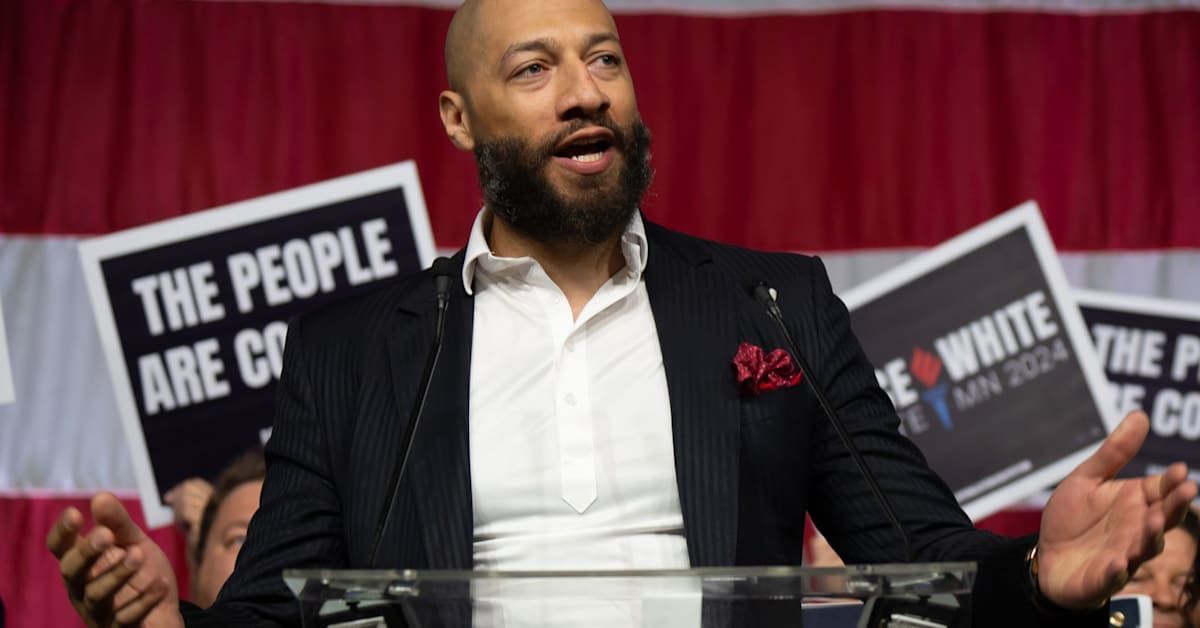
Enes Kanter Freedom's WNBA Stunt: What's Really Behind the So-Called Culture War?
By Tanya Brooks, PowerVault Staff Enes Kanter Freedom’s recent stunt at Game 3 of the WNBA Finals is a glaring example of the so-called culture war that's been simmering in women’s sports. By declining a luxury suite...
Advertisement
By Tanya Brooks, PowerVault Staff
Enes Kanter Freedom’s recent stunt at Game 3 of the WNBA Finals is a glaring example of the so-called culture war that's been simmering in women’s sports. By declining a luxury suite and security upgrades, he set the stage for a backlash that played right into political narratives. Kanter’s refusal, under the guise of standing up for women, is a calculated move on a chessboard where the pieces are more than just pawns, they're the lives and livelihoods of marginalized athletes, who bear the brunt of these public spectacles. His actions are not isolated but part of a larger trend where personal agendas are pushed at the expense of those who are already fighting for their rights and recognition in a world that often devalues their contributions.
The incident unfolded in the WNBA arena, a space increasingly fraught with the misuse of the term ‘culture war’, a label that has been lazily draped over discussions of racism, homophobia, and the inclusion of trans athletes. This term conveniently camouflages the ugly truth: bigotry persists, and it's directed predominantly towards Black and queer athletes. According to various media outlets, including NPR, Kanter's antics are just the tip of an iceberg that attempts to mask intolerance as a debate over values. By framing the issue as a cultural disagreement, the very real struggles faced by these athletes are sidelined, and the focus shifts away from addressing systemic discrimination to a superficial exchange of differing opinions.
The facts are stark. Over the past two years, the term 'culture war' has been used repeatedly to describe incidents where Black or queer WNBA players have been harassed. It rears its head in discussions about trans athletes and when players speak out against racism. These discussions are not theoretical musings; they translate into real-world consequences that affect the safety and mental health of Black athletes. Political opportunists, such as Kanter, manipulate these scenarios for their own gain, undermining the integrity of the league. The misuse of this term not only trivializes the lived experiences of these athletes but also provides a convenient cover for those who wish to perpetuate inequality under the guise of public discourse.
Kanter's latest maneuver can be seen in the YouTube video below, which shows the orchestrated spectacle he created. He claimed to be banned for standing up for women, despite being offered enhanced security and accommodations. The video reveals how he meticulously crafted a narrative that paints himself as the victim of a system allegedly biased against his supposed advocacy. This act was less about genuine concern for women's sports and more about diverting attention from the real issues at play, namely, the ongoing struggle for equity and respect faced by women, particularly Black and queer women, in sports. Such theatrics only serve to distract from the pressing need for systemic change.
Kanter's performance taps into a much larger issue. As political figures like him throw gasoline on the fire, the term 'culture war' becomes the gasoline itself, effectively obscuring the hostile actions it should be naming outright. Systemic sexism and racism are not issues with two equally valid sides. These are issues of human rights, and wrapping them up in the language of war diminishes the trauma and struggles faced by the athletes involved. It creates a false equivalence between oppressive actions and the fight for equality, misleading the public into thinking that there is a legitimate debate to be had, rather than an urgent moral wrong to be corrected.
The 'culture war' narrative is nothing new. It has historical roots in the German Kulturkampf of the 19th century, where it was used to disguise political power grabs as a clash of beliefs. Fast forward to the 1990s, sociologist James Davison Hunter popularized the term in America to describe ideological splits over abortion and gay rights. The core strategy remains the same: reframe systemic injustice as a debate, eliminating urgency and moral clarity in the process. This linguistic sleight of hand allows those in power to maintain the status quo by trivializing serious issues as mere differences of opinion, thereby stalling progress and perpetuating inequities that should be challenged head-on.
This isn’t about culture; it’s about controlling the narrative to maintain power.
This isn’t about culture; it’s about control.
When we look at Kanter's actions, they're emblematic of a broader attempt to maintain a status quo that marginalizes Black athletes. The societal systems that allow such framing also dictate terms to Black athletes, who are expected to excel, yet are consistently placed under microscopes for the slightest transgression. This misuse of the term 'culture war' serves as a distraction, allowing systemic inequities to persist under the guise of debate. It's a tactic as old as time and equally sinister, reinforcing a hierarchy that keeps marginalized groups on the defensive, constantly justifying their existence and rights in spaces that claim to be inclusive but often fall short in practice.
As for the WNBA itself, its struggle is emblematic of women's sports leagues worldwide. The cultural and financial stakes are enormous, and not just for the athletes. The league’s growth hinges on breaking past the barriers that 'culture war' narratives impose. It's a fight for legitimacy, respect, and financial equity in a market that persistently devalues them. Royce White's controversial WNBA bid earlier this year highlighted how these battles aren't just played out on the court but also in boardrooms and political arenas. The challenge lies in handling these spaces while pushing for a future where women's sports are valued and supported on their own merits, without the need for external validation or compromise.
For the audience, particularly Black communities, these are not just sports stories, but reflections of larger societal struggles. They show the resilience needed to fight systemic inequality. It’s a reminder that representation in spaces like the WNBA isn’t just about having a seat at the table, but having the power to flip it over when necessary. Just as Jalen Hurts' journey was more than his performance stats, the WNBA’s fight is more than a game, it's a cultural necessity. It embodies the ongoing battle for recognition, respect, and opportunity in a world that often prioritizes profit over people, and tradition over progress.
Advertisement
At the heart of these dynamics are class, race, and gender. Black and queer athletes often find themselves at the intersection of these challenging identities, pushed into roles as both performers and activists. This duality is exhausting, yet it's been involuntarily embraced by many to survive within the industry. How long will society allow the exploitation of their visibility for profit, without ensuring their rights and safety? The burden of representation weighs heavily, demanding not only excellence in performance but also resilience in the face of adversity, as these athletes are forced to handle spaces that resist their presence while simultaneously capitalizing on their talents.
Looking forward, the WNBA and its players are poised at a crossroads. The question is whether they will be allowed to redefine the narrative and move beyond being the scapegoats in a faux war that serves political opportunists. As we witness these tactics, there's a need for a broader conversation about the language we use and the power it holds. The next steps involve challenging these narratives, rooting out the systemic prejudices they disguise, and ensuring that Black and queer athletes can thrive in a truly supportive and equitable environment. Only then can the WNBA fulfill its potential as a beacon of progress and empowerment in the sports world.