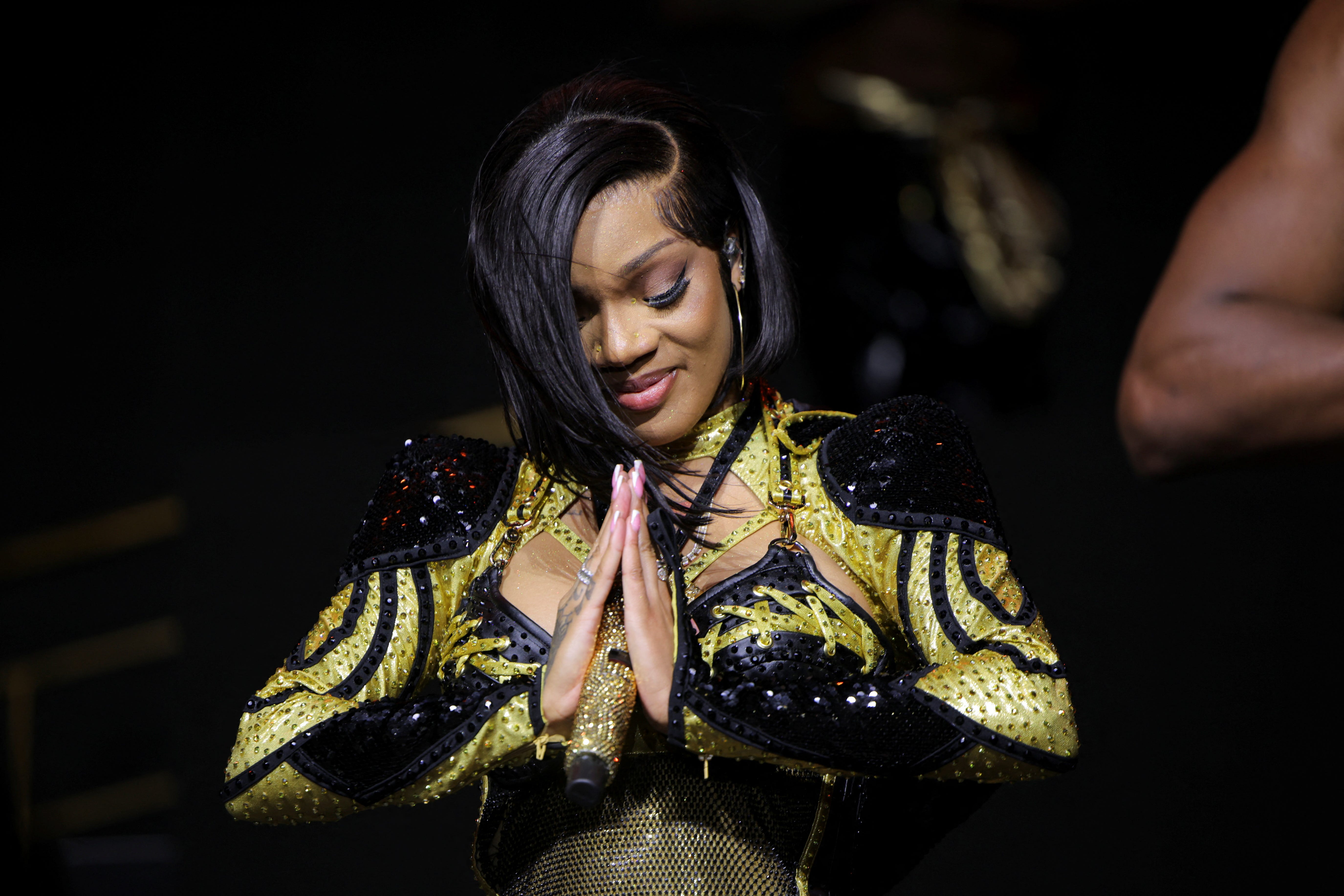
Heather Hunter Celebrates Soul Train Awards Return
By Simone Walker, PowerVault Staff Heather Hunter is celebrating the Soul Train Awards’ return as someone who danced on the original show from 1990 to 1992. The Bronx native had wanted to be a Soul Train dancer since...
Advertisement

By Simone Walker, PowerVault Staff
Heather Hunter is celebrating the Soul Train Awards’ return as someone who danced on the original show from 1990 to 1992. The Bronx native had wanted to be a Soul Train dancer since childhood. By the time she got her shot in Los Angeles, she knew exactly what to do with it. That red dress was not about to sit still.
Hunter told CBS News New York how she went from standing in the audience line at a taping to moving closer to the main stage. “I just got up the guts, you know, and someone pulled me from the line to move forward,” Hunter recalled. As PowerVault’s coverage of her interview noted, Hunter remembered the move she brought to the floor: a spin, with enough swing in her hair to make it part of the performance.
For Hunter, the pleasure of that memory deserves room of its own. She went on to work across photography, visual art, music and writing, but her time on Soul Train does not need to set up a later chapter to matter. The woman was talking about getting to do the thing she wanted to do. There is a particular kind of joy in hearing somebody remember what they wore when it finally happened.
The CBS segment examined how New York dancers helped shape a show born in Chicago. Hunter’s route adds a third city to that story: a dancer from the Bronx got her chance at a Los Angeles taping. That geography gives the segment a better question than which city gets bragging rights. What happens to a show’s identity when the people on camera bring movement from places other than the city where it began?
Hunter’s account also catches a little bit of television gatekeeping in action. She had to get up the nerve to go for it, and somebody still had to pull her forward. Both parts matter. The person who saw potential could move her closer to the camera, but they could not give her the spin, the timing or the nerve to turn that space into a moment.
For the entertainment business, that is the distinction worth keeping. A show can give a performer a bigger audience and still owe part of its identity to what that performer brought through the door. Who gets described as having made the show, and who gets described as having been lucky to get on it? Black dancers deserve better than a version of television history where the program gets a proper name and their contribution gets called atmosphere.
PowerVault’s coverage of who gets credit in Atlanta hip hop history starts from a question that travels well: Who gets named when the story gets retold? On a dance show, the answer cannot stop at the people whose names are easiest to find. It has to include the people whose work would make the footage look and feel different if it were missing.
A clip can show who had the moves and still leave the audience guessing whose moves they were.
The Awards and the dance show are distinct, which makes the return a useful occasion to think about what each puts in front of the audience. An awards ceremony is built to name the people it honors. A dance floor can give somebody a memorable turn on camera without giving the viewer a name to hold on to. There is room for both kinds of recognition, but they do different work.
A clip can show who had the moves and still leave the audience guessing whose moves they were.
That is why a dancer telling her own story is worth more than another pretty montage. The red dress is what a viewer might spot first. Hunter can tell that viewer what the dress cannot: she had wanted to be there for years, she almost stayed in the line, and the spin was hers to bring. For Black viewers who love to trade old clips, that detail is something to pass along with the footage.
Advertisement
The next time the Soul Train Awards bring the old footage back into conversation, watch what gets named. Does a tribute tell viewers who they are looking at, or does it cut away once the dress and the spin have done their job? The best tribute would send somebody looking for Heather Hunter’s next turn across that floor. Put her name where the replay button is.
More from PowerVault Network: