ICE Agent Christian Castro Turns Himself In: Analyzing the Implications for Accountability in Law Enforcement
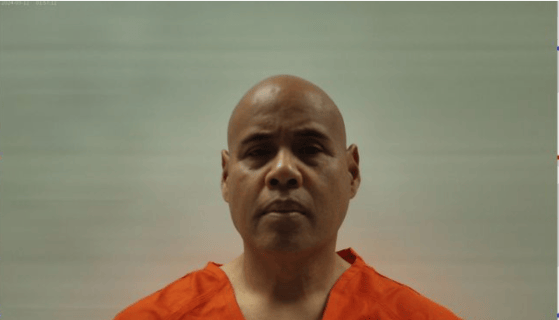
By Andre Coleman, PowerVault Staff On a quiet afternoon in Harlingen, Texas, a figure in an orange prison jumpsuit stands solemnly before the camera, the harsh florescent lights illuminating his bald head and serious...
Advertisement

By Andre Coleman, PowerVault Staff
On a quiet afternoon in Harlingen, Texas, a figure in an orange prison jumpsuit stands solemnly before the camera, the harsh florescent lights illuminating his bald head and serious expression. This is Christian Castro, an Immigration and Customs Enforcement (ICE) agent who recently turned himself in to authorities following a federal grand jury indictment on six charges of making false statements. But who is this man, and what does his surrender signify in the larger narrative of law enforcement accountability in America?
The indictment against Castro does not exist in a vacuum. It represents a culmination of systemic issues within law enforcement agencies that have been a long time coming. As an ICE agent, Castro was part of a federal system long criticized for its lack of transparency and accountability, especially concerning its treatment of immigrant populations. His charges raise significant questions not just about his individual actions but about the broader practices of this agency.
Castro's case is particularly striking given the historical context of ICE and its often controversial role in immigration enforcement. Critics have pointed to a plethora of instances where ICE agents have acted beyond their legal boundaries, leading to accusations of misconduct, abuse of power, and a failure to uphold principles of justice. This brings us to a critical intersection: the systemic failures that allow such behavior to proliferate unchecked.
In recent years, multiple incidents have come to light involving ICE agents, including cases where officers have lied or misrepresented facts surrounding arrests and encounters with migrants. For instance, an incident in Minneapolis involved ICE agents allegedly lying about the circumstances of a shooting involving a migrant. Such cases not only undermine public trust in law enforcement but also highlight a pattern of behavior that begs for scrutiny. With Castro's indictment, we are left to consider whether this could mark a turning point for accountability within the agency, or simply another instance of a rogue agent facing the consequences of actions that are indicative of a larger culture.
The charges against Castro stem from allegations that he misled investigations into incidents involving ICE operations. Making false statements in the line of duty is a serious offense; it erodes the foundational trust that the public must have in law enforcement. By manipulating facts, agents can escape accountability and perpetuate a cycle of mistrust and systemic injustice. It’s not merely Castro who should be scrutinized here; it’s the overarching system that has allowed such behavior to thrive.
Who benefits from this culture of silence and misrepresentation? It’s often those in power who evade scrutiny, effectively shielding themselves from the repercussions of their actions. This is emblematic of a larger issue within the American justice system, where individuals in positions of authority can manipulate narratives, distort facts, and create a facade of justice that often serves to protect themselves rather than the public. The public’s perception of law enforcement as a protective force is severely compromised when instances like Castro's come to light.
Furthermore, the racial undertones in such cases cannot be ignored. ICE predominantly operates within communities of color, often targeting immigrants who are already marginalized and vulnerable. In many instances, these agents have been implicated in acts of violence against these communities, raising alarms about racial profiling and systemic discrimination. The treatment of these individuals under the law often reflects deeper societal biases that question the very fabric of justice in a nation that prides itself on equality.
As Castro faces the consequences of his actions, it remains essential for the public and policymakers to demand accountability that extends beyond individual cases. This incident should serve as a catalyst for broader reforms within ICE and similar agencies. There needs to be a concerted effort to establish checks and balances that prevent the abuse of power and ensure that agents are held to the highest standards of integrity. Moreover, the public must engage in ongoing dialogues about the role of law enforcement in society and the mechanisms in place to protect the most vulnerable.
Advertisement
Looking ahead, the question becomes: what now for America’s immigration enforcement agencies? Will Castro's indictment lead to significant reforms, or will it be another example of a system that ultimately protects its own? In a moment of reckoning, society must challenge the narrative that individuals like Castro can act with impunity. It’s a call to action for everyone,activists, lawmakers, and everyday citizens,to hold those in power accountable.
As this case unfolds, it serves as a critical moment for reflection on the systemic failures that have led us to this point. The focus should not only be on Castro but on the structures that enable such behavior to manifest in the first place. It is a chance to reimagine a justice system that upholds the values it professes to represent. The challenge lies in ensuring that accountability does not stop here and that the momentum for change continues to build.