Jalen Hurts' Health Crisis: What It Means for His NFL Future and the Eagles
By Malik Carter, PowerVault Staff Jalen Hurts, the dynamic quarterback of the Philadelphia Eagles, is facing a career-defining challenge as he grapples with blood clots in his lungs. This alarming medical condition ha...
Advertisement
By Malik Carter, PowerVault Staff
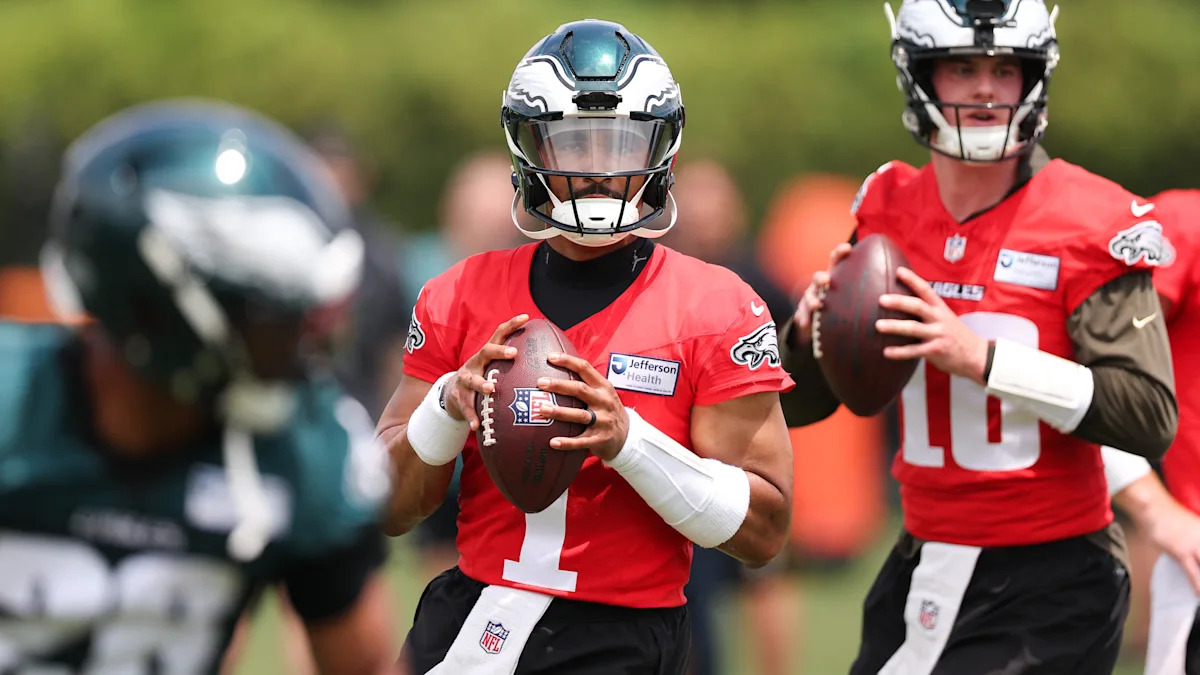
Jalen Hurts, the dynamic quarterback of the Philadelphia Eagles, is facing a career-defining challenge as he grapples with blood clots in his lungs. This alarming medical condition has rattled the NFL, leaving fans and analysts to question not only his immediate football future but also his long-term health outlook. For Hurts, whose identity is deeply intertwined with his on-field performance, this diagnosis poses challenging questions about his role in a league where profits often eclipse player welfare. The revelation highlights the brutal reality of NFL life, where the grind and glamour can quickly give way to vulnerability, especially for Black athletes who are handling a predominantly white sports machine that frequently prioritizes monetary gain over human well-being.
According to the All Phly report, Hurts' diagnosis has significantly altered the Eagles' trajectory for this season, intensifying concerns not only for the team's prospects but also for Hurts' professional journey. The high-stakes world of the NFL is notoriously unforgiving, and Hurts now faces the daunting dual challenge of recovering his health while maintaining his status as an elite quarterback. This situation is a stark reminder of how quickly a player's fortunes can shift in the NFL, where the pressure to perform is relentless. As the Eagles attempt to regroup, the spotlight inevitably shifts to backup quarterback Tanner McKee. His performance in the coming games could be pivotal, potentially influencing the team's strategic decisions as they approach the trade deadline. The pressure on McKee is immense, as his ability to step up could either stabilize the Eagles or necessitate a more radical restructuring.
Adding to these challenges is the retirement of key player Lane Johnson, which has already placed the Eagles in a precarious position. Johnson's departure leaves a significant void in the team's offensive line, forcing the Eagles' front office to reassess their approach to the season. The team now faces the critical decision of whether to pursue trades to bolster their roster or to undertake a comprehensive restructuring of their playbook to adapt to the new reality. The uncertainty surrounding Hurts' health complicates these decisions further, creating a delicate balancing act between immediate competitiveness and long-term planning. As captured in the video below, the team is grappling with intense dynamics and high-stakes decisions that could define their season and potentially the franchise's future direction.
The video captures the intense dynamics at play, offering a revealing glimpse into how the team is adjusting to these seismic changes. The NFL is no stranger to athletes dealing with serious health issues, but Hurts' situation is particularly poignant because of his meteoric rise as a symbol of resilience and leadership. His journey from collegiate stardom to NFL prominence is proof of his tenacity, yet it also shows the fragility of athletic careers. The stakes are high in professional sports, where the cost of success is often measured in physical and mental tolls. Hurts' current predicament serves as a stark reminder of these realities, highlighting the precarious balance athletes must maintain between achieving greatness and safeguarding their well-being.
This isn't the first time Hurts has faced hurdles. His collegiate career at Alabama and Oklahoma was marked by significant challenges that showcased his ability to adapt and excel under immense pressure. Despite being benched at Alabama, Hurts displayed remarkable resilience, transferring to Oklahoma where he thrived and eventually led to his selection by the Eagles in the 2020 NFL Draft. His journey is a narrative of overcoming odds, of redefining what it means to be an athlete who succeeds against adversity. However, the current situation demands a different kind of perseverance, one that involves prioritizing his health over heroics. As Hurts navigates this new chapter, the focus shifts from demonstrating physical prowess to making decisions that ensure his long-term well-being.
The history of Black athletes overcoming health challenges in the NFL is both inspiring and cautionary, reflecting broader societal issues of systemic neglect. In 2015, Pittsburgh Steelers' safety Ryan Clark faced a life-threatening situation due to sickle cell anemia, a condition that disproportionately affects Black individuals. Clark's experience brought to light the unique medical challenges Black athletes often face, challenges that are frequently exacerbated by systemic neglect and a lack of tailored medical attention. Hurts' current predicament reopens critical discussions about how the NFL addresses, or fails to adequately address, athlete health. These issues are particularly pressing for Black players, who are disproportionately affected by health conditions linked to their genetic makeup. The league's approach to these challenges will be scrutinized, as it reflects broader societal dynamics of race, health, and neglect.
This moment begs the question: How long can the NFL continue to commodify Black bodies without addressing the underlying health disparities?
The pressure on Black athletes to perform through adversity often discounts their humanity.
Hurts' situation shows the harsh reality that the pressure on Black athletes to perform through adversity often discounts their humanity and well-being. The NFL's business model is heavily skewed towards financial gain, frequently at the expense of player welfare. In this context, Hurts stands at a crossroads between an organization that views him primarily as an asset and his personal need to prioritize his health. This predicament is emblematic of a broader issue within professional sports, where the drive for success often overshadows the fundamental human concerns of the athletes who deliver that success. For Black athletes, this dynamic is further compounded by racial and systemic factors that can amplify the pressure to prioritize performance over personal health.
For the Eagles, Hurts' absence presents a stark decision: whether to focus on immediate success or commit to a strategic rebuilding with an eye toward the future. How the team handles this situation will set a precedent for their values regarding player health versus on-field success. If they choose to prioritize Hurts' recovery, it could herald a significant shift in how the NFL approaches athlete welfare, potentially influencing other teams and leagues. This could mark the beginning of a broader cultural shift within the sport, prioritizing the long-term health and safety of players over short-term competitive gains. Such a move could redefine the team's identity and set a new standard for how professional sports organizations balance success with player well-being.
The ripple effects of Hurts' situation extend well beyond the confines of the NFL. His struggle resonates deeply with many Black Americans who face systemic health inequities and the persistent pressure to persevere against daunting odds. Hurts' journey could ignite broader discussions about health equity and the urgent need for systemic reforms within sports and society at large. His story serves as a powerful reminder of the ongoing challenges related to racial disparities in healthcare access and treatment. By highlighting these issues, Hurts' experience could catalyze meaningful conversations and actions aimed at addressing the structural inequities that pervade not only sports but also the broader societal scene.
Advertisement
The complex dynamics of race, class, and health within the NFL cannot be ignored. Black athletes like Hurts often face heightened scrutiny and immense pressure that can undermine their overall well-being. The industry's persistent reluctance to address these systemic issues only perpetuates the challenges, highlighting the racial undertones that continue to pervade the sport. This reluctance is not just a sports issue but a reflection of broader societal challenges where race and class intersect to create disparities in treatment and opportunity. Hurts' case brings these issues to the forefront, challenging the league and its stakeholders to confront and address the inequities that have long been entrenched in the fabric of professional sports.
As the Eagles handle these turbulent times, all eyes will be on their next moves, which will have significant implications for the team and the league at large. Hurts' health remains the paramount concern, yet the broader implications for the NFL and its players are profound. The central question is whether teams will begin prioritizing player health and safety over immediate competitive gains. The answer to this question could potentially redefine the culture of the NFL, setting a new precedent for how athlete welfare is balanced with the commercial imperatives of the sport. This shift could also serve as a catalyst for transformative change across other American sports leagues, prompting a reevaluation of priorities that could fundamentally alter the world of professional athletics.