Jayson Tatum’s Technical Foul Deserves a Closer Look
By Simone Walker, PowerVault Staff Jayson Tatum’s technical foul helped seal Boston’s loss to Denver, but his explanation deserves more scrutiny than a verdict about his attitude. The Celtics lost 105 to 101 after sur...
Advertisement

By Simone Walker, PowerVault Staff
Jayson Tatum’s technical foul helped seal Boston’s loss to Denver, but his explanation deserves more scrutiny than a verdict about his attitude.
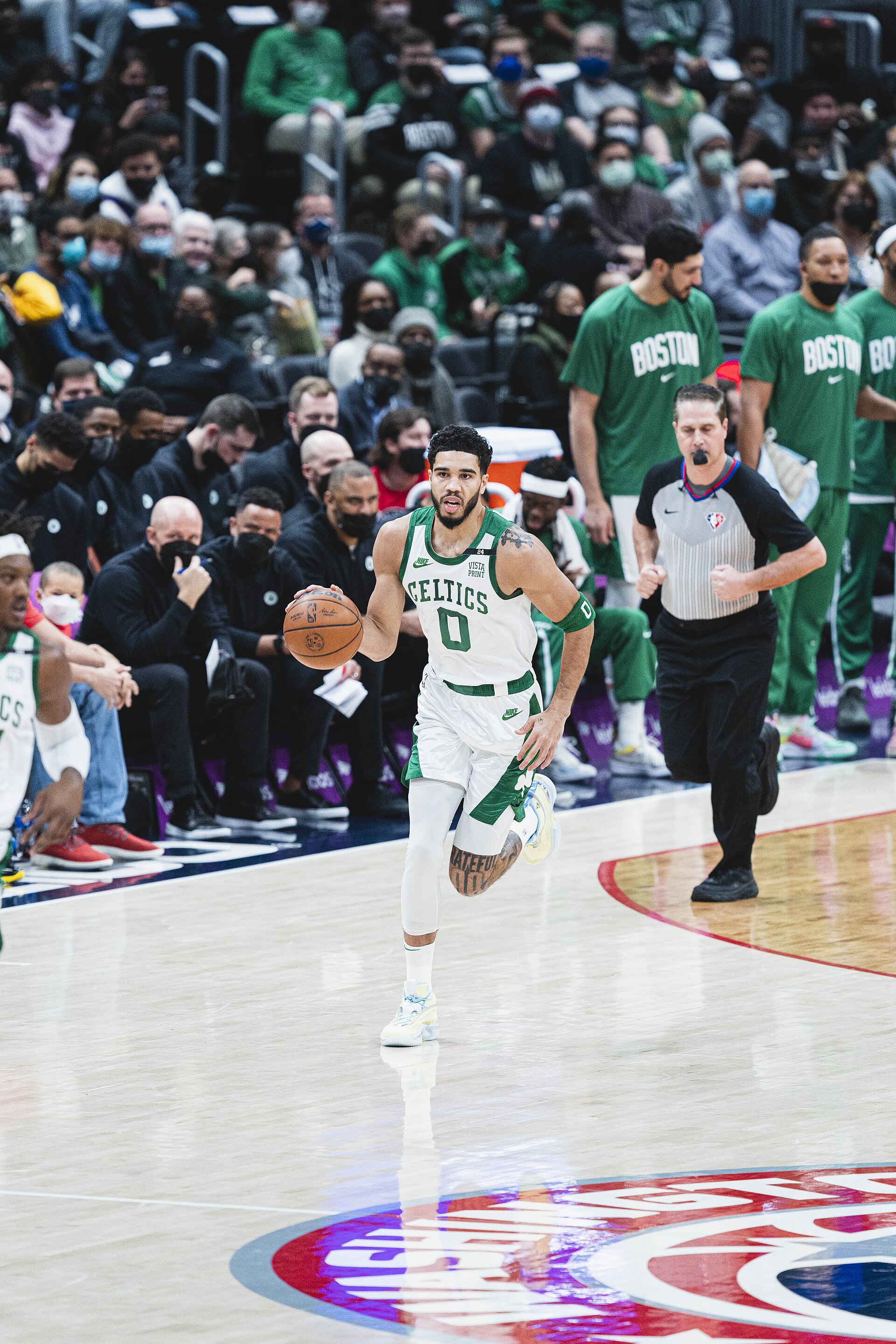
The Celtics lost 105 to 101 after surrendering a lead that reached 17 points. Tatum accepted responsibility for the late technical and his second half mistakes. That matters. So does separating a costly decision from assumptions about what was inside his head.
Jamal Murray hit a difficult jumper with 6.4 seconds remaining, putting Denver ahead by three. Tatum then threw the ball toward referee John Goble, and official Eric Dalen assessed a technical. The posted sequence shows how quickly Boston’s remaining chance narrowed.
That clip captures the ball going toward an official who was not looking. Murray’s technical free throw stretched the margin to four. The distinction matters: Boston went from needing one possession to tie to needing multiple scoring opportunities, barring a four point play.
He explained that Goble had pointed toward Boston’s bench. Tatum believed Goble was looking his way and acknowledged that handing the ball to another official was the better choice.
Tatum’s explanation does not erase the consequence. It does challenge the easy reading that this was necessarily an angry star losing control. An avoidable mistake can remain avoidable without becoming proof of a temperament problem. Those are different judgments, and responsible coverage should keep them separate.
Joe Mazzulla took the practical view after the game. “We can't put ourselves in that position to even give the refs an opportunity to interpret it a certain type of way,” Boston’s coach said. “Gotta be better.” That is useful coaching advice. It should not become the only question anyone asks.
Accountability should follow the whole possession, not stop at the most shareable mistake.
Accountability should follow the whole possession, not stop at the most shareable mistake.
For Black athletes, the space between an action and someone else’s interpretation deserves serious attention. This incident does not establish racial bias by any official. Still, PVN’s view is that coverage should resist turning an ambiguous exchange into a sweeping judgment about a Black player’s character. Critique the throw. Prove the rest.
Black fans should not have to choose between defending Tatum from an unsupported character judgment and demanding better basketball from him. Both positions fit comfortably together. Loyalty does not require pretending the ball was handled wisely. Fairness does not require pretending his stated intent is irrelevant.
The league’s authority also deserves examination, without inventing motives for Dalen. A technical can turn an official’s interpretation into an immediate competitive penalty. That power warrants clear explanation. Players need to manage risk, but audiences should still ask what conduct crossed the line and why it merited that consequence.
Boston’s own basketball gives the strongest reason not to let the whistle swallow the discussion. Tatum scored 20 points before halftime, then four afterward on 2 of 6 shooting. He committed five second half turnovers. Two missed midrange attempts in the final two minutes also cost Boston chances to extend or regain the lead.
Tatum identified a more sustained problem himself. “The four turnovers I had in the third quarter really put us out of sync,” he said. That assessment puts responsibility where it can produce change. Ball security and communication are repeatable work. Arguing forever about one official’s interpretation is not a possession plan.
The team figures were rougher still. Boston committed 11 turnovers after halftime and shot 2 of 19 from three. The Celtics were also called for 20 fouls, producing 22 Denver free throws. Those numbers describe a collapse with several causes, not a game functioning smoothly until one late technical.
Mazzulla’s challenge is to make “better” mean something specific. Which decisions fed the turnovers? How does Boston keep an offense connected when its jumpers stop falling? The supplied account cannot answer those questions. It does establish why a coach’s public demand must lead to more than a lesson about handing over the ball.
That distinction belongs in the broader conversation about organizational responsibility, including what teams must answer for around their stars. A franchise cannot make its best player the full explanation for every failure. Tatum’s accountability should sharpen the team’s review, not spare everybody else from one.
Denver also earned its finish. Nikola Jokić supplied the screen, Murray created separation against Neemias Queta, and the jumper fell. Centering only Boston’s frustration would erase the execution that forced the Celtics into that final scramble. The opponent did not disappear because the technical became the loudest part of the ending.
The stakes were already visible in the standings. Boston fell to 11 and 4, with consecutive losses for the first time that season. Philadelphia held the Eastern Conference’s top spot by 1½ games. A November loss does not decide April positioning, but a surrendered win cannot be reclaimed when the race tightens.
The pattern worth tracking is the lost cushion. Two of Boston’s four defeats involved substantial leads: 22 points against Detroit in the opener and 17 against Denver. That is evidence for a question, not a season verdict. Can this team protect an advantage when clean offense gives way to difficult possessions?
Tatum’s willingness to own his errors gives Mazzulla something to work with. The next test is whether that honesty leads to better decisions without turning every exchange into a public scolding. The balance connects to the question of trust between coaches and stars. Accountability needs a basketball purpose.
Advertisement
Watch Boston’s next close finish for the choices before the final whistle: safer passes, clearer communication and an offense that survives missed threes. Tatum already identified work he can control. The Celtics need to address the full collapse, not merely teach their star a cleaner way to return the ball.
More from PowerVault Network: