K’Den Dunye Prez Anderson: What the MARTA Bus Shooting Reveals About Public Safety
By DeShawn Price, PowerVault Staff The evening was supposed to be an ordinary one on Route 115 in DeKalb County, Georgia. Aboard MARTA bus 7038, passengers were engaged in the mundane rhythm of their commute, a time w...
By DeShawn Price, PowerVault Staff
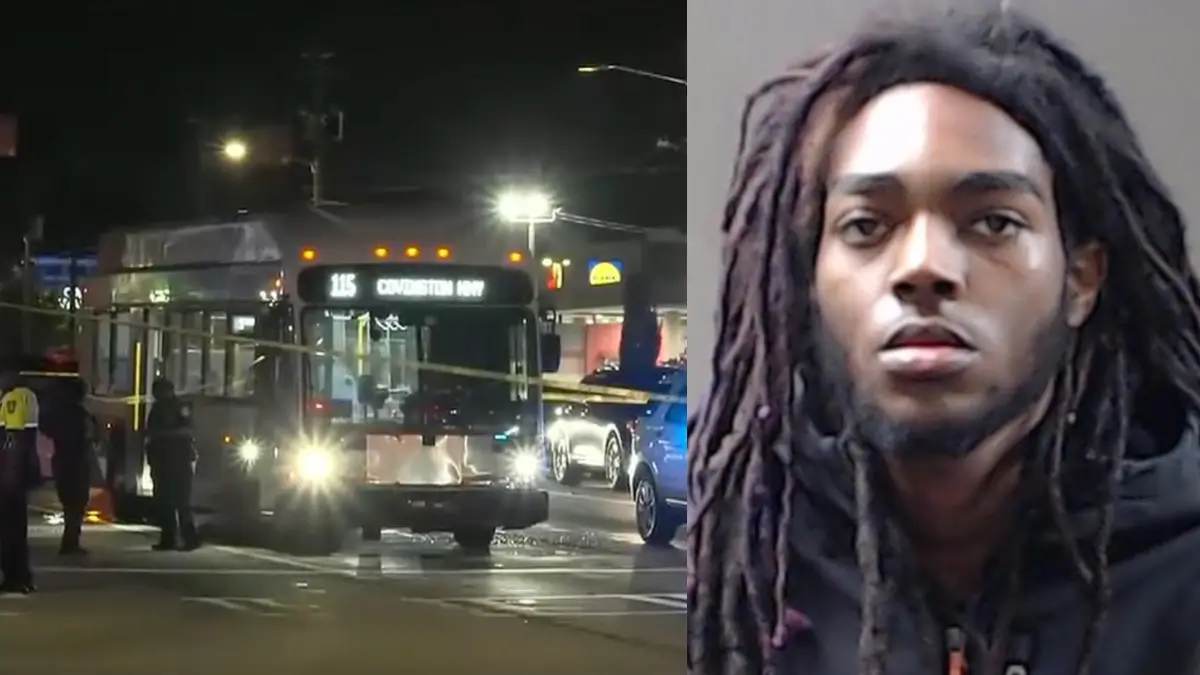
The evening was supposed to be an ordinary one on Route 115 in DeKalb County, Georgia. Aboard MARTA bus 7038, passengers were engaged in the mundane rhythm of their commute, a time when people often seek solace in their own world. The hum of the engine, the quiet chatter, and the tapping of phones created a backdrop of normalcy. But as the bus neared Covington Highway and Panola Road, this routine was shattered. An unexpected outburst disrupted the calm, replaced by chaos and a chilling fear that rippled through every seat. The air, once filled with the harmless monotony of daily life, suddenly felt charged with tension and uncertainty, leaving passengers in a state of shock.
According to arrest warrants and initial reports from 11 Alive, the evening took a dark turn when 20-year-old K’Den Dunye Prez Anderson allegedly shot another passenger twice. The dispute reportedly began over Anderson's complaints about the victim's smell, a trivial grievance that spiraled out of control. Authorities responded swiftly, rushing the unnamed victim to Grady Memorial Hospital, where he remains under medical care after undergoing surgery for a gunshot wound to the chest. The incident shows the fragility of public safety, as a seemingly innocuous issue escalated into violence. The victim's identity remains undisclosed, but his condition highlights the severity of the altercation and the potential for everyday conflicts to have life-threatening consequences.
MARTA police swiftly identified Anderson as the suspect, utilizing witness accounts and surveillance footage to pinpoint his involvement. He now faces charges of aggravated assault and possession of a firearm during the commission of a felony, highlighting the serious nature of his alleged actions. The authorities' rapid response reflects the urgency of containing such threats within public transport systems, where the safety of countless commuters depends on effective policing. As the investigation unfolds, the role of law enforcement in both preventing and responding to these incidents comes under scrutiny, raising questions about the adequacy of current security measures. The scene that unfolded is captured in the video below, providing a stark visual account of the chaos that ensued.
The MARTA system, a critical artery of Atlanta's public transport, was soon reacting to the fallout. Officials from MARTA communicated that Anderson would be permanently banned from their services, a measure that shows the severity of his alleged actions and their commitment to securing their passengers' safety. This decisive action reflects the broader responsibilities of public transport authorities to protect their riders and maintain a safe environment. The incident has prompted MARTA to reassess its security protocols, recognizing the need for increased vigilance and preventive measures. As a lifeline for the city's commuters, ensuring the safety of public transport remains paramount, and the implications of this event will likely influence policy discussions and security strategies moving forward.
K’Den Anderson's alleged confession during a police interview, in which he claimed to be provoked to violence by the victim's smell, adds another layer to the narrative. It's a statement that raises eyebrows, suggesting an unsettling willingness to resort to violence over minor grievances. This claim demands further examination of the psychological and environmental factors that could have contributed to such a drastic reaction. The notion that a trivial complaint could escalate into a violent confrontation invites a deeper exploration of underlying tensions, whether personal, societal, or systemic, that may influence behavior. You can watch a detailed recount in the video below, which gets into the complexities of this tragic encounter.
The MARTA bus shooting is a stark reminder of how public safety continues to be compromised. Such incidents are not isolated; they echo past tragedies where public spaces became scenes of violence. One can recall the 2022 Miami incident where a young man was abducted in broad daylight, prompting a national discussion about security measures in public spaces. Similarly, the Idaho In-N-Out Shooting highlighted alarming safety lapses in community areas. These events show the persistent vulnerabilities within our public domains, challenging the effectiveness of existing safety protocols. They serve as a call to action for policymakers and law enforcement to address these deficiencies, ensuring that public spaces do not become arenas for violence but remain secure environments for all.
This incident reveals deeper issues than a mere complaint about smell.
This incident is not just about a shooting; it's about the systemic failures that allow such tragedies to keep happening.
The MARTA bus shooting exposes the deeper, systemic issues within public safety protocols. How is it that a firearm found its way onto a public transportation vehicle, despite existing security measures? This lapse reveals a chink in the armor of the supposed safety nets that are meant to protect commuters. Such incidents highlight the need for a comprehensive review of security policies and their enforcement. The presence of a weapon in a crowded public space shows a failure in preventative measures, raising concerns about the accessibility of firearms and the effectiveness of screening processes. This incident is not just about a shooting; it's about the systemic failures that allow such tragedies to keep happening, necessitating urgent reforms to prevent future occurrences.
For the community, this isn't an anomaly; it's an unfortunate reality. Public transport is a lifeline for many, especially those in lower-income brackets who rely on it as their primary mode of travel. The fear of violence, however, can erode public confidence in these systems, isolating communities and exacerbating existing inequalities. The psychological impact of such incidents extends beyond immediate victims, affecting the broader public's perception of safety and accessibility. As people reconsider their reliance on public transport, there is a risk of increased social isolation and economic hardship for those without alternative means of mobility. Therefore, addressing these safety concerns is crucial not only for individual security but for the social and economic well-being of the community as a whole.
In many urban settings, the pressure cooker environment on public transport can create flashpoints for violence. The recent shooting reveals that minor disputes can escalate quickly, often with dire consequences. It reflects broader societal issues where conflict resolution is often replaced with violence, a tendency exacerbated by easy access to firearms. The stressful conditions of crowded commutes, combined with underlying social tensions, can create a volatile mix where minor provocations ignite significant confrontations. This incident shows the need for comprehensive conflict resolution strategies and mental health support within public spaces, aiming to diffuse tensions before they escalate. Addressing these root causes is essential to fostering safer, more harmonious urban environments, where public transport remains a reliable and secure option for all.
The intersection of race and class also demands attention in understanding the dynamics of this incident. Anderson, like many young men from marginalized communities, may have been driven by the complex socio-economic pressures that often go unnoticed in mainstream narratives. These pressures can manifest in various forms, including limited access to education, employment, and social services, creating environments where frustration and hopelessness can lead to violence. The socio-economic context in which such incidents occur must be acknowledged and addressed to break cycles of criminality and violence that disproportionately affect marginalized groups. By understanding these underlying factors, we can begin to develop more effective interventions that address not just the symptoms of violence, but its root causes.
As the investigation continues, the MARTA shooting leaves us pondering crucial questions. What strategies will be put in place to prevent another incident? How will the justice system respond to the charges Anderson faces, and what will it mean for public safety policies? These questions require us to challenge our current frameworks and think more critically about the spaces we inhabit and how we protect them. The challenges are enormous, but without addressing them, we're doomed to repeat a cycle of fear and violence. Engaging stakeholders across sectors, including law enforcement, community leaders, and policymakers, is vital to developing comprehensive solutions that enhance safety and restore public confidence in shared spaces.