Laraven Davis's Jiffy Lube Abandonment: What It Reveals About Systemic Failures
By Andre Coleman, PowerVault Staff Laraven Davis, a 35-year-old mother, walked into a Jiffy Lube in Mableton, Georgia, and handed over her 6-month-old daughter in a stroller to the stunned employees, saying, “You guys...
Advertisement

By Andre Coleman, PowerVault Staff
Laraven Davis, a 35-year-old mother, walked into a Jiffy Lube in Mableton, Georgia, and handed over her 6-month-old daughter in a stroller to the stunned employees, saying, “You guys can just have her.” This striking incident unfolded without any prior warning, leaving many to question the circumstances that drove Davis to such a desperate act. The act of leaving a child in such a situation is not only shocking but deeply concerning, as it suggests a level of desperation and possibly mental distress that demands further investigation. What could compel a mother to make such a decision, and what support systems failed her and her child? These questions loom large as the community grapples with the incident's broader implications, both for Davis herself and the systemic issues it highlights.
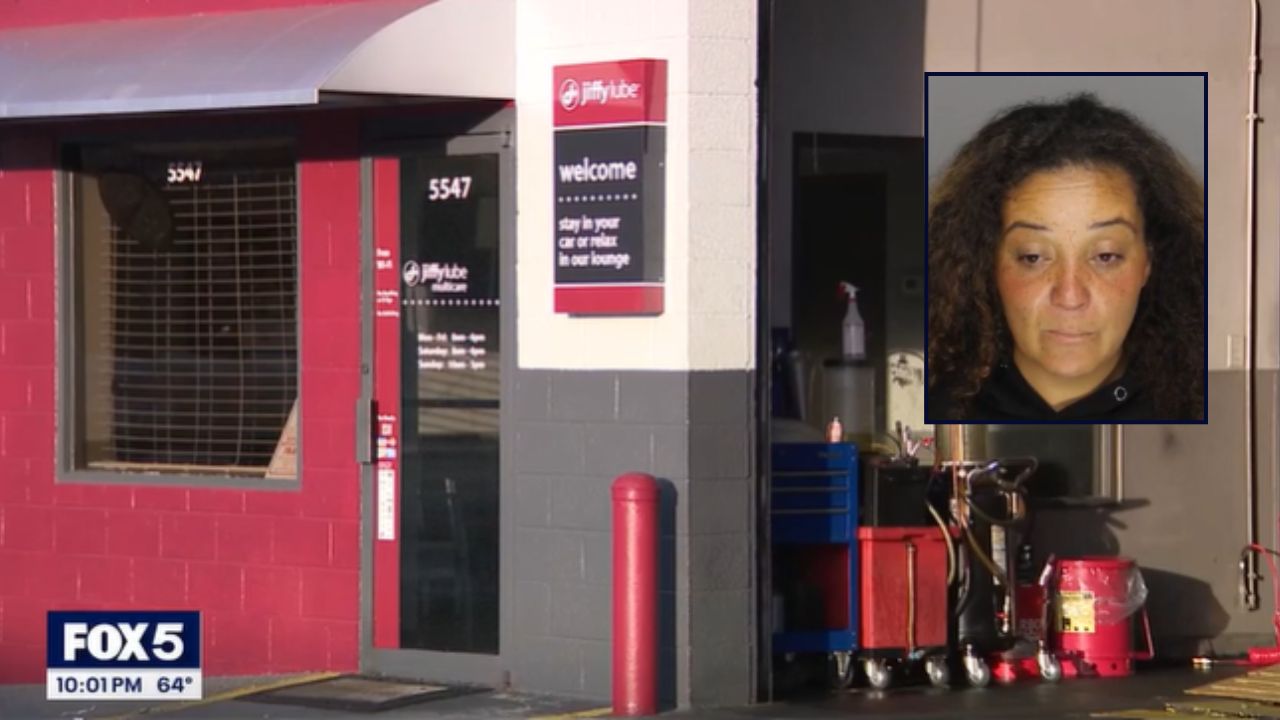
This unsettling episode occurred at a Jiffy Lube located in the 5500 block of Floyd Road, roughly 14 miles northwest of Atlanta. Onlookers and employees were taken aback when Davis reportedly left her daughter with a Jiffy Lube employee and exited the scene, prompting the staff to call the police immediately. The location, typically a place of mundane vehicle maintenance, became the backdrop for this extraordinary event. According to a statement from the Cobb County Police Department shared with Law&Crime, the child appeared to be in decent health, albeit dressed in soiled clothes and suffering from several rashes. This condition of the child raises additional concerns about the care she was receiving prior to the incident, suggesting ongoing neglect and possibly deeper issues that may have been present in Davis's life.
Assistant manager Jarayya Mayes recounted the incident to local Fox affiliate WAGA, explaining how Davis approached her and a co-worker, Elijah, with the baby in tow. Mayes recalled Davis saying, "Hey, doesn't my baby look so cute? Is my baby so cute?" Mayes and her co-worker responded affirmatively to what seemed like an ordinary compliment before the situation took a dramatic turn. This initial interaction, seemingly benign, belied the seriousness of the unfolding events. The employees, expecting a routine exchange, were instead thrust into a situation that demanded immediate action and empathy. The clip that set everything off is below, capturing the surreal nature of the encounter and the rapid shift from normalcy to crisis.
After entrusting the baby to Mayes and Elijah, Davis allegedly stated she had some errands and left, allegedly telling them, "The paperwork is in the bag, you guys can just have her if I don't make it back." Mayes recognized the potential danger immediately and, with growing concern, contacted 911. The phrase "if I don't make it back" resonated as an ominous warning, suggesting that Davis might have been in distress or facing an unseen threat. About 15 minutes later, the situation escalated when Davis returned to the Jiffy Lube, reportedly brandishing a knife and demanding her baby back. Her return, marked by panic and urgency, intensified the already fraught scenario, demonstrating the unpredictable nature of her state of mind.
According to Mayes, Davis came back in a panic, exclaiming, "Where's the baby? I need the baby. I gotta go, I gotta go. Some stuff just went down. I gotta go." Dispatchers instructed the employees not to return the baby until police arrived, emphasizing the potential danger Davis might pose. Officers soon arrived on the scene and took Davis into custody, while an ambulance transported the baby to the hospital. This decisive response by the employees and law enforcement shows the gravity of the situation and the need for careful handling. Davis remains at the Cobb County Jail on a $4,620 bond, a stark reality that reflects the legal consequences she now faces. The video below further illustrates the tense situation, capturing the urgency and fear that permeated the interaction.
This incident is just one of many revealing systemic failures when it comes to addressing mental health and family welfare, particularly within marginalized communities. The struggles and pressures faced by Black mothers in America are historically tied to systemic inequalities in healthcare, economic opportunities, and social support. These disparities often leave individuals without the resources or support networks needed to handle crises, increasing the likelihood of desperate actions. Events such as these shine a light on the growing need for better support systems and interventions, similar to the challenges highlighted in other cases of system failures. Addressing these issues requires a comprehensive approach that considers the unique challenges faced by Black families, ensuring that they are not left to bear the brunt of systemic neglect.
This incident isn't just about Laraven Davis; it's a stark reminder of the systemic gaps that let vulnerable individuals fall through the cracks.
This incident isn't just about Laraven Davis; it's a stark reminder of the systemic gaps that let vulnerable individuals fall through the cracks.
Davis's case raises critical questions about the level of mental health support available to mothers in crisis. Was she aware of where to seek help? Did she have access to those resources? The availability of mental health services is often inconsistent, particularly in marginalized communities where stigma and lack of awareness further impede access. Without adequate counseling and support services, many parents find themselves overwhelmed, leading to desperate actions. This mirrors discussions about how society can better support athletes like Ja Morant in high-pressure situations, emphasizing mental health support's critical role. Just as athletes require mental resilience to perform under stress, parents need support to manage the demands of caregiving, especially when resources are scarce and pressures are high.
The justice system's involvement in Davis's situation also illuminates broader issues of how such cases are handled. Charging her with misdemeanors like child abandonment and reckless conduct seems straightforward, but it glosses over underlying issues that a more compassionate legal approach might address. The intersection of criminal justice and mental health is fraught with complexities, often leading to punitive measures rather than rehabilitative solutions. This mirrors how the criminal justice system is often critiqued for its handling of Black individuals, as seen in the Kiarious and Jazmine Hall case. In both instances, the need for systems that recognize and address the root causes of behavior, rather than merely punishing them, is evident. Such an approach requires a shift in perspective that values prevention and support over enforcement.
For the community, this serves as a critical moment to discuss collective responsibilities. What do we do when we see someone in distress? How do we ensure that others in similar situations receive the support they need before reaching a crisis point? The Jiffy Lube employees' quick thinking and empathy highlight the potential impact community members can have when they choose to intervene positively. Their actions exemplify how individuals can become the first line of defense in preventing tragedies, stepping in where systemic support may be lacking. Creating a culture of care and vigilance can empower communities to act collectively in the face of crisis, fostering environments where individuals feel supported and less isolated.
Advertisement
The racial and socioeconomic dynamics at play cannot be ignored. Black women like Davis often bear the brunt of the intersection between racial discrimination and poverty, which exacerbates situations like hers. These intersecting oppressions can create a cycle of disadvantage that is difficult to escape without systemic change. This is part of a larger narrative that finds parallels in other societal domains, resembling the scrutiny faced by public figures in similar intersections, such as Nicki Minaj's political statements. Both cases illustrate how Black women are often at the forefront of challenging systemic inequities, whether in their personal lives or on public platforms. Recognizing these patterns is crucial in devising strategies that not only address immediate needs but also work towards long-term equity and justice.
As Davis's case moves forward, it poses larger questions about what reforms might be necessary. Will this result in changes that better address mental health crises? Will there be a push for more comprehensive social services? These are pivotal questions that demand attention from policymakers and community leaders alike. This event provides an opportunity for local authorities and the community to reassess how they address the well-being of its most vulnerable members. Developing effective interventions requires collaboration across sectors, with a focus on prevention, support, and rehabilitation. It's a call to action that must be heard, not just for Laraven Davis, but for everyone in similar situations, ensuring that no one is left without the help they need.