Nicki Minaj Faces Criticism After Trump Highlights Her Backside: What's at Stake?
By Jasmine Reed, PowerVault Staff Nicki Minaj, no stranger to controversy, found herself at the epicenter of another media storm, this time courtesy of former President Donald Trump. At a rally in Michigan's Port Huro...
Advertisement

By Jasmine Reed, PowerVault Staff
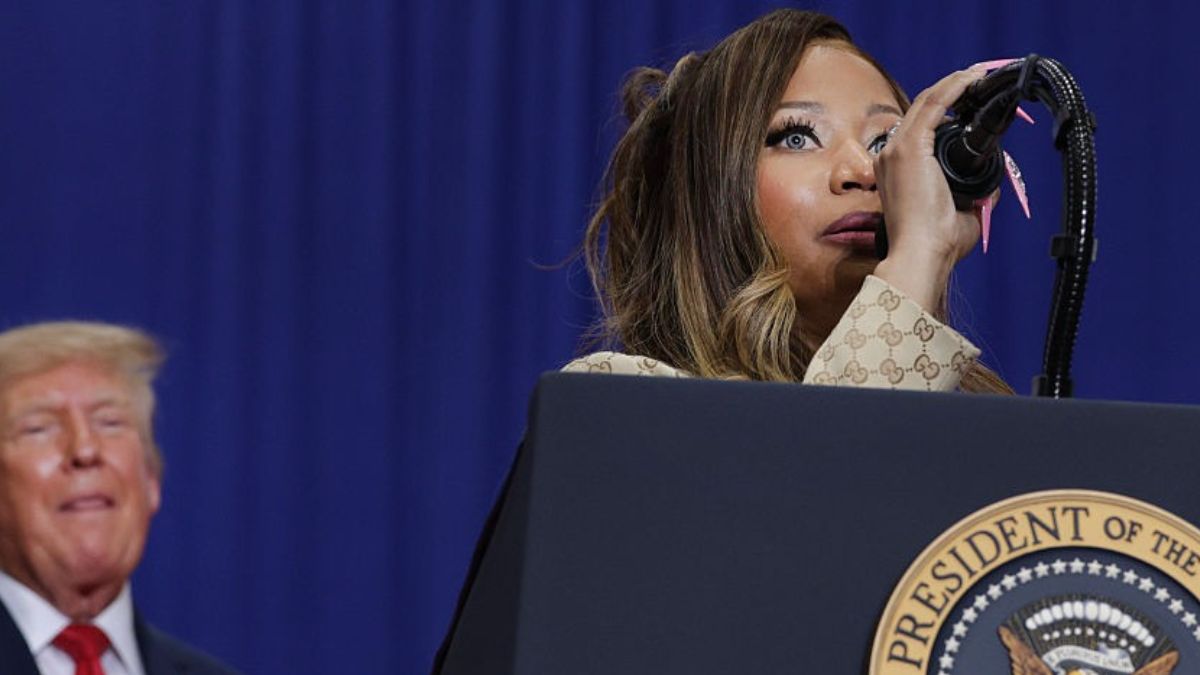
Nicki Minaj, no stranger to controversy, found herself at the epicenter of another media storm, this time courtesy of former President Donald Trump. At a rally in Michigan's Port Huron, Trump, ever the showman, made headlines once again by drawing attention to Minaj's infamous backside, in a comment that many found inappropriate and demeaning. As Minaj stood in the front row, Trump called her out before thousands, praising her talent but primarily fixating on her figure. This sparked a wave of criticism and renewed discussions about her political affiliations, raising questions about the dynamics of power and respectability in their exchange.
The rally, reported by Atlanta Black Star, featured Trump campaigning for Republican Senate candidate Mike Rogers. Among his supporters were several Black celebrities whose presence he paraded as badges of honor for his campaign, attempting to project a facade of diversity and acceptance. This isn't the first time Trump's interactions with Black celebrities have raised eyebrows. Previously, figures like Mike Tyson have faced backlash for aligning with him, seen by some as props used to bolster his image among marginalized groups. Minaj, a powerhouse in the music industry known for her outspoken nature and undeniable influence, has recently voiced her support for Trump, a move that has not been without its critics and has stirred controversy within her fanbase.
During his speech, Trump humorously admitted to scrutinizing Ohio Sen. Jon Husted's physique, adding a layer of absurdity that seemed to set the stage for his next spectacle. Midway through, he shifted his focus to the 'Super Bass' rapper, Nicki Minaj, with a comment that straddled the line between flattery and objectification. 'By the way, I looked at one hell of a beautiful a, before, Nicki Minaj! That's hard to miss!' he exclaimed, inviting her to stand as the crowd cheered. While the audience reacted with enthusiasm, seemingly entertained by the spectacle, social media was not as kind, with many expressing their outrage over the former president's comments, which some viewed as a continuation of his pattern of disrespect towards women.
The backlash on social media was swift and intense, a digital firestorm of criticism that refused to be ignored. One user denounced Trump as a 'disgusting pig,' while others were quick to mock his fascination with celebrity physiques, questioning his respect for women in general. The buzz on platforms like X, Twitter's new iteration, captured the collective disapproval of Trump's remarks. Many found his behavior unbecoming of a former president, while others pointed out the disturbing trend of objectifying women, particularly Black women, in public forums. The post that sparked the uproar is below, illustrating how Trump's words reverberated far beyond the rally itself.
Minaj's association with Trump has left fans divided, with many struggling to reconcile her past messages of empowerment with her current political affiliations. Her recent political pivot has raised questions about her motives and the potential repercussions for her brand. In July, Trump had previously objectified her during a White House dinner, joking about her response to a security scare. Yet, Minaj seems to brush off these moments with her unwavering support for Trump, a stance she reiterated by joining him on stage and praising his leadership. This allegiance has been met with mixed reactions, as fans grapple with the implications of her support for a figure whose policies and past rhetoric often contrast sharply with the values Minaj has championed in her music.
Trump's penchant for objectifying individuals, particularly Black women, is not new, and it reflects a troubling and persistent societal issue. His comments echo a history of racial and gendered stereotypes that have long plagued Black female celebrities, reinforcing harmful narratives that date back centuries. From the days of Hottentot Venus to the scrutiny of Serena Williams, the hyper-fixation on Black women's bodies has consistently been a societal issue, serving to dehumanize and reduce women to mere objects of spectacle. Trump's rhetoric is reflective of a much larger pattern, one that continues to demand attention and change, as it shows the need for a more respectful and equitable discourse around Black women's bodies and their place in society.
But let's pause here to reflect deeply.
When Trump objectifies, he is more than targeting an individual; he's tapping into historical stereotypes that demean Black women.
Given Minaj's stature in both the music industry and popular culture, her interactions with Trump are significant and cannot be overlooked. Her support for a polarizing figure like Trump complicates her public image, especially given his controversial history with race and gender issues. For Minaj, who has built a career on empowerment and defying norms, this alliance puts a spotlight on the messages she sends to her fans, the majority of whom are young, Black, and impressionable. Her partnership with Trump challenges her narrative of strength and independence, prompting her audience to question the authenticity of her empowerment message and the potential contradictions it presents.
For the industry, these moments highlight the complexities of celebrity endorsements and political affiliations in an era where public figures are expected to align with specific values. Minaj's support for Trump poses a challenge to the music industry's liberal status quo, which often positions itself as a progressive force. The backlash she faces may deter other artists from publicly aligning with controversial figures, impacting the dynamics of celebrity politics. The stakes are high, as Minaj's decision reverberates beyond her personal brand, influencing industry norms and prompting discussions about the responsibilities artists bear in shaping political discourse and societal values.
For the audience, especially Black women, this interaction is a reminder of the dual-edged sword of visibility and objectification, a perennial issue that continues to affect how Black women are perceived in the public eye. Minaj's experience speaks to a broader narrative of how Black women handle public spaces where their bodies are often commodified, celebrated, and simultaneously scrutinized. When Trump objectifies, he is more than targeting an individual; he's tapping into historical stereotypes that demean Black women. This incident should spark deeper conversations about respect, the power dynamics within these exchanges, and how we can move towards more equitable representations.
Advertisement
From a socio-political standpoint, Trump's behavior shows the racial and class dynamics that permeate American society, revealing the complexities of these intersections. His interactions with Black celebrities often seem performative, as if their presence validates his claims of racial inclusivity, yet these encounters frequently reveal a lack of genuine respect and understanding, often reducing these figures to mere tokens in his political theater. This dynamic, where class and race intersect, reveals much about the ongoing struggles faced by Black communities in asserting their agency, challenging stereotypes, and demanding respect and representation in spaces historically dominated by others.
Looking forward, the aftermath of this incident challenges us to reconsider the role of celebrities in political discourse, urging a reevaluation of how influence is wielded in public arenas. As the lines between entertainment and politics continue to blur, the responsibility lies not just with the celebrities themselves but also with the audiences who consume and critique their every move. Minaj's fans, along with the broader community, must grapple with the implications of her choices and what they mean for the values we uphold. As the spotlight moves on, let this be a moment of reflection and a call to demand more from those who wield influence, ensuring accountability and authenticity in the messages they convey.