Scott Colom Senate Win Claim: Where Are the Receipts?
By Andre Coleman, PowerVault Staff Scott Colom’s reported Mississippi Senate win would make history, but the supplied account does not provide enough evidence to verify that result. The story describes a Black Democra...
Advertisement

By Andre Coleman, PowerVault Staff
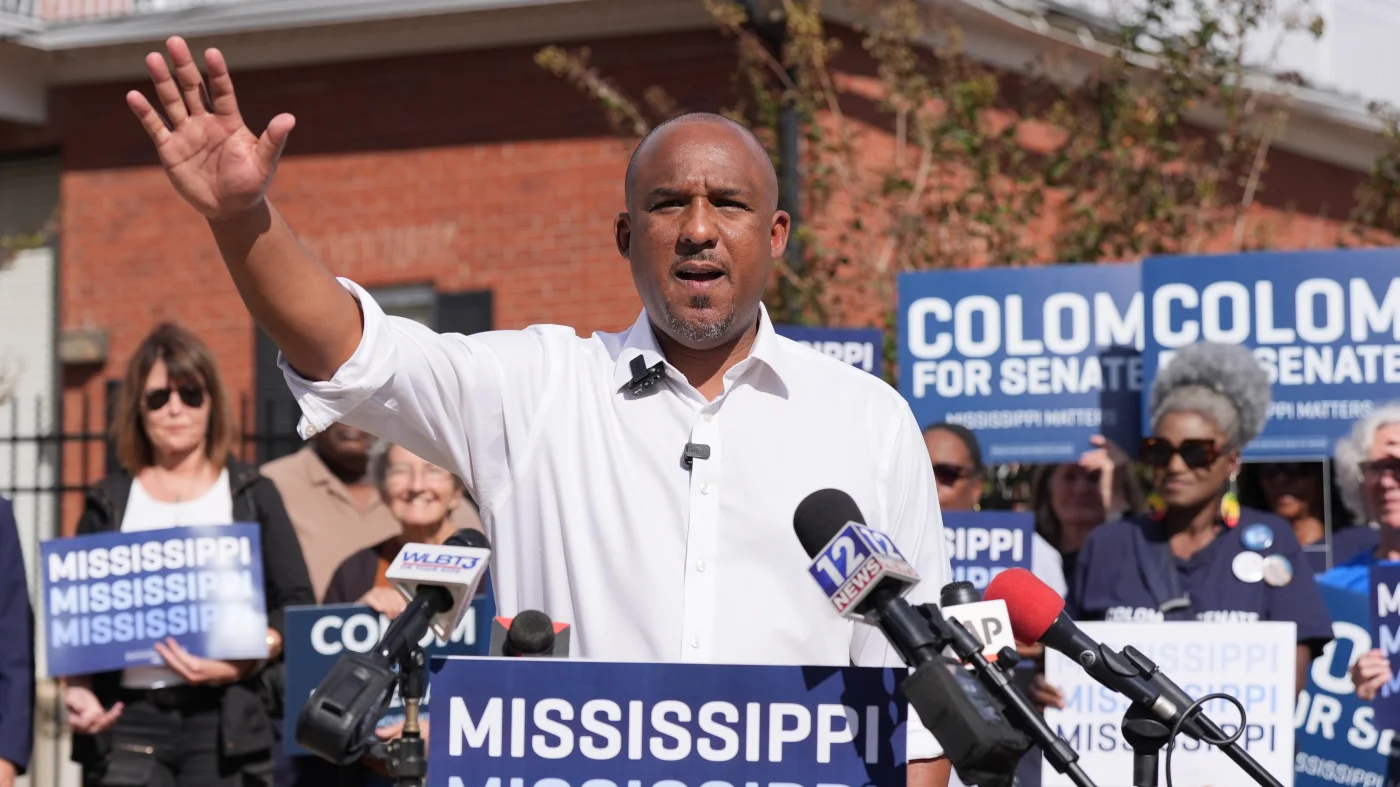
Scott Colom’s reported Mississippi Senate win would make history, but the supplied account does not provide enough evidence to verify that result. The story describes a Black Democratic prosecutor defeating Republican incumbent Cindy Hyde-Smith by roughly 5,000 votes. That would be enormous news for Mississippi and Black political representation. It also demands stronger receipts than an unnamed article claiming an Associated Press race call without linking to it. A margin that narrow makes outstanding ballots especially relevant to understanding the reported outcome. Before anybody crowns a senator, the distinction matters: a compelling account of an election victory is not the same thing as a confirmed result. The flowers can wait for the facts.
The supplied report places Colom ahead after a Wednesday evening AP call, with some ballots still outstanding. However, it identifies neither its original outlet nor a publication date that readers can check. Those omissions prevent readers from establishing when this account appeared or tracing its central claim. Its opening summary also makes a sweeping claim about Mississippi having no Democrat in office since 1980. That is incorrect. Democrat John C. Stennis won reelection to the Senate in 1982, and Democrats have held other Mississippi offices much more recently. Readers should consult AP’s election coverage and the Mississippi secretary of state’s election information for independently documented results. Neither link should be mistaken for confirmation of this particular claim.
The account’s campaign details explain why the story travels so easily. It describes Colom winning Democratic territory around Jackson while also taking Forrest County, which Donald Trump carried with about 58 percent in 2024. Hinds County, home to the state capital, anchors that account of his traditional Democratic support. That combination would suggest support beyond the usual partisan base. The article also attributes a confident campaign prediction to Colom: "We're gonna shock a lot of people, but I'm not gonna be shocked." It places those remarks at a coastal canvassing event in October. Without the original recording or an identifiable publication, that quotation remains attributed to the supplied account rather than independently authenticated here. The accompanying video needs the same scrutiny: who published it, when, and what does it actually establish?
Whatever that video contains, campaign confidence cannot establish an election result. The supplied account identifies Colom as district attorney for Mississippi’s 16th judicial district since 2016, including his hometown of Columbus in Lowndes County. It says his campaign emphasized accessible healthcare, rural hospitals and affordability. He also connected those concerns to whether young people could find jobs and remain in Mississippi. Those priorities offer a serious political argument, not merely a feel good headline. A hospital closing can mean a longer emergency drive, fewer local jobs and another reason for young families to leave. Still, a persuasive platform does not prove the reported county results. That requires vote totals, reporting percentages and a traceable race call, not an attractive campaign message.
There is another consequential thread: Hyde-Smith’s opposition to Colom’s federal judicial nomination during Joe Biden’s presidency. The supplied reporting says Republican Senator Roger Wicker supported him, while Hyde-Smith objected. Her stated concerns included Soros connected political spending and Colom’s position on legislation concerning female athletes. According to that account, Colom said the donations went to an independent political committee, not his campaign. He also challenged her characterization of his views and discussed signing a statement opposing prosecution of doctors providing gender affirming care to transgender youth. In his 2023 letter, he asked her to reconsider and said personal views would not govern his judicial work. Any video accompanying this dispute should be checked against the original statements and correspondence, not treated as a substitute for them.
A clip about that nomination dispute would not, by itself, verify a later Senate victory. The history deserves equal precision. Hiram Revels entered the Senate from Mississippi in 1870, becoming its first Black member. Blanche K. Bruce followed in 1875 and served until 1881. That means the supplied summary’s reference to Mississippi’s last Black senator serving in the 1870s leaves out part of Bruce’s tenure. The Senate’s historical resources provide a starting point for checking those records. Mississippi’s 1890 constitution later entrenched voting restrictions that disenfranchised Black citizens. That gap in representation was not simply a matter of candidates failing to connect. Understanding it requires attention to who could exercise political power and whose participation the state deliberately obstructed. Any discussion of representation today belongs beside that deliberate destruction of political power, not above it.
The bigger the historic claim, the less room there is for careless reporting.
Black voters deserve celebration that can survive a fact check.
For Colom personally, the temptation is obvious: the prosecutor blocked from a judgeship returns to defeat the senator who blocked him. That is a political comeback story with an almost suspiciously tidy ending. But Black achievement does not need a revenge script to deserve attention. His qualifications, record and policy positions should face scrutiny on their own terms. His reported appeal to bipartisan cooperation also deserves attention beyond the personal conflict, particularly given his experience serving a conservative area. If a victory is independently confirmed, celebrate the organizing and the voters who delivered it. Until then, turning a reported outcome into a triumphant personal redemption story risks making a real public figure carry an unproven claim. A satisfying ending is not evidence, however badly the group chat wants the screenshot.
For the political system, the account points toward a more useful question than whether one candidate supposedly cracked a red state. Which institutions receive sustained investment, and which communities get written off before campaigning begins? Parties cannot praise Black voters as democracy’s backbone while treating their neighborhoods as places to visit only before Election Day. Door knocking, local relationships and attention to rural healthcare deserve serious examination whenever credible reporting documents them. Colom reportedly credited visits to homes and festivals with earning support. That is his explanation, not an independent assessment of the campaign’s effectiveness. But this account supplies no spending records, turnout analysis or voter interviews that establish why the claimed result happened. Calling it a blueprint now would confuse a campaign’s preferred explanation with demonstrated evidence. Strategy needs receipts too.
For Black readers, there is no conflict between wanting a historic breakthrough and demanding confirmation. Black voters deserve celebration that can survive a fact check. Too often, audiences get offered two bad choices: accept an uplifting claim immediately or risk being accused of dampening the moment. Nobody owes a headline that kind of loyalty. The standard should protect readers, especially those whose votes and labor become supporting characters in a national comeback story. They deserve to know whether they are sharing a documented result or helping an unsupported account travel further through trusted community spaces. PVN’s coverage questioning an election claim involving Lauren Boebert reflects a relevant editorial priority. Evidence cannot become optional because this time the claim feels good. Hope deserves better than a correction the next morning.
Race and class also shape which political stories get sold as surprising. Describing Mississippi only as a Republican fortress can make its Black residents disappear until someone needs an upset headline. Treating rural voters as one conservative bloc erases differences in income, race, age and access to care. The account itself places Colom’s hometown in an area with a conservative electorate. That background deserves examination, not an assumption that everyone there votes alike. Meanwhile, references to billionaire donors can collapse legally distinct spending into a single insinuation. Candidate fundraising and independent political spending require separate documentation, even when both deserve scrutiny. The connection to PVN’s question about who gets seen in college basketball is visibility: people deserve coverage before they become useful to somebody else’s preferred story.
Advertisement
The next step is straightforward: locate the original report, verify the AP call and compare the claimed margin with documented election returns. Any confirmed result should distinguish a media projection from official certification. A reported victory would then invite harder questions about turnout, county shifts, campaign spending and what Colom promised to deliver. Without that verification, this remains an account requiring confirmation, not a historic result PVN can responsibly declare. Mississippi’s Black political history is too consequential to decorate with unsupported certainty. Give the achievement its flowers when the evidence earns them, and give the voters something sturdier than a headline to stand on.
More from PowerVault Network: