Semaj Coleman's Shooting: Questions Linger Over Accidental Death Claim
By Marcus Ellison, PowerVault Staff Semaj Richelle Coleman, a 22-year-old student at Norfolk State University, tragically lost her life in an incident that authorities have labeled an accident. But is the situation tr...
Advertisement

By Marcus Ellison, PowerVault Staff
Semaj Richelle Coleman, a 22-year-old student at Norfolk State University, tragically lost her life in an incident that authorities have labeled an accident. But is the situation truly as straightforward as it appears on the surface? Coleman, who was on the cusp of completing her degree in Health Services Management, was fatally shot on October 24 in a parking lot in Norfolk, Virginia. As the police assert that the shooting was accidental, the scant details provided so far leave a community grappling with more questions than answers. They wonder how such a devastating event could have transpired and what circumstances preceded this heartbreaking loss.
Reports from Norfolk Police and local media outlets illuminate the abrupt and tragic end of a promising young life. Semaj Coleman was not just a student; she was part of the vibrant community at Norfolk State University, a historically Black institution with deep roots and significance in the Black community. The campus is now enveloped in mourning, as the university extends its condolences and support to the grieving students, faculty, and staff left reeling from her untimely death. Meanwhile, Matthew B. Croslin, a fellow student, faces serious charges of involuntary manslaughter and reckless handling of a firearm. Despite these charges, the story presented by authorities remains incomplete, prompting a collective yearning for the truth about that fateful night.
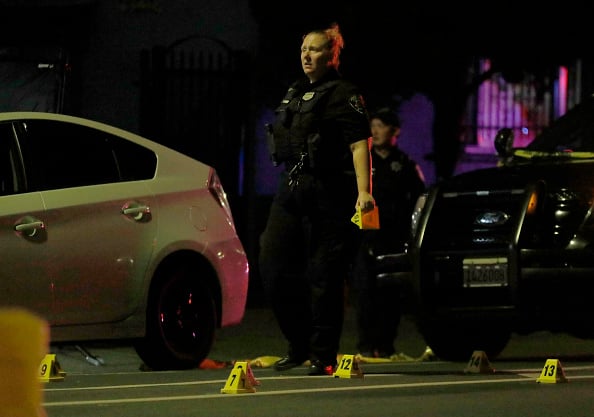
Semaj Coleman was shot in the 5700 block of East Virginia Beach Boulevard, a location that has now become a somber landmark of her final moments. Police were first alerted when she was brought to Sentara Norfolk General Hospital with injuries that would ultimately claim her life. Although the police have preliminarily labeled the shooting as accidental, there remains a void of information about the circumstances leading to this tragic event. The public is left in the dark, with no official explanation to piece together the sequence of events that led to such a devastating outcome. The video below captures the scene, showing police presence as they began their investigation into what exactly unfolded that night.
Norfolk State University, recognized as a historically Black university, finds itself mourning the loss of a cherished member of its community. Semaj Coleman was more than just a student; she was an integral part of the university's fabric, actively participating in campus life. Her recent induction into the National Association for Allied Health Professions and involvement in the Spartans Promise to Persist with Purpose program underscored her dedication to her field and community. Coleman embodied the hopes and dreams of many young Black individuals striving to uplift their communities through education and service, making her untimely death a profound loss to both the university and the broader community.
The charges brought against Matthew B. Croslin, a 23-year-old student, add a complex layer to this already tragic narrative. Currently held at Norfolk City Jail without bond, Croslin's involvement raises difficult questions about accountability and justice. The police's preliminary classification of the incident as an accidental shooting leaves the community with more queries than answers, creating a void filled with uncertainty and grief. As the investigation remains ongoing, the lack of clarity around the events that led to Semaj Coleman's death leaves many struggling to comprehend how a vibrant student's life could be cut short so suddenly. The video below provides insight into the community's reaction, reflecting a collective sense of mourning and a desire for truth.
This heartbreaking incident does not stand alone; it is part of a disturbing pattern of violence impacting young Black lives, particularly within college settings. The recent shooting during Florida A&M University's homecoming still resonates, underscoring persistent concerns about safety at Historically Black Colleges and Universities (HBCUs). Just last year, Norfolk State University was thrust into the national spotlight due to another shooting incident. Each tragedy serves as a stark reminder of the systemic issues that continue to threaten the safety and well-being of our young people. These ongoing incidents compel us to confront the broader societal failures that disproportionately endanger Black students pursuing their education and dreams.
Yet, how often do we see Black lives reduced to 'accidents' until proven otherwise?
How often do we see Black lives reduced to 'accidents' until proven otherwise?
The characterization of Semaj Coleman's death as an accidental shooting warrants careful examination. In a society where Black individuals are frequently subjected to heightened scrutiny and suspicion, the term 'accidental' can serve as an all-too-convenient conclusion that bypasses deeper inquiry. Our legal system has a documented history of downplaying the deaths of Black individuals, either through neglect or by framing such tragedies as mere mishaps. This case should prompt us to critically evaluate whether investigators adhered to rigorous protocols or if they allowed entrenched biases to shape their conclusions prematurely. We must demand a thorough investigation that respects the gravity of the situation and seeks genuine accountability.
The university's response to Semaj Coleman's death also explains a larger issue: how institutions manage and communicate in the aftermath of tragedies. While providing support to those affected is crucial, there is an equally pressing need for transparency and accountability to ensure that justice is pursued and lessons are learned. The social media post below captures the community's collective grief and their yearning for answers, resonating deeply with those who knew and loved Semaj. It shows the community's demand for clarity and action, reflecting a broader call for institutions to be more forthcoming and responsible in handling such devastating events.
For the Coleman family and the wider community, this tragedy starkly illustrates the precarious boundary between safety and violence. It highlights systemic failures that span from law enforcement practices to the policies of educational institutions, necessitating a critical reevaluation of measures that disproportionately impact Black communities. From police procedures to campus safety protocols, there is an urgent need for comprehensive review and reform. These systemic issues require immediate attention to prevent further tragedies and to create an environment where all students can pursue their education without fear for their lives.
Advertisement
This incident also brings to the forefront the racial dynamics that persist in our society. With a Black student killed and a judicial system quick to categorize it as an accident, the historical context of how Black lives are valued in America cannot be overlooked. This case echoes the painful reality of systemic undervaluation of Black lives, prompting the community to rightfully demand transparency and accountability. It is more than about seeking justice for Semaj Coleman; it is about ensuring that all students, particularly those from marginalized communities, feel safe and valued in their academic environments. The demand for clarity is a call to address these enduring racial injustices.
As we look to the future, the pressing question remains: How will this case be handled moving forward? Will the authorities and community leaders commit to an exhaustive investigation that prioritizes justice and truth over expediency? Semaj Coleman was a bright young woman with a future filled with promise and potential, and her life deserves more than a narrative of silence. In remembering her, we must also challenge ourselves and our systems to support the next generation more effectively. The final chapter of Coleman's life should serve as a catalyst for meaningful change, compelling us to demand reforms that prevent such tragedies from recurring.