Trump Rally Turns Violent: What This Means in a Divided America
By Jasmine Reed, PowerVault Staff A Donald Trump rally in North Carolina descended into chaos when a heckler was punched by a supporter, capturing not just the attention of attendees but also the former president hims...
Advertisement
By Jasmine Reed, PowerVault Staff
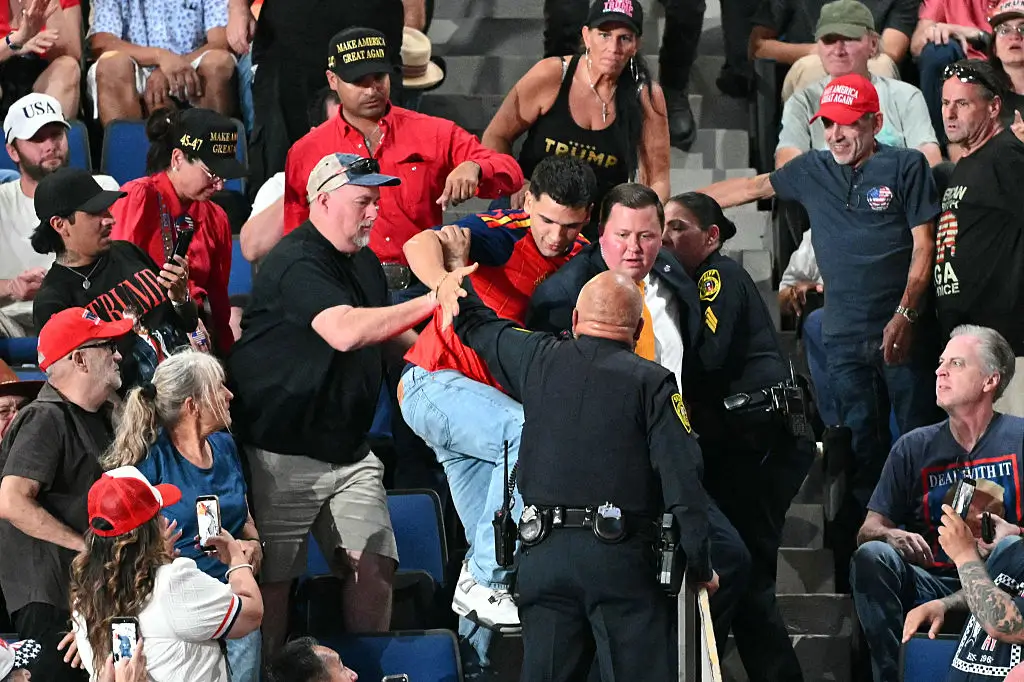
A Donald Trump rally in North Carolina descended into chaos when a heckler was punched by a supporter, capturing not just the attention of attendees but also the former president himself. The scene quickly turned into a spectacle, as tensions that had been simmering beneath the surface exploded into physical confrontation. Evander Holyfield, the legendary boxer, found himself unexpectedly thrust into the spotlight after Trump likened the altercation to a boxing match. This rally was meant to drum up fervor and support for key Republican candidates ahead of the midterm elections, but instead, it showcased the volatility and aggressive undertones that often permeate Trump's gatherings. The involvement of a figure like Holyfield highlighted the unpredictable and often chaotic nature of these events, where even the most renowned individuals can become unwitting participants in the drama.
The brawl erupted just as Trump was addressing his Make America Great Again (MAGA) faithful, a crowd known for its fervent and unwavering support. Instead of de-escalating the situation, Trump chose to fan the flames by drawing a bizarre connection to Holyfield, noted for his historic bouts and long-standing friendship with Trump since the days of Trump's Atlantic City casinos. Holyfield, present as a special guest, likely did not anticipate being dragged into a fracas that signaled more than just poor crowd control. His presence was meant to add a touch of star power to the rally, but instead, it underscored the chaotic and unpredictable nature of Trump's political gatherings. The incident served as a reminder of how quickly these events can spiral out of control, fueled by the former president's provocative rhetoric and the passionate response it elicits from his followers.
According to NewsNation White House correspondent Libbey Dean, Holyfield's arrival on Air Force One was modest, a reflection of his diminished prominence in Trump's circle. His name reportedly ranked at the bottom of the travel list, leaving him standing outside the plane as aides joined Trump aboard Marine One, a telling sign of the pecking order within Trump's entourage. This surreal scene shows the spectacle of Trump's events, where even legendary figures like Holyfield become props in a political theater marked by tension and unpredictability. The juxtaposition of Holyfield's iconic status with his treatment at the rally highlights the transactional nature of Trump's relationships, where loyalty and utility are often prioritized over genuine camaraderie. It also serves as a stark reminder that in Trump's world, even the most celebrated individuals can be reduced to mere footnotes in the larger narrative of his political ambitions.
In the immediate aftermath of the punch, police rushed to separate the combatants, an intervention captured in footage that showed the heckler retrieving his glasses from the floor, dazed and disoriented. The physical confrontation was not wholly captured on camera, leaving room for speculation about what exactly transpired in those heated moments. Nevertheless, Trump chose to address it from his podium, expressing enthusiasm rather than concern. 'That was incredible,' he exclaimed, inviting comparisons to Holyfield's career and inadvertently glorifying the violence that had just unfolded. This reaction from the former president illustrates a troubling tendency to prioritize spectacle over substance, a hallmark of his rallies that often leaves attendees on edge and the nation divided. By framing the altercation as an entertaining sideshow, Trump ignored the deeper implications of such violence, further eroding the standards of civil discourse and encouraging a culture where aggression is normalized.
As Trump marveled at the chaos, he offered an awkward shout-out to Holyfield, inaccurately referencing his opponent's size during a famous match. Holyfield, who indeed fought heavier boxers, became part of Trump's narrative, which often values showmanship over substance. This moment, shared widely on social media, speaks to the current political climate, where violence at rallies is shrugged off as entertainment rather than a serious public safety issue. By invoking Holyfield's name, Trump attempted to draw parallels between the boxing ring and the chaos of the rally, blurring the lines between sport and political violence. This conflation trivializes the seriousness of the altercation and sends a dangerous message that physical confrontations are an acceptable form of political expression. In doing so, Trump perpetuates a culture that celebrates aggression and undermines the principles of peaceful protest and constructive dialogue.
This isn’t the first time a Trump rally has turned volatile. Dating back to his initial presidential campaign in 2016, Trump rallies have repeatedly been venues for violence and aggressive rhetoric. The 2017 Charlottesville rally, where white supremacists clashed with counter-protesters, is a stark reminder of how Trump's rhetoric emboldens hostility, creating an environment where hate and violence thrive. More recently, at a rally leading up to the 2020 election, violence erupted when Trump's supporters confronted Black Lives Matter activists, highlighting the dangerous tensions simmering under the surface of American politics. These events are not isolated incidents but rather part of a broader pattern where Trump's inflammatory language and divisive tactics incite unrest and deepen societal divides. The normalization of such behavior poses a significant threat to democratic values and shows the urgent need for leaders who promote unity and peace over discord and division.
This isn’t just about a punch at a rally; it’s about the eroding line between political speech and street brawls.
This isn’t just about a punch at a rally; it’s about the eroding line between political speech and street brawls.
Trump's rhetoric has consistently blurred the boundaries between approval of physical aggression and the encouragement of peaceful protest. When the former leader of the free world cheers on a brawler at his rally, it sends a chilling message to his supporters: violence is not only acceptable, it's commendable. This fosters an environment where civil discourse is replaced by fists and anger, eroding the very fabric of democratic engagement. By endorsing such behavior, Trump undermines the principles of free speech and peaceful assembly, encouraging his followers to resort to violence instead of dialogue. This approach not only endangers the safety of those attending these rallies but also sets a dangerous precedent for how political disagreements are resolved. In a democracy, the exchange of ideas should be characterized by mutual respect and understanding, not by threats and intimidation.
Politically, the implications of this event stretch beyond the rally itself. It reflects the deepening divide within American society, where political gatherings resemble war zones and rhetoric inflames rather than informs. This dynamic raises critical questions about the role of political leaders in quelling or inciting violence through their words and actions. The Trump rally is a microcosm of a larger issue: the normalization of violence in political discourse. As leaders choose to exploit tensions for political gain, they risk alienating constituents and undermining the very foundations of democratic governance. This trend not only compromises the integrity of the political process but also threatens to destabilize the social fabric, as communities become increasingly polarized and distrustful of one another. The challenge moving forward is to foster a political climate that prioritizes dialogue and understanding, rather than division and hostility.
For Black communities, who often find themselves at the intersection of systemic racism and political violence, the stakes are particularly high. The underlying message of such rallies can be seen as a call to arms against those who challenge the status quo, often putting marginalized communities directly in harm's way. As history teaches, when violence is celebrated, it is those already oppressed who bear the brunt of its consequences. The glorification of aggression at political events sends a disturbing signal that dissent will be met with force, a message that resonates deeply with communities already facing significant socio-economic and racial challenges. This hostile environment exacerbates existing inequalities and perpetuates a cycle of fear and repression, making it increasingly difficult for marginalized groups to engage safely in the political process. The urgent task is to ensure that all voices can be heard without fear of retribution, fostering an inclusive and equitable democracy.
Advertisement
The racial and class tensions at play here are undeniable. Trump's audience, predominantly white and rural, starkly contrasts with the increasingly diverse America that his rhetoric targets. This segregation is visible not just in the crowds but in the very policies his speeches champion. It paints a picture of an America divided not just by politics, but by race and economic status, creating a fertile ground for unrest. The divisive language used at these rallies exacerbates existing societal fissures, alienating communities of color and reinforcing systemic inequalities. As these divides deepen, the risk of conflict and misunderstanding grows, threatening the cohesion and stability of the nation. To move forward, it is essential to bridge these gaps through policies that promote equality and inclusion, ensuring that all Americans, regardless of race or socioeconomic status, have a stake in the country's future.
Looking ahead, the path forward demands accountability and a reevaluation of what political leadership means in an era of heightened tension. Can the nation afford leaders who glorify violence? As the November elections loom, the stakes couldn't be higher, with candidates like Ken Paxton and James Talarico representing two diverging paths for the future of states like Texas. The challenge for the electorate is to support those who prioritize unity and peace over discord and division. This critical juncture requires voters to scrutinize the values and actions of those seeking office, choosing leaders who will uphold democratic principles and work towards bridging societal divides. The future of American democracy hinges on the ability to foster an environment where dialogue prevails over confrontation, and where the pursuit of justice and equality becomes a shared national priority.