Trump's Ilhan Omar Obsession: How His Rant Exposed His Own Legal Struggles
By Simone Walker, PowerVault Staff Donald Trump just can't seem to let go of Ilhan Omar. At a recent campaign rally in Corinth, Mississippi, he launched into yet another tirade against the Minnesota congresswoman. Thi...
Advertisement

By Simone Walker, PowerVault Staff
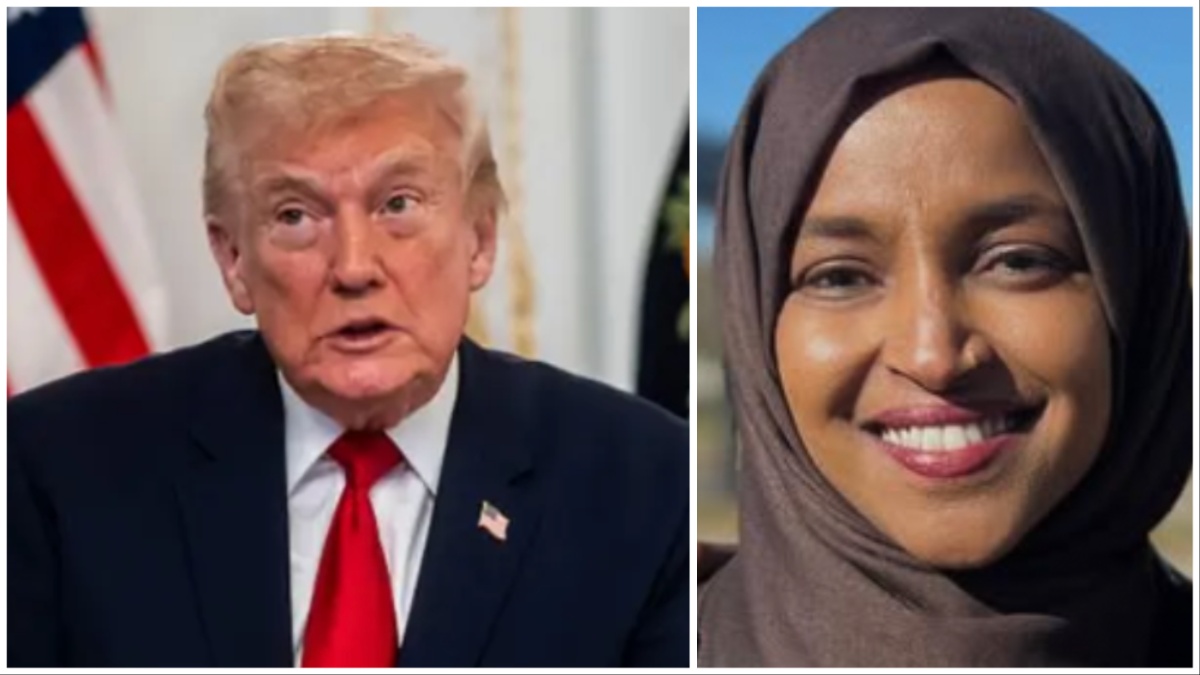
Donald Trump just can't seem to let go of Ilhan Omar. At a recent campaign rally in Corinth, Mississippi, he launched into yet another tirade against the Minnesota congresswoman. This time, however, he revealed more about his own legal mindset than anything about Omar. Trump's fixation on the Somali-born representative reached absurd new heights when he inadvertently spilled some truths about how guilty people dodge accountability. These truths might ring familiar to anyone who's followed his own legal escapades, where his penchant for projection and deflection has become a hallmark. Trump's obsession isn't just about policy differences; it's a personal vendetta wrapped in xenophobia and racism, aimed at a woman who represents everything he and his followers fear: diversity, change, and a challenge to the status quo.
The focus of Trump's ire was Omar's interview with MS NOW’s Chris Hayes, during which she addressed the persistent, unfounded rumors about her personal life. She dismissed the claims that she married her brother as "insane," but her response to Hayes' probing question about whether there was any truth to it left room for interpretation. Trump seized on her words, claiming they were lawyer-advised and indicating guilt, a tactic he should know well, given his history of legal entanglements. This is classic Trump: taking an opponent's words out of context to manufacture scandal. Yet, the irony is that Trump's own legal maneuvers are far more indicative of guilt than anything Omar has ever been accused of. His accusations are a smokescreen, an attempt to deflect from his own myriad legal issues.
Ilhan Omar's controversial response was simply, "Not to my knowledge," which Trump capitalized on during his rally. He mocked her, suggesting that this was the kind of response a lawyer would advise a guilty person to use. Ironically, this is something Trump might be intimately familiar with, given his own legal battles. The irony wasn't lost on social media commentators, who quickly pointed out Trump's history of invoking legal counsel to avoid self-incrimination. The absurdity of his claims was highlighted by his own record of dodging direct answers when under legal scrutiny. The online backlash was swift, with users pointing out that Trump's critique was, in fact, a confession of his own tactics. The clip that set everything off is below.
Trump's own dealings with the law provide a striking contrast to the accusations he's slinging. During a 2022 deposition in a civil suit led by Attorney General Letitia James against the Trump Organization, Trump reportedly invoked the Fifth Amendment 440 times. His only answer throughout the four-hour session was to confirm his name, an act that says a lot about his own strategies for evading accountability. It's a classic case of projection, where Trump's attempt to portray Omar as guilty instead highlights his own strategy of evasion. This deposition is emblematic of Trump's broader approach to legal challenges: avoiding direct answers, hiding behind constitutional protections, and projecting his own guilt onto others. His attack on Omar is another chapter in this ongoing saga of deflection and deceit.
For years, Trump has targeted Omar with accusations rooted in xenophobia and racism, questioning her American citizenship and suggesting she faces consequences for baseless claims. His latest rant comes on the heels of a federal raid on Omar's home, part of an ongoing investigation with suspicious timing. This raid occurred just 22 days before midterms, a move that Trump, in a classic twist of hypocrisy, would have decried as election interference had it not benefited his agenda. She addressed it head-on in the post below. This attack is not just about Omar; it's about the communities she represents and the ideals she embodies. Trump's rhetoric is a thinly veiled attempt to undermine her legitimacy and distract from his own legal and political troubles.
Trump's fixation on Omar fits a larger pattern in U.S. Political history where Black and immigrant politicians face disproportionate scrutiny and slander. Omar, as a Somali-American woman in Congress, embodies a shift that challenges the status quo and agitates those invested in maintaining it. This isn't a new phenomenon; Black leaders from Shirley Chisholm to Barack Obama have faced undue criticism and conspiracy theories meant to undermine their legitimacy. These attacks are rooted in fear, fear of change, fear of diversity, and fear of losing control. They are designed to delegitimize and distract, to sow doubt and division. Yet, despite these challenges, leaders like Omar continue to rise, their resilience and determination serving as a beacon of hope for marginalized communities across the nation.
Here's the real crux: Trump's own legal tactics betray the very guilt he projects onto others. His rally remarks reveal more about how he's navigated legal quagmires than anything about Omar's situation.
For years, Trump has been the loudest voice assigning guilt based on heritage and assumption.
For years, Trump has been the loudest voice assigning guilt based on heritage and assumption. Yet, his actions reflect a deep knowledge of legal loopholes that serve him when the spotlight's on him. He thrives on sowing doubt and diverting attention from his own questionable conduct. Every word he speaks about Omar is a shadow cast to obscure his own issues. His playbook is simple: accuse others of the very things he's guilty of, hoping to muddy the waters enough that his own transgressions get lost in the chaos. This strategy has served him well in the past, but as the legal noose tightens, the effectiveness of these tactics is waning. The more he attacks Omar, the clearer it becomes that he is the one with something to hide.
Omar's strength lies in her resilience despite relentless attacks. By consistently calling out Trump's rhetoric for what it is, racism and a desperate attempt to vilify, she has become a symbol of resistance against political intimidation. Her perseverance is inspiring for communities that have historically been marginalized and targeted by systems of power. Omar's presence in Congress is proof of the power of representation, and her ability to stand firm in the face of adversity is a lesson in courage and conviction. She represents a new generation of leaders who are unafraid to challenge the status quo, who understand that their very existence in spaces of power is an act of defiance. Her journey is a reminder that the fight for justice and equality is ongoing, and that perseverance in the face of hate can indeed lead to progress.
Trump’s obsession with Omar is not just a personal vendetta; it mirrors broader systemic biases that resonate through American politics. By attacking Omar, he is also attacking the communities she represents, exploiting racial tensions for political gain. This is a classic strategy that has been used to undermine the credibility of minority leaders throughout history. The response to his tactics is in the video below. This strategy of division and distraction is as old as politics itself, yet it remains effective in a society still grappling with its racial and cultural divides. By casting doubt on Omar's loyalty and integrity, Trump taps into a well of prejudice that has been used to maintain power structures that favor a select few. The challenge for Omar and those who stand with her is to dismantle these narratives and push for a political scene that is as diverse and dynamic as the nation it represents.
Advertisement
This saga lays bare the racial and class dynamics that continue to shape political discourse in America. Black leaders often face the dual challenge of overcoming systemic barriers while also enduring personal attacks that question their integrity and identity. Trump's attacks on Omar are not isolated; they are part of a larger effort to maintain power structures that benefit the few at the expense of the many. These dynamics are deeply entrenched, yet they are not insurmountable. The resilience of leaders like Omar is a reminder that change is possible, that the voices of the marginalized can and will be heard. The key to dismantling these structures lies in collective action, in holding systems accountable, and in demanding a political discourse that is fair, just, and inclusive for all.
As for what happens next, the political scene remains fraught with the tension of these dynamics. Omar will likely continue to face unjust scrutiny, but her resilience is a beacon of hope for many. The challenge now lies in ensuring that these attacks do not detract from the critical work being done to address systemic inequities. The community must remain vigilant and vocal, supporting leaders who challenge the status quo and advocating for justice and equality at every turn. The fight continues, and eyes will be on both Omar and Trump as these narratives unfold. In this moment of heightened tension and division, the stakes have never been higher. The path forward requires courage, collaboration, and a commitment to the principles of equity and justice that define the very fabric of democracy.