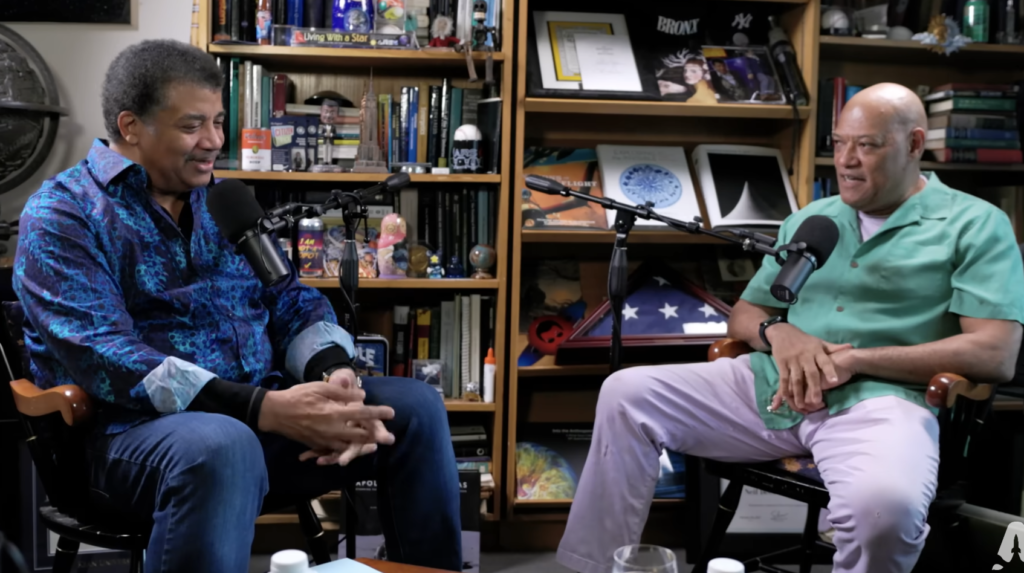
The Matrix, a groundbreaking sci-fi film that has transcended generations, is rich with layers and symbolism, and its exploration of philosophical ideas continues to captivate audiences. Recently, renowned astrophysicist Neil deGrasse Tyson and acclaimed actor Laurence Fishburne engaged in a fascinating dialogue about the film’s deep-rooted biblical references, drawing parallels that elevate the narrative beyond mere dystopian fiction. As they dissect the character arcs, Tyson and Fishburne illuminate how Neo embodies the archetype of ‘The One,’ echoing the messianic themes found in biblical texts, while Morpheus takes on the role reminiscent of John the Baptist, guiding Neo towards his destiny.
Fishburne, who famously portrayed Morpheus, reflects on his character’s unwavering belief that Neo is destined for greatness and what that signifies in both a cinematic and spiritual context. The layers of meaning grow thicker as Tyson, with his scientific mind, posits that the very concept of choice versus destiny in The Matrix mirrors the age-old theological debate found in scriptures. Is life preordained, or do we hold the power to shape our own fates? These questions resonate not only within the film but also within the struggles and triumphs of the Black community, where narratives of hope, resilience, and divine purpose often intertwine.
As the conversation unfolds, they explore how the film’s iconic red pill/blue pill analogy serves as a metaphor for enlightenment and the painful pursuit of truth, often rooted in spiritual awakening. The biblical references are not merely superficial, but serve as a testament to the human experience, reflecting the journey of sacrifice and redemption that has characterized so many Black stories throughout history. Tyson and Fishburne’s analysis not only shines a light on these parallels but also encourages a deeper look at how our cultural narratives continually echo biblical themes.
In a world where science and spirituality often seem at odds, Tyson and Fishburne demonstrate that they can coexist harmoniously, reminding us of the power of storytelling to bridge gaps and foster understanding. Their insights prompt us to revisit The Matrix with fresh eyes, seeing it not just as a film about reality and perception, but as a narrative rich with spiritual significance that resonates with the core of our collective human experience. The Matrix remains a masterclass in storytelling, encouraging us all to consider the very essence of who we are and how our stories are interwoven with something greater than ourselves.
About The Author