By Jasmine Reed, PowerVault Staff
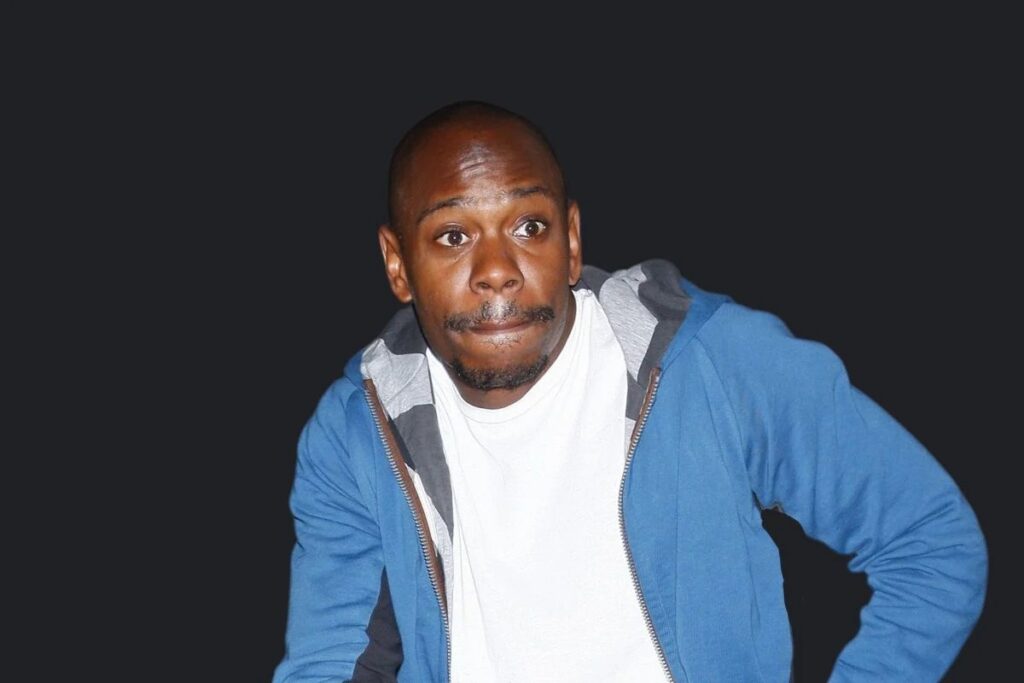
In a surprising reveal, Dave Chappelle recently shared that he wasn’t invited to the much-talked-about wedding of pop sensation Taylor Swift at Madison Square Garden. While it might seem like a throwaway joke from one of comedy’s heavyweights, it touches on something deeper about the intersections of culture, celebrity, and the expectations we have of one another in the world of fame.
For those not in the know, Taylor Swift’s wedding came on the heels of a whirlwind romance with NFL star Travis Kelce. Swift, a white pop icon, whose fanbase spans generations and races, has been at the forefront of mainstream music for over a decade. Chappelle, on the other hand, is a Black comedian whose biting humor often tackles the complexities of race, identity, and society. The contrasting backgrounds of these two cultural giants highlight the ways in which celebrity interactions can sometimes feel like a reflection of the broader social landscape. When Chappelle jokes about being left off the guest list, it’s not just a comment on his individual experience but an invitation to explore the underlying dynamics that govern who gets included in the ‘in-crowd.’
What does it mean when figures from different cultural spaces interact—or fail to interact? Chappelle’s exclusion from an event like this can serve as a microcosm of the often-fractured nature of cultural communion. Here you have a celebrated Black artist who, despite his immense success and influence in the comedy world, finds himself outside a pinnacle of what many would consider the modern celebrity elite. This speaks volumes about how communities can exist in silos, even when their members are all ostensibly part of the same industry. It raises questions about how we define community in entertainment, particularly for artists of color when the narratives often dominate the mainstream establishment.
This isn’t the first time we’ve seen a notable snubbing elicit broader discourse. Think back to the infamous 2017 Oscars when Chris Rock hosted and the Black community was barely represented. It felt like a slap in the face, especially in a year filled with incredible Black cinema. In both instances, we’re seeing a moment where marginalized voices are sidelined—Chappelle at a wedding that’s become a media spectacle and Rock amidst a Hollywood ceremony that should’ve celebrated diversity.
Looking forward, this scenario leaves us to ponder who truly gets to decide who belongs where within these cultural trenches. With the rise of social media, we have a unique lens into these interactions, but that doesn’t necessarily bridge the gaps we see in real life. As we watch Chappelle continue to navigate his world and observe the rise of artists like Swift and Kelce, it’ll be interesting to see if there’s a shift toward more inclusive cultural dialogues that embrace diversity in all forms.
In a world where connectivity seems at our fingertips, let’s not forget the actual connections we need to foster. Whether it’s comedians, musicians, or athletes, it’s crucial for us, as a community, to advocate for belonging and recognition across the spectrum. Chappelle’s lighthearted jab may just be the catalyst we need to spark deeper conversations about inclusion in the spaces we hold dear.
About The Author