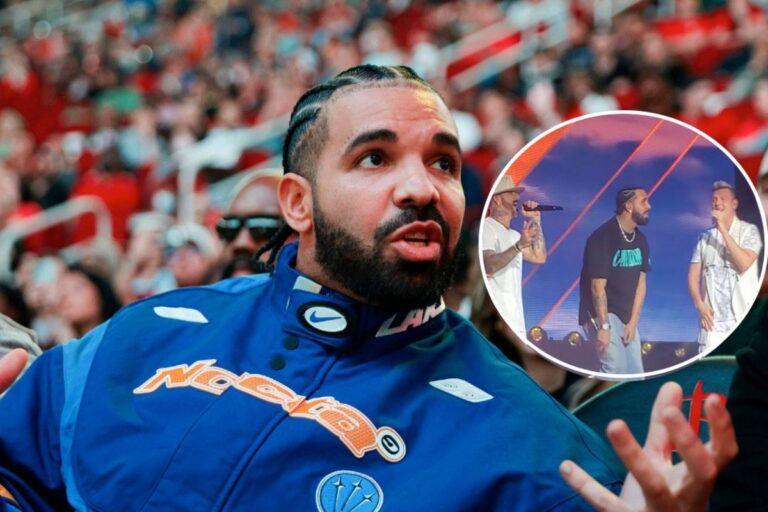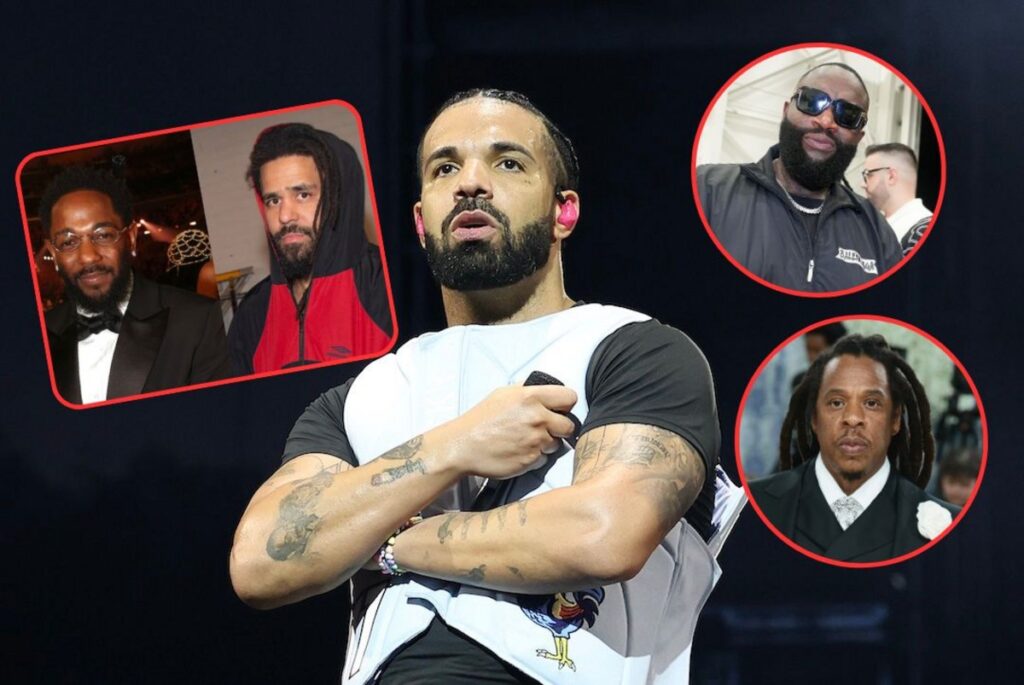
Drake has never been one to hold back, and his latest album, “Iceman,” is no exception. The Canadian rapper takes aim at some of the biggest names in the game, including Rick Ross, Jay-Z, and the legendary Big Three – a title that has been synonymous with the elite in hip-hop. As the album unfolds, it’s clear that Drake is carving out his narrative, positioning himself not just as a participant in the industry but as a pivotal force that is here to challenge and redefine the landscape.
In tracks layered with clever wordplay and sharp delivery, Drake’s verses serve as both a celebration of his own achievements and a subtle jab at his contemporaries. For Jay-Z, whose legendary status and business acumen are well-recognized, Drake seems to suggest that the throne may not be as secure as many believe, hinting at a shift in power dynamics. Meanwhile, Rick Ross, known for his larger-than-life persona and luxurious lifestyle, becomes a target for Drake’s critique of industry excess and authenticity, leaving fans to ponder the depth of their rivalry.
This isn’t merely a call-out; it’s a calculated move by Drake to assert his place at the forefront of hip-hop. With each bar, he reflects on the evolution of the genre, underscoring that there’s no room for complacency in a space that is constantly changing. The references are not just personal; they speak to the broader narrative of hip-hop culture, emphasizing the ongoing battle for relevance and respect in a genre that has continuously evolved since its inception.
As the dust settles from the release of “Iceman,” the industry is buzzing with reactions. Fans and critics alike are dissecting Drake’s lyrics, trying to decode his intentions and the implications of his bravado. The album is more than just music; it’s a commentary on artistry, legacy, and the fierce competition that defines hip-hop. For those paying attention, this marks a pivotal moment not just in Drake’s career but in the genre as a whole, as it highlights the intertwining of personal and professional rivalries that continue to shape the narrative of hip-hop.
From The Source
About The Author