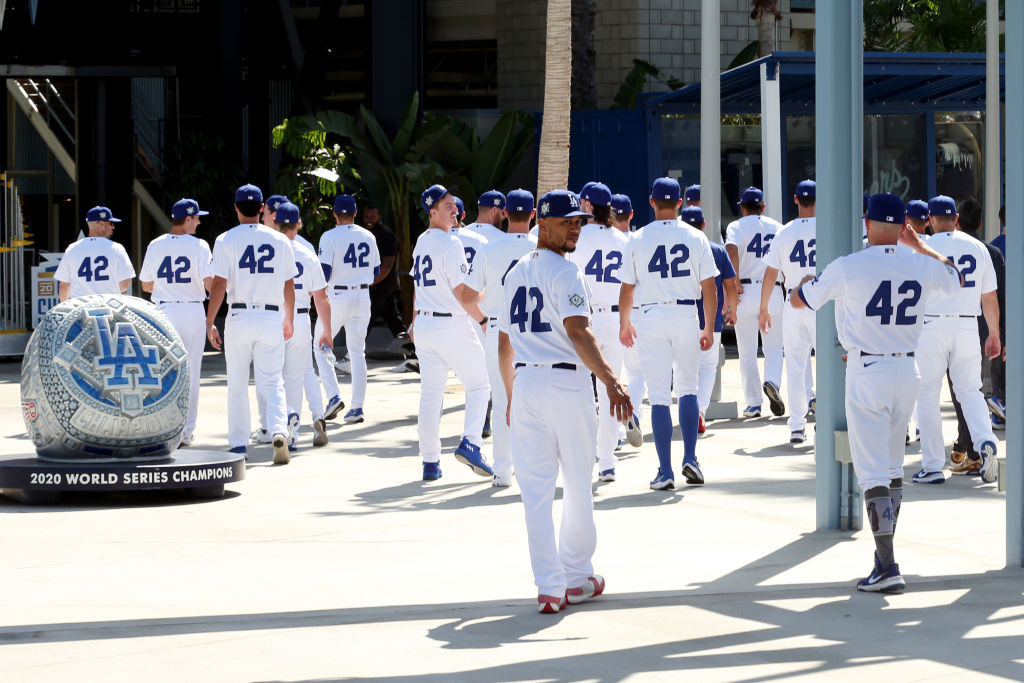
LOS ANGELES, CA - APRIL 15: Mookie Betts #50 of the Los Angeles Dodgers and teammates are seen entering Dodger Stadium after meeting by the Jackie Robinson statue prior to the game between the Cincinnati Reds and the Los Angeles Dodgers on Friday, April 15, 2022 in Los Angeles, California. (Photo by Rob Leiter/MLB Photos via Getty Images)
Every April 15th, Major League Baseball honors Jackie Robinson, the man who courageously shattered the color barrier in 1947. He wore the number 42, a symbol of change and hope for countless African American players who dreamed of making it to the majors. Yet, as the league pauses to reflect on his legacy, it becomes crucial to examine the current state of Black athletes in baseball. Robinson’s legacy, while monumental, has not translated into an equitable environment for today’s players.
In 2022, just 7.2% of Major League Baseball players were Black, a stark contrast to the 27% of players in 1975. This decline is not merely a statistic but a reflection of a systemic issue within the sport. From youth leagues to college ball, systemic barriers have marginalized Black athletes at every level. The talent exists, but the opportunities are shrinking — both in terms of access to quality coaching and resources, and the implicit biases that still linger at every turn.
It’s easy to celebrate the triumphs of the past, to wear those 42 jerseys as a badge of honor, but such gestures can feel hollow when the sport continues to sideline the very demographic that once inspired it. Instead of using their platform to uplift young Black talent, many organizations perpetuate a cycle that drives them away. The emphasis on analytics and a homogenized style of play often overlooks the unique skill sets that Black players bring to the field.
As we honor Jackie Robinson today, we must also confront the uncomfortable reality that his groundbreaking achievement has been followed by a gradual reclamation of the color line in professional baseball. The celebration should not gloss over the challenges that remain. It’s time for Major League Baseball to not only commemorate its past but to actively dismantle the barriers that exist today for Black players, ensuring that the sport thrives on a foundation of true diversity and inclusivity. Robinson broke the color line, but it’s up to us to ensure it doesn’t get rebuilt.
About The Author