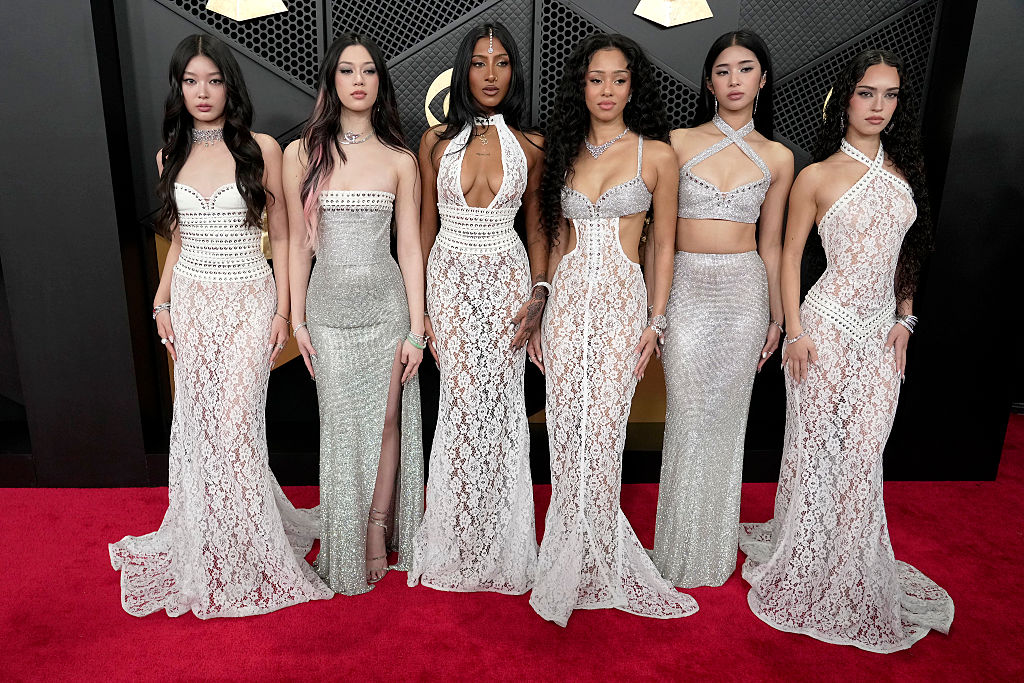
In the wake of Katseye’s recent hiatus due to the departure of member Manon, fans are left not only mourning the loss of talent but also questioning a troubling trend that persists in the music industry. Across countless girl groups, it seems that the narrative surrounding Black women often oscillates between being the center of attention and being sidelined. Manon’s absence has ignited discussions about how Black women navigate the complex dynamics of group identity, often becoming the ‘weakest link’ despite being the very heartbeat of their ensembles.
Historically, we’ve seen this pattern play out time and again. From Destiny’s Child to Fifth Harmony, Black women frequently carry the weight of their groups, showcasing exceptional talent and charisma, only to be overshadowed or pushed to the margins when it comes to decision-making and visibility. This duality of being hyper-visible in performances yet invisible in the industry’s broader narratives speaks volumes about how systemic biases operate, often rendering Black women as afterthoughts rather than leading voices.
Fans of Katseye are not just reacting to Manon’s departure as a loss of a beloved member; they are engaging with a larger conversation about representation, agency, and equity in the music industry. Black women have historically faced barriers that limit their creative expression and influence, leading some to question if industry standards prioritize profitability over authenticity. As we celebrate the contributions of these women, it’s crucial to advocate for a shift in how they are perceived and utilized within their respective groups.
This moment serves as a reminder that the narrative surrounding Black women in music is complex and often fraught with contradictions. Their strength and talent should not be viewed as expendable resources but as essential elements that enhance the entire group’s dynamic. As discussions about Manon and her contributions to Katseye continue, it’s time to challenge the systemic dynamics that place Black women at the margins and instead uplift their voices as foundational to the music we cherish.
Ultimately, the questions raised by Manon’s hiatus go beyond the individual and challenge us to rethink how we view and value the contributions of Black women in entertainment. They deserve not just visibility but also the recognition and respect that acknowledges their integral role in shaping the sounds and narratives we celebrate. The conversation must continue, reminding us that the strength of any ensemble lies in its ability to uplift all its members equally, ensuring that no one is ever cast as the ‘weakest link’ again.
About The Author