By DeShawn Price, PowerVault Staff
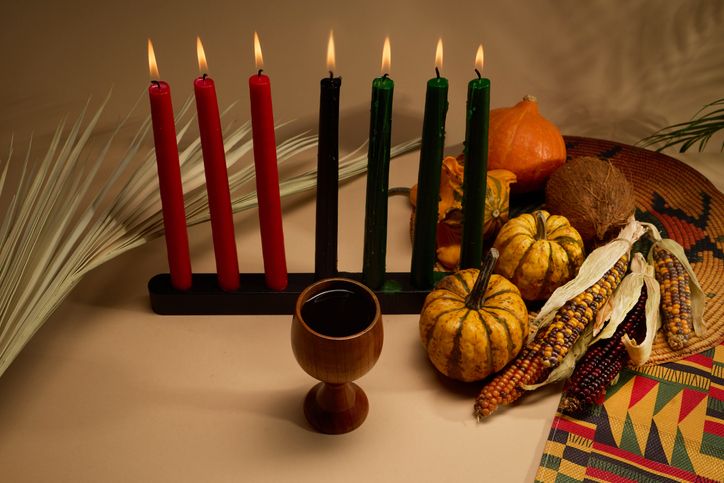
In recent discussions, Kwanzaa has once again found itself in the crosshairs of public debate, with voices questioning its legitimacy and expressing outrage over its existence. This backlash, often steeped in ignorance and racism, overlooks the profound significance of Kwanzaa as a celebration of Black culture, history, and community empowerment. Kwanzaa isn’t just a holiday; it’s an assertion of identity, a reclamation of agency that reminds us that Black people can create meaning on our own terms.
To understand this outrage, it’s essential to consider the historical context that birthed Kwanzaa. Established in 1966 by Dr. Maulana Karenga during the civil rights movement, Kwanzaa was designed as a response to a society that marginalized, misrepresented, and often erased Black narratives. In a world where holidays are predominantly reflective of white traditions, Kwanzaa stands as a deliberate act of cultural self-determination, emphasizing the importance of community, family, and heritage. It embodies the idea that Black identity does not have to be filtered through a Eurocentric lens; rather, it invites us to embrace our distinctiveness and celebrate it unapologetically.
For the culture, Kwanzaa is a powerful reminder that Black spaces need not seek validation from mainstream America. It challenges us to build and nurture our own traditions, to foster relationships centered on love, respect, and mutual uplift. In a society that often pressures us to conform, Kwanzaa encourages a radical act of self-affirmation. It’s about creating an identity that is rooted in our experiences, experiences that cannot and should not be dictated by others. The outrage surrounding Kwanzaa reveals a discomfort with our autonomy; it exposes a persistent fear of a united and self-aware Black community.
This isn’t the first time we’ve seen such reactions to Black cultural expressions. Recall the initial backlash against hip-hop in the late 1980s and early 1990s. Artists faced scrutiny for their authenticity and the lyrical content that discussed the realities of Black life in America. However, that criticism only fueled the growth of the genre, empowering a generation of artists to unapologetically tell their stories. Similarly, Kwanzaa’s critics reveal their insecurities rather than any inherent flaw in the celebration itself. Just as hip-hop evolved into a globally influential force, Kwanzaa can and should galvanize Black communities to explore their heritage and identity with pride.
As we move forward, it will be crucial to monitor how Kwanzaa is embraced or resisted in the coming years. The holiday serves not only as an introspective look at our past but also as a guide for future generations on the importance of self-definition. In a climate where cultural appropriation and misunderstanding run rampant, Kwanzaa stands as a beacon of hope and resilience, urging us to remember the power of our own narratives. The true test will be whether we allow the critics’ outrage to derail a celebration that is rooted in empowerment and community—or if we leverage this moment to grow even stronger, reminding the world that our culture, our traditions, and our identities are not up for debate.
About The Author