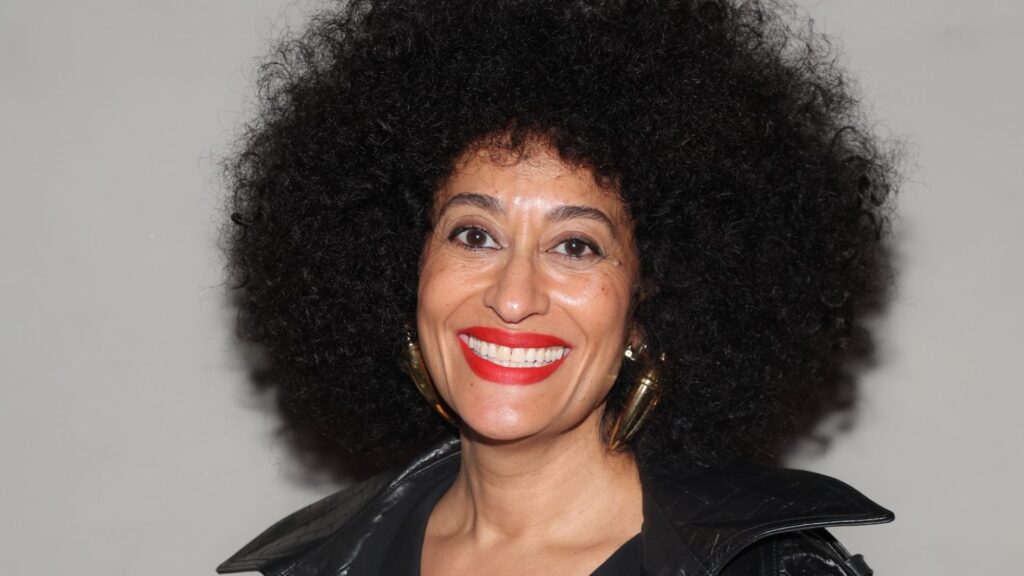
Boxer braids? Buddha knots? Cloud bob? In a since-removed image of Tracee Ellis Ross in a Vogue article, her beautiful and proud bouffant afro was labeled as an ‘afro’ for thicker hair types, only to be later dubbed ‘Buddha knots’ in a separate discussion about trending hairstyles. This renaming of styles that have deep cultural significance honestly feels more like an erasure than an evolution. We’ve seen it time and time again—the appropriation of Black culture wrapped up in shiny, new packaging that often ignores the history, the struggles, and the beauty embedded in these hairstyles.
When did the cultural heritage of styles like cornrows and locs transform into generic names with no tie to their roots? These styles were not just a choice of aesthetics; they were born from heritage, identity, and resilience. They carry stories of our ancestors and the ways they expressed themselves in a world that often sought to stifle their voices. To rename them is to dilute their significance, to strip away their narratives and create a sanitized version devoid of context.
In a world obsessed with trends and newness, the urge to rebrand iconic Black hairstyles speaks to a larger issue of cultural appropriation. It’s about power dynamics; whose voices are heard, and whose stories are told, and often, the narrative is rewritten to suit a non-Black audience. It’s disheartening to witness such appropriation unchecked, especially in spaces that should celebrate diversity.
This isn’t just about hair—it’s about identity. We deserve spaces where our cultural expressions are honored and respected, where we can celebrate our history and influences without the fear of dilution or misrepresentation. The conversation surrounding hairstyles must not end at aesthetics; it’s crucial that we reclaim the language around our culture and ensure that it reflects our truth. Only then can we truly celebrate the richness of our heritage without the risk of erasure.
About The Author