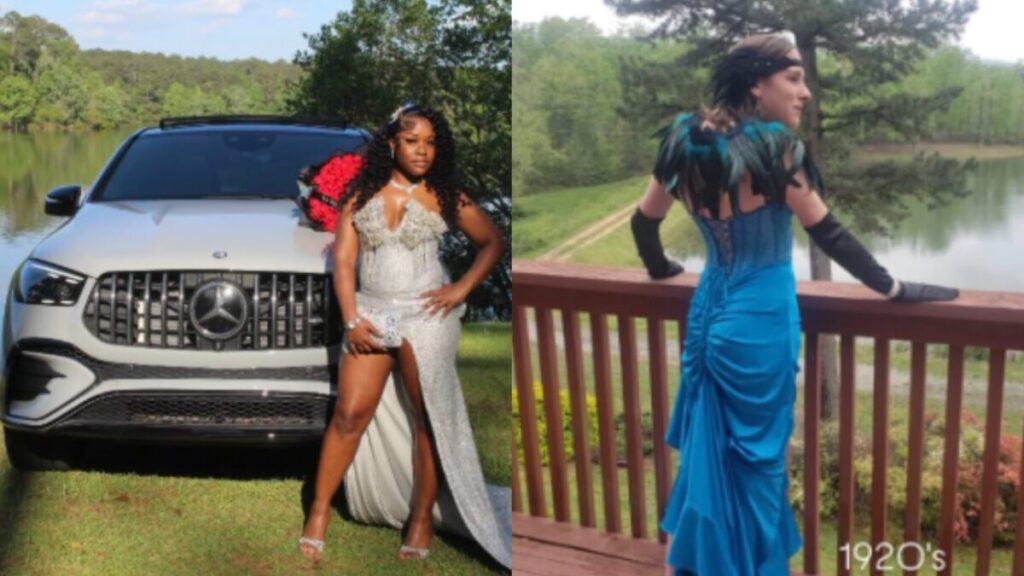
In a world where self-expression is as vital as breathing, the story of a Black high schooler who recently deleted her Threads account is a powerful reminder of the ongoing battle against cultural policing. The young queen showcased her stunning prom dress—a beautiful, bold style that radiated confidence and individuality—only to face an onslaught of criticism from a white woman who deemed the attire inappropriate. This incident has now sparked heated discussions about what is considered acceptable for young Black women in spaces that have historically marginalized their voices and choices.
The prom dress, which was a blend of elegance and flair, was more than just a garment; it was a statement. It represented not only her personal style but also a culture rich in creativity and resilience. The backlash she received, however, was not just about fabric and fashion; it spoke to a deeper issue of racial bias. The comments that followed her post echoed the age-old narrative of respectability politics, where Black bodies are often subjected to scrutiny by those who don’t understand their significance and brilliance. It’s exhausting for young Black girls to navigate a world that constantly tries to impose restrictions on how they express themselves.
In her emotional response, the student articulated a sentiment that many can relate to: “Please go to hell.” It’s an embodiment of the frustration felt by countless individuals who find themselves under the microscope, judged for simply existing in their truth. Instead of celebrating her unique style, this critique forced her to retreat from the online space she had shared with friends. This decision is not just a personal loss; it reflects the broader implications of social media and the pressures that can weigh heavily on young people today.
This controversy serves as a reminder of the importance of uplifting and amplifying Black voices rather than stifling them. It challenges us to rethink our definitions of appropriateness and to encourage young Black women to embrace their identities without fear of judgment. The world needs to recognize that diversity in expression is a strength, not a flaw. As we continue to navigate these conversations, let’s stand in solidarity with the young queens who dare to step outside the box and redefine beauty on their own terms.
About The Author