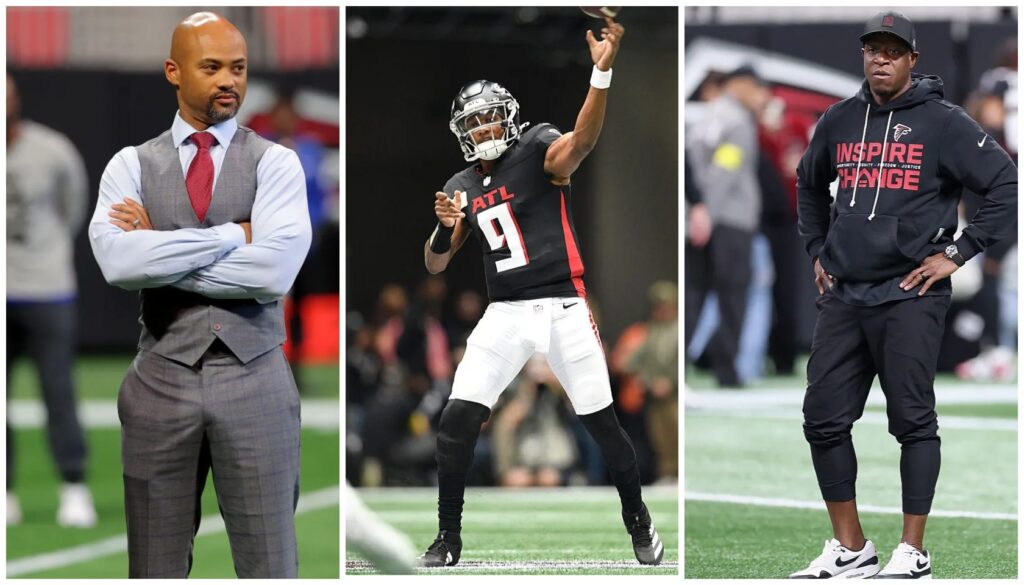
When the Atlanta Falcons decided to part ways with Raheem Morris and Terry Fontenot after several challenging seasons, it was a moment that echoed beyond the realm of sports; it resonated deeply within the fabric of Black excellence and leadership in the NFL. Morris, who served as the team’s head coach, and Fontenot, the general manager, held the weight of history on their shoulders as they stepped into these roles. As the first Black individuals to hold these positions within the organization’s storied legacy, their tenures were not just about wins and losses, but also about representation, hope, and the systemic barriers often faced by Black professionals in sports.
The journey of Morris and Fontenot was marked by not only the expectations that came with being leaders of a franchise but also the reality of managing a team grappling with its identity and performance issues. Their hiring was celebrated within the Black community, as it brought forth a sense of progress within a league that has been slow to fully embrace diversity in its leadership. However, the results on the field rarely matched the promise of their potential, leading to a swift exit that is all too familiar in a league where Black coaches often find themselves under the microscope.
In the world of professional sports, the trend of firing the first Black leaders after a series of setbacks raises essential questions about accountability and the disproportionate pressures placed on them. Morris and Fontenot entered into a legacy of navigating an environment rife with scrutiny, where their success would have been celebrated as a beacon for others, yet their struggles were magnified to an immense degree. This dichotomy reflects broader societal issues, where Black professionals find themselves in positions that feel simultaneously groundbreaking and precarious.
As we reflect on the recent changes within the Falcons organization, it becomes clear that the narrative surrounding Black leadership in sports is far from over. The legacies of Morris and Fontenot serve as a reminder of the burdens they carried and the responsibilities they embraced, not just as team leaders but as symbols of hope and change within their community. Their departure calls for a deeper analysis of how Black professionals are treated in high-stakes environments, urging leagues to prioritize diversity, equity, and inclusivity in their hiring practices. Looking forward, it will take collective action from fans, players, and organizations to ensure that the contributions of Black leaders in sports are valued and supported, allowing future generations to thrive without the shadows of their predecessors’ challenges looming over them.
About The Author