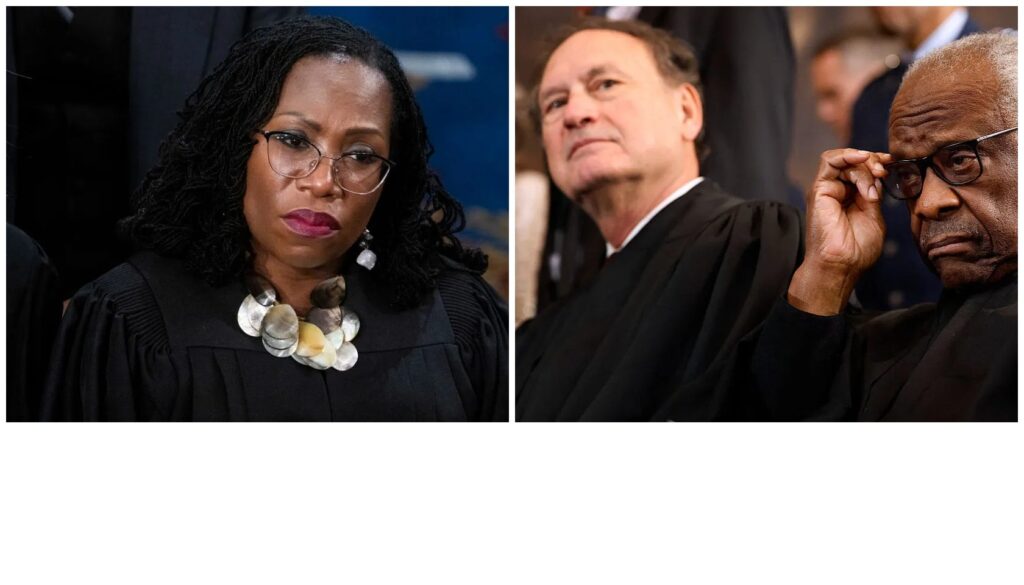
In a poignant exchange that echoes the heart of America’s ongoing struggle for voting rights, Supreme Court Justices Samuel Alito and Ketanji Brown Jackson found themselves at the center of a heated debate. The discussion revolved around a significant decision made by the Court to bypass the traditional waiting period before officially formalizing a ruling. This is a topic that has consistently stirred tension within the nation’s judiciary, particularly as it relates to issues affecting marginalized communities. Alito, a stalwart of the conservative wing, argued that expedited decisions are sometimes necessary to ensure that laws remain reflective of contemporary values, while Jackson countered that such haste could undermine the very fabric of democratic participation.
The debate touched on the critical implications of voting rights in America, especially as we continue to navigate an electoral landscape laden with challenges. With many states implementing legislation that critics claim suppresses voter turnout, the urgency of the Supreme Court’s decisions is more important than ever. Jackson emphasized that any rush to judgment could disproportionately impact communities of color, who have historically faced barriers at the ballot box. Alito’s perspective, while rooted in judicial efficiency, raised questions about the balance between swift justice and the need for thorough consideration of how laws affect all citizens.
As the justices articulated their positions, it became clear that the ramifications of this decision could reverberate far beyond the courtrooms. Each ruling has the power to shape the political landscape, influence voter engagement, and either bolster or erode public trust in the electoral system. Jackson’s advocacy for a more cautious approach resonated with many who have fought tirelessly for voting rights, underscoring the profound responsibility the Supreme Court holds in safeguarding democracy.
Ultimately, the exchange between Alito and Jackson is more than a legal debate; it is a reflection of the broader societal discourse on voting rights, representation, and justice. With the midterm elections approaching, the stakes could not be higher. As citizens, we must remain vigilant, aware that the decisions made within the hallowed halls of the Supreme Court have the power to either fortify our democracy or threaten its very foundation. As the nation watches, the conversation surrounding voting rights continues to evolve, reminding us all of the tireless struggle for access and equity in the electoral process.
About The Author