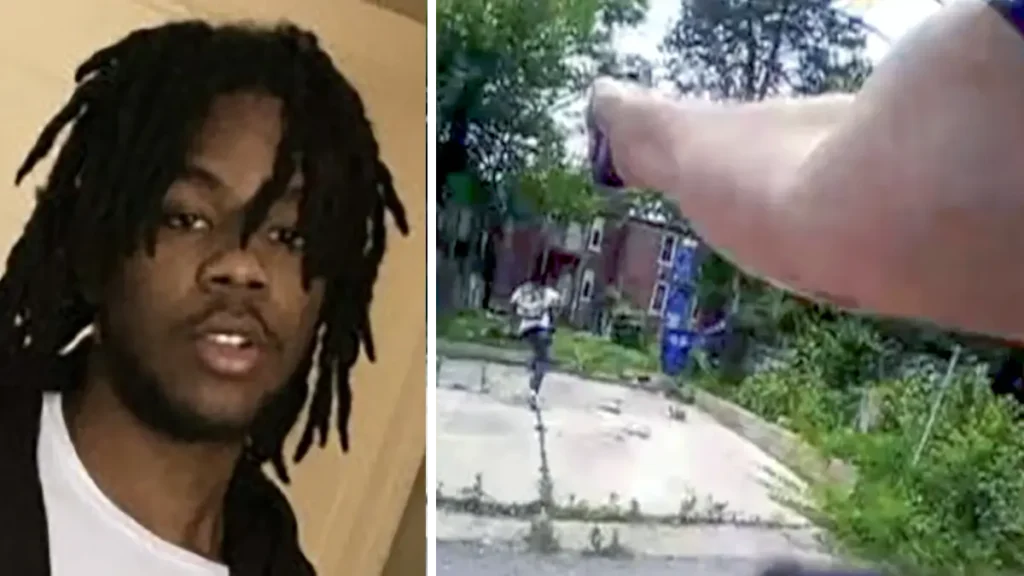
In a case that has gripped the nation, the tragic shooting death of 17-year-old Emeshyon Wilkins in St. Louis has raised serious questions about police accountability and transparency. Initially, police claimed they had no choice but to shoot the young Black teen in the back of the head, alleging that he was a threat during a foot chase. This narrative fit neatly into a long history of justifying violence against Black bodies, but it unraveled dramatically when body-camera footage, suppressed for over a year, finally surfaced. The chilling video reveals a different story, one that paints a picture of a young man running for his life rather than posing an imminent danger.
The footage contradicts the police’s assertion that Wilkins had turned toward them with a gun drawn. Instead, it shows him fleeing with his hands raised, a chilling reminder of how narratives can be twisted to suit a predetermined narrative. As more details emerge, it becomes painfully clear that the truth was deliberately obscured, with consequences that extend far beyond just one tragic incident. This isn’t merely about a young life lost; it speaks to a systemic issue of mistrust between law enforcement and communities of color, where the assumption of guilt often overrides the presumption of innocence.
In the wake of this revelation, St. Louis residents are left to grapple with the impact of this incident. The community’s outrage is palpable, echoing the sentiments shared across the nation in the wake of similar tragedies. Activists are now demanding accountability, pushing for a reevaluation of police practices and the need for increased transparency in officer-involved shootings. The lack of accountability in cases like Wilkins’ is not just a local issue; it reflects a broader national crisis concerning police violence against Black individuals.
As we stand in solidarity with Emeshyon’s family, it is imperative that we hold those in power accountable, demand justice, and advocate for change. The release of the body-camera footage is a step forward, but it’s just one part of a much larger battle. The question remains: how many more lives will be lost before the systems that perpetuate these injustices are dismantled? Emeshyon’s story is a stark reminder that our work is far from over, and we must continue to fight not just for justice in his case, but for a complete reform of a system that has failed too many of our young Black men and women.
About The Author