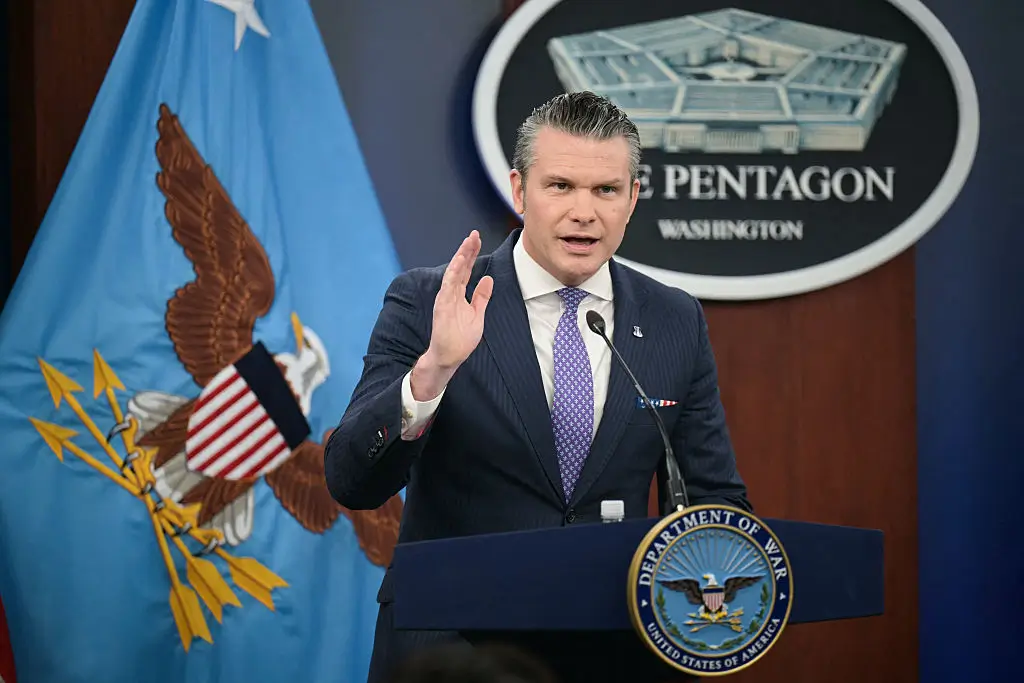
This week, Defense Secretary Pete Hegseth made headlines for all the wrong reasons when he leaned into a quote from a popular movie during a Pentagon worship event. With an air of bravado, Hegseth recited what he believed to be a stirring declaration, apparently forgetting that his inspiration came from a film—hardly the most sacred of sources. The moment spiraled quickly from cringe-worthy to downright comical as the audience’s reactions ranged from awkward chuckles to outright disbelief. What was meant to galvanize support instead became a glaring example of misplaced confidence and poor judgment.
But it didn’t stop there. The Pentagon, perhaps sensing the growing backlash, rushed to Hegseth’s aid, attempting to frame his blunder as an honorable tribute to values of the armed forces. Unfortunately, their rescue mission only served to amplify the embarrassment. Critics were quick to point out that in their eagerness to support Hegseth, officials had inadvertently highlighted the disconnect between military leadership and the public’s perception of authenticity. In a world that increasingly values genuine connection and sincerity, this gaffe seemed to miss that mark spectacularly.
Social media erupted in a frenzy, with countless memes and commentary flooding timelines as people relished the situation with a sense of schadenfreude. While many onlookers were quick to call out Hegseth for his faux pas, the ensuing discussions also unearthed larger issues around representation and credibility in political offices. For a sector that prides itself on discipline and accountability, this episode raises questions: How can the public trust leaders who seem to conflate pop culture with serious discourse?
At a time when authenticity is paramount, Hegseth’s misfire serves as a reminder that even those in positions of power can stumble spectacularly. The incident also underscores a cultural moment where leaders are expected to be genuine communicators, inspiring confidence rather than cringes. As we watch this drama unfold, one can only hope that lessons—especially those about the consequences of poorly timed quotes—are learned by the Pentagon and beyond. After all, in a landscape filled with sharp tongues and keen eyes, embarrassing moments hold the potential to turn into teachable ones, if we’re willing to embrace them.
About The Author