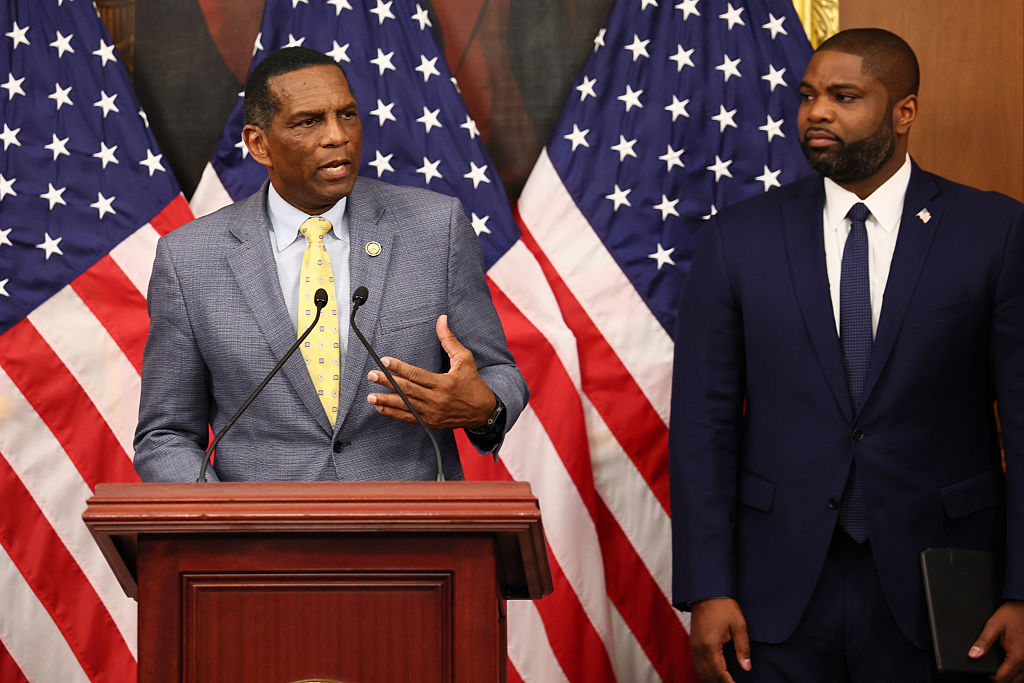
As we look towards the impending political shifts in Washington, it becomes glaringly clear that the Republican Party is witnessing a significant exodus of its Black representatives. With the four Black GOP members of the House seemingly on their way out, the once-prominent voices that tried to navigate the turbulent waters of party politics are disappearing. This stark reality brings to the forefront a critical question: where does that leave the party in terms of representation and diversity, especially when it comes to appealing to Black voters?
Senator Tim Scott stands as the last bastion of Black Republican presence in the Senate, but even his position feels tenuous as he faces the inevitable political tides that threaten to wash away GOP support. Scott has often been seen as a token by many, highlighting the struggle within the party to authentically engage with Black communities on the issues that matter. His attempts to bridge the gap are commendable, but they often come across as isolated efforts in a climate where many feel abandoned by the GOP’s direction.
The erosion of Black representation within the Republican Party raises concerns not just for the GOP, but for the broader political landscape as well. It poses the question of whether the party can recover its footing and offer a message that resonates beyond its traditional base. With a growing consciousness among younger voters who prioritize equity and inclusion, the absence of diverse voices within the party could lead to a significant disconnect with the electorate.
As we move closer to the next election cycle, it will be interesting to see if the GOP addresses its glaring lack of Black representation. A party that ignores the voices of a significant demographic in America risks being left behind as the nation continues to evolve. The road ahead demands a reckoning with identity politics and a commitment to diversity, lest the Republican Party continue its downward spiral in Black voter support.
About The Author