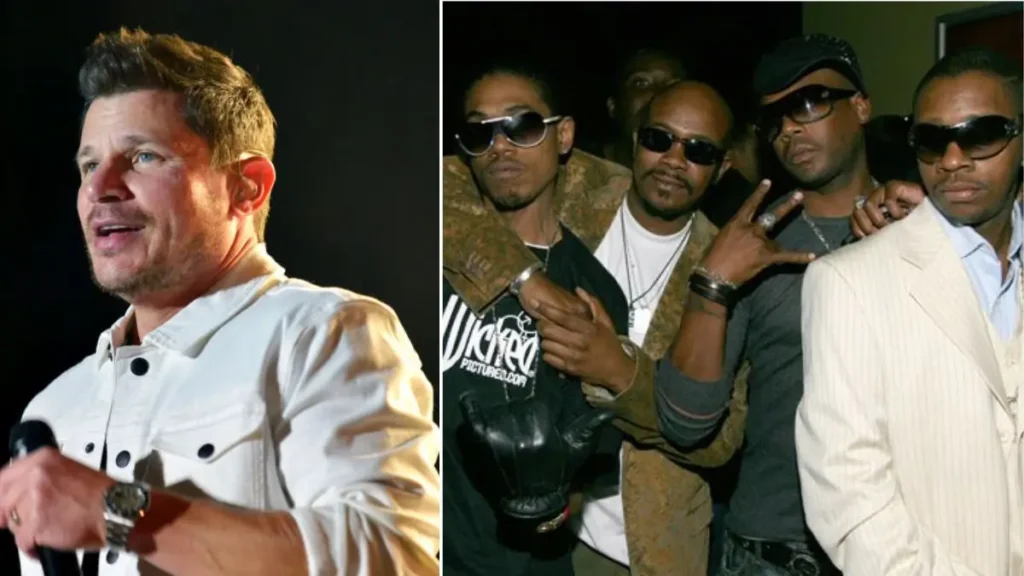
In the late 1990s, 98 Degrees weren’t some label-manufactured overnight sensation. They grinded for their moment and earned the attention of Motown Records on the basis of their undeniable talent and charisma. Yet, as Nick Lachey recently revealed, their journey through the music industry was anything but smooth. In a candid interview, he dropped a bombshell that shed light on a troubling chapter in their history: Motown attempted to reshape the band’s sound and image following the soaring success of a popular Black group that had taken the charts by storm.
This revelation forces us to confront the often-unseen dynamics at play in the music industry, especially regarding how Black artistry has historically influenced and even dictated trends. As 98 Degrees began to carve out their niche, the record label seemingly wanted to reposition them, leveraging the success of Black artists to create a more marketable pop boy band. It’s a telltale sign of an industry that can sometimes prioritize image over authenticity, seeking to package something that feels familiar rather than fostering true originality.
Lachey’s comments also reignite a broader conversation about the complexities of cultural appropriation and the fine line between inspiration and imitation. In an era where Black culture has continually shaped mainstream music, it’s essential to reflect on who benefits from that cultural capital. While 98 Degrees may have been vying for success in their own right, Motown’s push to alter their sound raises questions about the pressures artists face to conform to a mold created by someone else’s success.
Ultimately, Nick Lachey’s bombshell isn’t just about the past; it’s a reminder of the ongoing challenges that artists face in navigating their identities within a commercial landscape that often prioritizes profit over genuine artistic expression. As the industry continues to evolve, we can only hope that more artists are empowered to take control of their narratives without the weight of external expectations stifling their creativity. For 98 Degrees, their story is a testament to resilience, a reflection on the cultural landscape of the 90s, and a call to appreciate the authentic voices that continue to shape music today.
About The Author