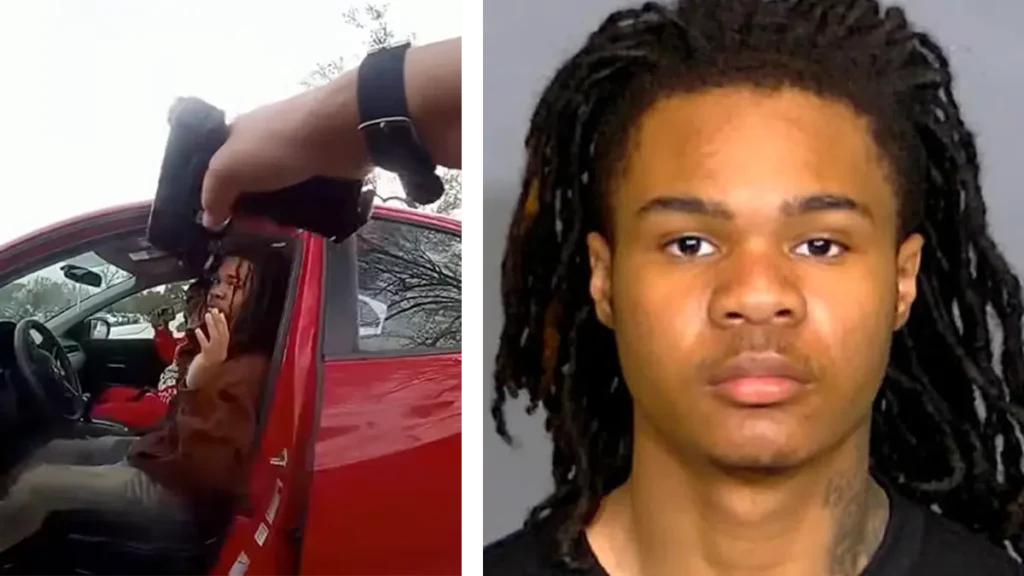
In a chilling reminder of the systemic issues plaguing our justice system, the story of a Black teenager in Indiana who faced serious charges after being accused of pointing a gun at police has taken a shocking turn. Indianapolis Police Sgt. Robyn Frazier claimed, in what now appears to be a blatant fabrication, that the teen had aimed a firearm directly at her. Yet the recently released body-camera footage tells a different tale, revealing that the truth is often obscured by the very individuals sworn to protect us. The footage shows the young man holding the weapon away from the officer, a clear discrepancy that not only exonerates him but raises critical questions about the conduct of law enforcement.
As the nation grapples with ongoing discussions about police accountability and the disproportionate criminalization of Black youth, this case serves as a painful reminder of how readily some officers and institutions can distort reality. The teenager, who was arrested and faced felony charges based on Frazier’s claims, can finally breathe a sigh of relief, knowing the truth has come to light. But for many, this incident highlights a troubling pattern: the urgent need for reform in policing practices and accountability measures that can prevent such injustices from happening again.
It’s disheartening to think about how many other innocent lives may have been affected by similar fabrications. The underlying implications of this case reach far beyond just the teen’s freedom; they reverberate through communities that have long been on the receiving end of unjust policing. How many more young people are being wrongfully accused, their lives disrupted, their futures uncertain? As the fallout from this incident continues, it serves as a rallying point for change and a call to action for communities advocating for transparency and justice.
As we celebrate this young man’s win, we must also recognize the broader fight that remains. Each time a story like this surfaces, it reminds us of the power of technology—like body cameras—acting as a safeguard against injustice. Yet, while this case ends in freedom for one young man, it demands that we remain vigilant in our fight for equity and accountability within law enforcement. The truth may have prevailed this time, but for the countless others still ensnared in the web of institutional bias, the struggle is far from over.
From The Source
About The Author